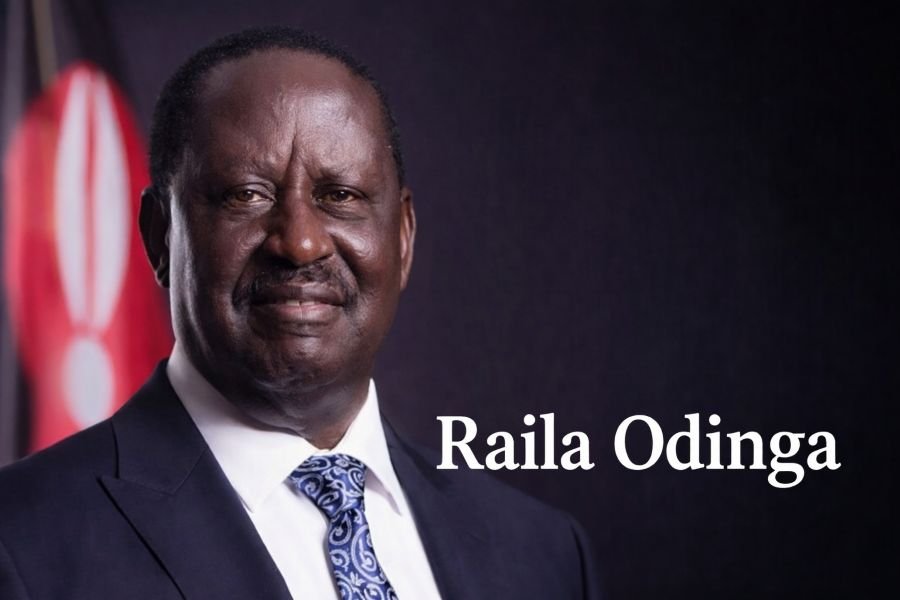
raila odinga: The Resilient Visionary — Triumphs, Trials, and the Complex Legacy of Kenya’s Reform Champion
A powerful journey of leadership, struggle, and influence from opposition icon to Former Prime Minister of Kenya

Table of Contents
ToggleIntroduction
Raila Odinga stands among the most influential political figures in modern African history. Known for his persistence, charisma, and reformist vision, he shaped Kenya’s political evolution across decades of turbulence and transformation. His journey reflects both inspiring achievements and intense controversies, making his story one of resilience and complexity.
From his roots in a prominent political family to his role as Former Prime Minister of Kenya, Odinga’s life mirrors the broader story of Kenya’s democratic struggles. His influence extended beyond elections, helping redefine governance, opposition politics, and constitutional reform in the country.
Quick Bio
| Field | Details |
|---|---|
| Full Name | Raila Amolo Odinga |
| Date of Birth | 7 January 1945 |
| Place of Birth | Maseno, Kenya |
| Nationality | Kenyan |
| Ethnicity | Luo |
| Religion | Christianity |
| Profession | Politician, Engineer, Businessman |
| Known For | Former Prime Minister of Kenya |
| Spouse | Ida Odinga |
| Children | Four |
| Education | Mechanical Engineering, Technical University of Magdeburg |
Early Life and Background
Raila Odinga was born into a politically active household, the son of Jaramogi Oginga Odinga, a key figure in Kenya’s independence movement and the country’s first vice president. Growing up in such an environment exposed him to governance debates, national identity issues, and the responsibilities of leadership from an early age.
This background nurtured his strong political awareness and social consciousness. His upbringing in western Kenya also helped him build a deep connection with grassroots communities, a relationship that would later become central to his political strength.
Education and Intellectual Formation
Odinga pursued his early education in Kenya before traveling to Germany for higher studies. At the Technical University of Magdeburg, he earned a master’s degree in mechanical engineering, gaining technical expertise and international exposure.
Studying abroad during a period of global ideological competition broadened his worldview and sharpened his analytical thinking. This experience later influenced his policy perspectives and leadership style, blending technical reasoning with political activism.
Start of Career
Upon returning to Kenya, Odinga began his professional life as a lecturer at the University of Nairobi. He also worked with the Kenya Bureau of Standards, where he applied his engineering knowledge in public service.
However, his passion gradually shifted toward politics and governance. His early professional experiences strengthened his understanding of state institutions and economic structures, laying a practical foundation for his future leadership roles.
Rise in Politics
Raila Odinga emerged as a prominent voice in Kenya’s pro-democracy movement during the 1980s and 1990s. His opposition to one-party rule led to periods of detention and political confrontation, elevating him as a symbol of resistance and reform.
When multiparty politics returned, he entered Parliament and quickly became one of the country’s most recognizable political leaders. His growing popularity stemmed from his advocacy for transparency, inclusivity, and constitutional change.
Government Leadership and Prime Ministership
Odinga’s political career reached a historic milestone when he became Former Prime Minister of Kenya from 2008 to 2013. His appointment followed a national crisis and a power-sharing agreement aimed at restoring stability and unity.
During this period, he championed governance reforms and played a central role in the implementation of Kenya’s 2010 constitution. His tenure demonstrated his ability to work within coalition politics while pushing for institutional transformation.
Presidential Campaigns and Opposition Role
Throughout his career, Odinga contested multiple presidential elections, consistently remaining one of Kenya’s most formidable opposition leaders. His campaigns mobilized millions and kept democratic debate vibrant and competitive.
Although he never secured the presidency, his influence reshaped the political landscape. He helped strengthen opposition politics, ensuring accountability and keeping reform issues at the forefront of national discourse.
Business Interests and Economic Influence
Beyond politics, Raila Odinga engaged in business ventures, particularly in manufacturing and energy sectors. These investments reflected his interest in economic development and private sector participation in national growth.
His business involvement complemented his political agenda by demonstrating the importance of industrialization and entrepreneurship. This dual engagement in politics and enterprise contributed to his reputation as both a reformist and a pragmatic leader.
Personal Life and Character
Raila Odinga married Ida Odinga, and together they built a family while navigating the pressures of public life. His personal image combined warmth, resilience, and determination, earning him strong loyalty among supporters.
Often called “Baba” by followers, he cultivated a connection with ordinary citizens. This rapport reinforced his political identity as a people-centered leader who remained accessible despite decades in national politics.
Challenges and Controversies
Like many long-serving political figures, Odinga’s career included controversies and intense rivalries. Electoral disputes and political tensions frequently placed him at the center of national debates and moments of uncertainty.
These challenges, however, also highlighted his endurance and negotiating skills. His willingness to engage in dialogue during crises contributed to conflict resolution efforts and reinforced his role as a stabilizing figure.
Legacy and Historical Impact
Raila Odinga’s legacy is deeply intertwined with Kenya’s democratic journey. He played a critical role in expanding political freedoms, advocating constitutional reforms, and strengthening opposition politics over several decades.
His influence extends beyond electoral outcomes. By shaping political culture and championing institutional change, he left a lasting imprint on governance in Kenya and inspired reform movements across Africa.
Conclusion
Raila Odinga’s life story is one of persistence, ambition, and transformative leadership. From his early activism to his tenure as Former Prime Minister of Kenya, he remained a central figure in the nation’s pursuit of democratic progress.
His career demonstrates how influence is not defined solely by holding the highest office but by shaping ideas, institutions, and political culture. As a reform champion and enduring opposition icon, his impact continues to resonate in Kenya’s political narrative.
FAQ
Who is Raila Odinga?
Raila Odinga was a Kenyan politician and reform advocate best known as the Former Prime Minister of Kenya and a leading opposition figure.
What is Raila Odinga known for?
He is known for his role in Kenya’s pro-democracy movement, constitutional reforms, and decades-long influence on national politics.
Did Raila Odinga ever become president?
No, although he ran for president several times, he never held the office but remained a dominant political leader.
What was his main contribution to Kenya?
His key contributions include strengthening multiparty democracy and supporting the adoption of the 2010 constitution.