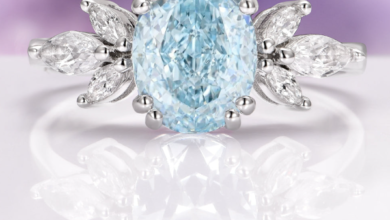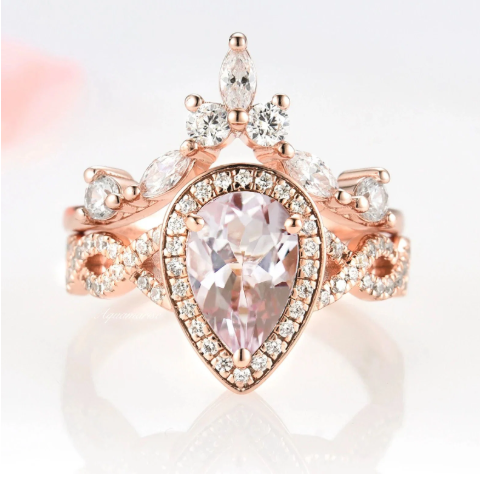

Morganite has a quiet, blush-pink glow that reads as soft rather than showy, which is exactly why it works on so many people. Its color sits somewhere between peach, rose, and champagne, shifting slightly with the light around it. That gentle warmth is the whole appeal, but it also means the stone can either harmonize with your complexion or fight it, depending on how you pair it. Choosing well is less about rules and more about noticing how the pink plays against your own coloring.
Why your undertone matters more than your surface color
When people talk about skin tone, they often mean how light or deep their complexion is. For jewelry, the more useful idea is undertone, the subtle warmth or coolness that sits underneath the surface. Two people can share the same tan or the same fair skin yet have completely different undertones, and that difference is what decides whether a peachy stone looks radiant or slightly washed out against them. Warm undertones lean golden, olive, or peachy. Cool undertones lean pink, red, or bluish. Neutral undertones borrow a little from both. Because morganite is itself a warm-leaning stone, understanding your undertone tells you how much contrast or agreement you are creating. It is also worth remembering that metal does half the work here, so it helps to understand how yellow, white, and rose gold compare before you commit to a single look. The metal frames the stone the way a mat frames a photograph, and the frame can shift the whole impression.
Morganite on warm undertones
If your skin has golden, peachy, or olive warmth to it, morganite tends to feel like a natural extension of your coloring. The stone’s soft blush echoes the warmth already in your complexion, so the two blend into an easy, glowing effect rather than standing apart. This can be flattering and cohesive, giving a lit-from-within impression that suits relaxed, everyday wear. The one thing to watch is that too much sameness can flatten the look, since a warm stone against warm skin sometimes reads as one continuous wash of color. If you want the morganite to feel more like a distinct piece rather than a tonal blur, introduce a touch of contrast. A cooler metal or a small accent of brighter white nearby can lift the stone off your skin and let its shape register. Warm undertones rarely go wrong with morganite; the goal is simply to keep it from disappearing into you.
Morganite on cool undertones
Cool undertones, the pink, rosy, or slightly blue-based complexions, create a different and often striking relationship with morganite. Here the stone’s peach is playing against your natural coolness, so instead of blending it provides gentle contrast. That contrast is what makes the color read clearly and gives the stone definition on the hand. Because the pink of morganite carries a rosy note, it can also flatter cool skin by picking up the pink already present in it, creating a considered rather than accidental echo. The balance to strike is warmth without overload. If a morganite piece leans very peach and orange, it can feel slightly at odds with a very cool complexion, so a softer, rosier stone or a cooler metal setting brings everything back into agreement. Cool undertones have real range with morganite; the choice is whether you want harmony through a shared pink note or definition through gentle contrast.
Warm metal tones tend to echo morganite’s peach warmth.
Matching the metal to your skin tone
The metal you set morganite in changes the outcome as much as the stone itself, because you are really reading the two together. Think about metals by how their color appears against your skin rather than by name alone. Warmer-looking metals with a golden or rosy cast tend to amplify the peach in morganite and echo the warmth in golden or olive complexions, which can be lovely but can also intensify an already warm pairing. Cooler-looking metals with a bright, silvery-white appearance do the opposite, cooling the overall impression and giving the pink stone a crisper edge that often reads well on cool undertones. A rosy-toned metal sits in the middle, leaning into morganite’s blush and flattering a wide range of complexions because its pink meets skin gently. There is no single right answer, only a question of whether you want the metal to agree with the stone or to counterbalance it.
Balancing the stone’s peach with your natural coloring
Beyond undertone, your hair and eye color quietly shape how morganite looks on you, and factoring them in leads to more satisfying choices. Soft, muted coloring, ash-toned hair, gray or hazel eyes, tends to pair beautifully with morganite because the stone shares that gentle, low-contrast quality. Bolder, high-contrast coloring can carry a more saturated morganite that holds its own next to strong features. If you are browsing morganite jewelry for women and comparing options, look at each piece against the back of your hand and near your face, not just on a screen, because the peach can shift dramatically between artificial and natural light. Pay attention to whether the stone makes your skin look brighter and more even or slightly sallow, since that single cue tells you more than any rule about warm and cool ever could. The most flattering piece is simply the one that makes your complexion look healthier, not the one that matches a chart.
Quick ways to test morganite in daylight
The fastest way to judge a morganite piece is to take it to a window, because daylight is honest in a way that store lighting and phone screens are not. A few simple checks make the decision clear:
- Hold the stone near the inside of your wrist and glance at your veins; if the piece harmonizes with your natural coloring, it will look intentional rather than jarring.
- Compare the morganite against a plain white surface and a warm cream one to see which brings out a color you actually like.
- Move between full daylight and shade, since morganite can turn more peach or more rosy as the light changes.
- Watch your skin, not the stone; the right pairing makes your complexion look fresher, while the wrong one leaves the stone doing all the work.
Testing this way takes a minute and removes almost all the guesswork, letting you trust your own eye instead of a set of instructions.
The takeaway
Morganite flatters a remarkably wide range of skin tones precisely because its warmth is soft rather than aggressive. Warm undertones get an easy, glowing harmony; cool undertones get gentle, flattering contrast; and the metal you choose can nudge the whole effect warmer or cooler to suit you. Rather than memorizing categories, let daylight and your own reflection guide the final call. When a morganite piece makes your skin look brighter and more alive, you have found your match, and that quiet, personal fit is what makes the stone feel like it was chosen for you rather than off a shelf.