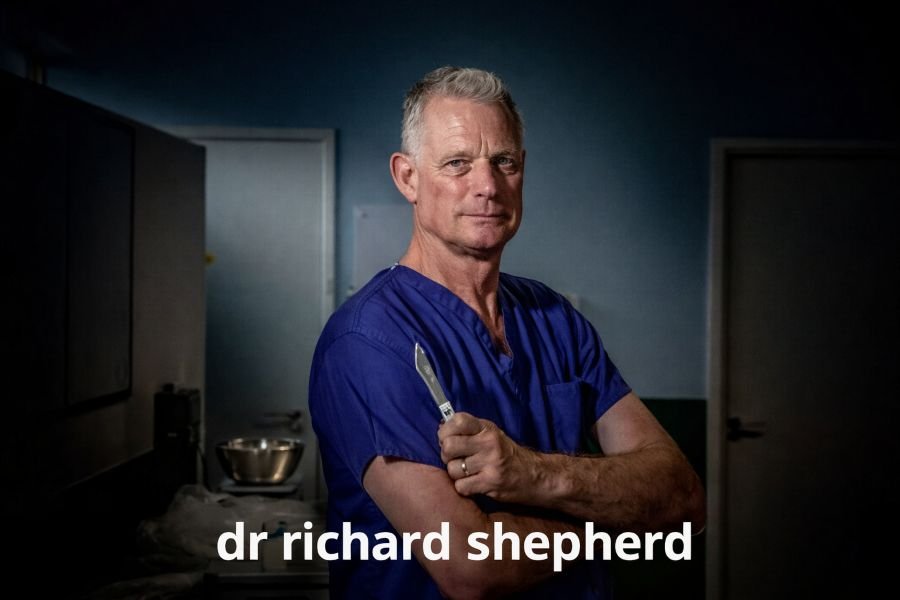
dr richard shepherd Biography – A Powerful Journey of Truth, Science, and the Dark Side of Death
The Inspiring and Challenging Life of Britain’s Leading Forensic Pathologist

Table of Contents
ToggleIntroduction
Dr Richard Shepherd (born 1952) is one of the most respected forensic experts in the United Kingdom. Known for his work on thousands of post-mortem examinations, he has played a major role in modern forensic investigation. His career reflects both the positive impact of justice and the negative emotional toll that comes with working so closely with death.
His story is not only about science, but also about responsibility, public service, and understanding the fragile line between life and loss. Through his books and media appearances, he has helped ordinary people understand what forensic pathology truly involves.
Quick Bio
| Detail | Information |
|---|---|
| Full Name | Richard Shepherd |
| Known As | Dr Richard Shepherd |
| Born | 1952 |
| Age | 73 years (as of 2026) |
| Nationality | British |
| Profession | Forensic Pathologist, Author, TV Presenter |
| Birthplace | West London, England |
| Education | St George’s Hospital Medical School, London |
| Famous For | Over 23,000 post-mortem examinations |
| Notable Work | Unnatural Causes |
Early Life and Background
Dr Richard Shepherd was born in West London in 1952 and later grew up in Watford, Hertfordshire. His early years were shaped by personal experiences that influenced his curiosity about medicine and the mysteries of life and death. From a young age, he developed an interest in understanding how the human body works.
His childhood was not without hardship, and those early moments helped shape the strong character he would need for his future profession. The world of forensic medicine demands emotional strength, and Shepherd’s early life prepared him for the challenges ahead.
Education and Medical Training
Dr Shepherd studied medicine at St George’s Hospital Medical School in London. He qualified as a doctor in 1977, beginning his journey into one of the most demanding branches of medical science. His academic training gave him the foundation needed to explore complex medical questions.
In 1987, he completed specialist postgraduate training in forensic pathology. This marked the beginning of his professional life as a pathologist focused not on treating the living, but on learning from the dead in order to protect the living.
Starting a Career in Forensic Pathology
After completing his training, Dr Richard Shepherd joined the forensic department at Guy’s Hospital in London. This was the start of a career that would eventually make him one of Britain’s best-known forensic pathologists.
The role of a forensic pathologist is both powerful and difficult. It involves uncovering hidden truths behind sudden or suspicious deaths. Shepherd’s early work introduced him to the reality that forensic medicine is not only science, but also justice.
A Remarkable Career Overview
Over the course of more than three decades, Dr Richard Shepherd conducted over 23,000 post-mortem examinations. His work supported police investigations, legal proceedings, and major national inquiries. Few pathologists have reached such a level of experience.
His career highlights the positive role forensic science plays in society, helping solve crimes and bring closure to families. At the same time, it also shows the negative emotional burden carried by those who work so closely with tragedy and loss.
High-Profile Cases and Public Recognition
Dr Shepherd has been involved in several major investigations that gained national and international attention. These cases placed him at the center of history, where forensic expertise became crucial for understanding events.
Some of the most notable cases he contributed to include the death of Princess Diana, the Stephen Lawrence murder investigation, the Hungerford massacre, and forensic work connected to the 9/11 attacks. These cases demonstrate how essential a skilled pathologist is in the search for truth.
The Role of a Pathologist in Justice
The work of a forensic pathologist is not simply about examining bodies. It is about providing evidence that may determine the outcome of court trials, criminal investigations, and public understanding of tragedy.
Dr Richard Shepherd’s career reflects how forensic pathology can protect society. His careful scientific approach has helped ensure that justice is based on facts, not assumptions. This is one of the strongest legacies of his professional life.
Books and Contributions to Public Knowledge
Dr Shepherd is also a bestselling author, known for writing about his experiences in forensic medicine. His most famous book, Unnatural Causes, offers a powerful and human insight into the world of death investigation.
He also wrote The Seven Ages of Death, which explores death through different stages of life. Through these works, he has educated the public and made forensic science more understandable to both professionals and ordinary readers.
Television and Media Presence
In addition to his medical work, Dr Richard Shepherd has appeared on television programmes that focus on forensic investigation. His ability to explain complex scientific topics has made him a respected public figure.
He hosted The Truth About My Murder and appeared in projects such as Ancient Autopsy. These appearances show how his expertise continues to influence public awareness of forensic pathology.
Personal Life
Dr Richard Shepherd is married to Linda, who is also a forensic doctor. Their shared professional background reflects a life deeply connected to medicine and investigation.
He is also a family man, and at least one of his children has followed a similar path into pathology. His personal life remains largely private, which is common for professionals working in sensitive fields.
Legacy and Influence
Dr Richard Shepherd’s legacy is one of knowledge, service, and truth. He has helped shape modern forensic investigation in Britain and contributed to some of the most important criminal and disaster-related inquiries of recent decades.
His life shows both the positive impact of science in justice and the negative emotional cost of witnessing death so closely. Still, his work stands as an inspiring example of dedication and professionalism.
Conclusion
Dr Richard Shepherd (born 1952) remains one of the most influential forensic pathologists of his time. Through decades of post-mortem investigations, major case involvement, bestselling books, and media appearances, he has helped society better understand death, evidence, and justice.
His career proves that forensic pathology is a profession of truth, courage, and responsibility, offering both powerful rewards and difficult emotional challenges.
FAQ – Dr Richard Shepherd
Who is Dr Richard Shepherd?
Dr Richard Shepherd is a British forensic pathologist known for conducting over 23,000 post-mortem examinations.
When was Dr Richard Shepherd born?
He was born in 1952 in West London, England.
What is Dr Richard Shepherd famous for?
He is famous for his forensic work in major investigations and his bestselling book Unnatural Causes.
What does a forensic pathologist do?
A forensic pathologist investigates causes of death, especially in suspicious or unexplained cases.
Has Dr Richard Shepherd appeared on television?
Yes, he has hosted and appeared in forensic-related TV programmes including The Truth About My Murder.