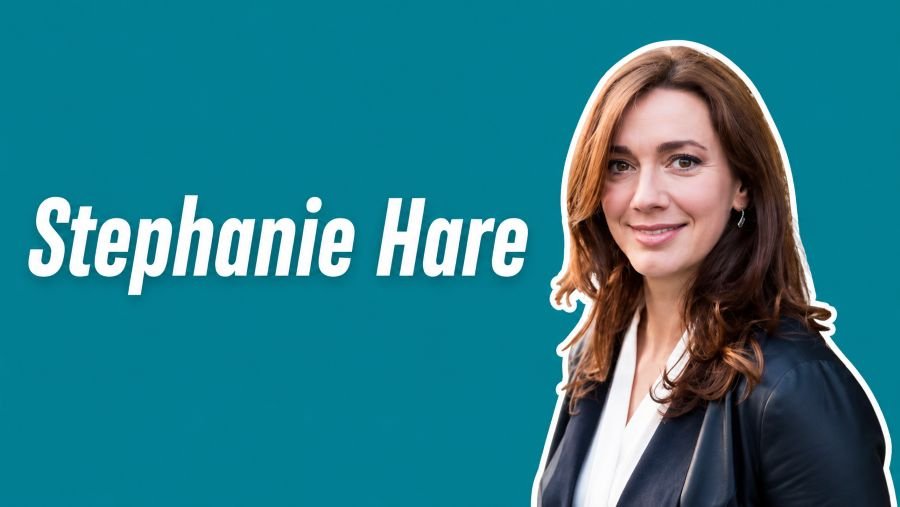
Stephanie Hare: Powerful Biography of a Brilliant Broadcaster
A detailed look at her education, career journey, technology ethics work, broadcasting role, book, achievements, and public impact.

Introduction
Stephanie Hare is a respected researcher, author, and Broadcaster known for her clear work on technology, politics, history, artificial intelligence, and ethics. She has built a strong public identity by explaining complex digital issues in a simple and practical way. Her voice is especially important in a world where AI, data, surveillance, and digital systems are changing how people live, work, and make decisions.
She is best known for her book Technology Is Not Neutral: A Short Guide to Technology Ethics and for her work on BBC television’s Artificial Intelligence: Decoded. Her career has a positive side because she helps people understand technology responsibly, but it also highlights a negative truth: modern technology can create harm when ethics, privacy, and accountability are ignored.
Quick Bio
| Field | Details |
|---|---|
| Full Name | Dr Stephanie Hare |
| Profession | Researcher, Broadcaster, author, keynote speaker |
| Main Field | Technology ethics, AI, politics, history, and the future of work |
| Famous For | Technology Is Not Neutral and BBC’s Artificial Intelligence: Decoded |
| Education | PhD and MSc from London School of Economics |
| Other Education | BA from University of Illinois at Urbana-Champaign |
| Additional Study | Université de la Sorbonne, Paris IV |
| Former Work | Accenture, Palantir, Oxford Analytica |
| Fellowship | Alistair Horne Visiting Fellowship at St Antony’s College, Oxford |
| Book | Technology Is Not Neutral: A Short Guide to Technology Ethics |
Who Is Stephanie Hare?
Stephanie Hare is a technology ethics expert who works across research, writing, broadcasting, and public speaking. She studies how technology affects people, organisations, governments, rights, security, and society. Her work is not limited to technical language; she connects digital tools with real human questions about fairness, privacy, responsibility, trust, and power.
As a Broadcaster, she is known for making difficult topics easier to understand. She explains artificial intelligence and digital risk in a way that helps both expert and general audiences. This ability has helped her become a trusted public voice in technology ethics and responsible innovation.
Early Life and Academic Background
Stephanie Hare’s public biography is strongly connected with education, research, and international study. She earned a BA from the University of Illinois at Urbana-Champaign and also studied at Université de la Sorbonne, Paris IV. This academic path gave her a broad foundation in global thinking, culture, politics, and history.
She later earned an MSc and PhD from the London School of Economics and Political Science. Her education shaped her professional approach because she does not look at technology only as software or machines. She studies technology as part of history, society, law, politics, business, and human behaviour.
Education and Training
Her academic training helped her develop the ability to examine technology from many directions. At LSE, she built a strong base in international relations and history, which later became useful in her work on technology policy, political risk, AI governance, and digital ethics.
This background makes her different from many technology commentators. She can discuss artificial intelligence not only through innovation and business growth, but also through accountability, civil rights, surveillance, and long-term social impact. That balance makes her work useful for businesses, policymakers, students, and general readers.
Career Start
Stephanie Hare began her professional journey through roles connected with consulting, analysis, and technology. She worked with Accenture, Oxford Analytica, and Palantir, which gave her experience across business strategy, political risk, research, and digital systems. These roles helped her understand how technology is created, sold, adopted, and governed.
Her early career gave her a practical view of how large organisations use data and technology. This experience became important later when she began speaking and writing about technology ethics. She understood that ethical questions are not only theoretical; they appear in real decisions made by companies, governments, investors, and institutions.
Complete Career Overview
Stephanie Hare’s career covers research, technology analysis, broadcasting, writing, and keynote speaking. She has worked as a Principal Director at Accenture Research, a strategist at Palantir, a Senior Analyst at Oxford Analytica, and a consultant at Accenture. These roles show a career built on serious research and real-world technology experience.
She also held the Alistair Horne Visiting Fellowship at St Antony’s College, Oxford. This academic connection adds depth to her career profile. It shows that her work is not only about public commentary; it is also connected with research, teaching, history, and intellectual discussion.
Career Timeline
| Period | Career Highlight |
|---|---|
| Academic Stage | Studied at University of Illinois at Urbana-Champaign, Sorbonne Paris IV, and LSE |
| Early Career | Worked in consulting and analysis |
| Oxford Analytica | Worked as a Senior Analyst |
| Palantir | Worked as a strategist |
| Accenture | Worked in consulting and later Accenture Research |
| Oxford | Held the Alistair Horne Visiting Fellowship at St Antony’s College |
| 2022 | Published Technology Is Not Neutral |
| Current Public Work | Researcher, author, Broadcaster, and speaker on AI and technology ethics |
Breakthrough and Public Recognition
The major breakthrough in her public career came through her work on technology ethics and the publication of Technology Is Not Neutral. The book gave readers a practical way to think about ethical technology, including how to reduce harm and improve responsible decision-making.
Her BBC work also increased her public recognition. As a Broadcaster, she reaches audiences who may not read academic papers or technical policy reports. Her media work helps people understand why AI, privacy, cybersecurity, facial recognition, and digital rights matter in everyday life.
Book: Technology Is Not Neutral
Technology Is Not Neutral: A Short Guide to Technology Ethics is the most important written work associated with Stephanie Hare. The book explains that technology should not be treated as a neutral force. Every digital system is designed, funded, built, used, and governed by people, which means it can reflect human choices and human bias.
The book is useful because it focuses on practical thinking. It asks how society can create and use technologies that maximise benefits while reducing harm. This message is important for companies, governments, engineers, investors, regulators, and ordinary users who want to understand the real impact of digital systems.
Work as a Broadcaster
Stephanie Hare is widely recognised as a Broadcaster because of her role in explaining technology on television and radio. She co-presents BBC’s Artificial Intelligence: Decoded and contributes to BBC World Service. This work places her in front of audiences interested in AI, business, global affairs, and social change.
Her broadcasting style is clear and thoughtful. She does not present AI as only exciting or only dangerous. Instead, she explains both sides: technology can improve lives, but it can also create risks when privacy, security, fairness, and human rights are not properly protected.
Public Image and Professional Style
Stephanie Hare’s public image is intelligent, practical, and ethics-focused. She is known for explaining difficult subjects without making them feel confusing. Her professional style combines research, history, policy, and clear communication.
She is also known for speaking to business leaders, policymakers, technology teams, and public audiences. Her message is usually balanced: innovation matters, but responsibility matters too. That balance gives her public work a positive tone while still warning about serious digital risks.
Major Topics She Covers
Stephanie Hare covers artificial intelligence, technology ethics, cybersecurity, biometrics, surveillance, data governance, political risk, and the future of work. These topics are important because they affect both private life and public institutions.
Her work often asks important questions. Who controls a technology? Who benefits from it? Who may be harmed by it? How can organisations make better decisions before damage is done? These questions make her work valuable in the modern digital age.
Major Achievements
One of her major achievements is becoming a recognised public voice in technology ethics. Through her book, media work, and speaking, she has helped bring ethical technology discussions to wider audiences.
Another achievement is her ability to connect different professional worlds. She has experience in consulting, technology, political analysis, academic research, writing, and broadcasting. This combination gives her a strong position in conversations about AI governance and responsible innovation.
Career Stats and Popular Works
| Work Area | Details |
|---|---|
| Book | Technology Is Not Neutral |
| Television | Artificial Intelligence: Decoded |
| Radio | BBC World Service contributions |
| Writing | Articles and essays on technology, politics, and ethics |
| Speaking | Keynotes on AI, technology ethics, cybersecurity, and responsible innovation |
| Research | Technology, politics, history, and the future of work |
Family Background and Personal Life
Stephanie Hare’s public identity is mainly professional. Her biography is built around education, research, broadcasting, writing, and technology ethics. She keeps the public focus on her work rather than turning attention toward private family matters.
This makes her public profile more serious and career-centred. Readers know her because of her knowledge, analysis, media appearances, and book, not because of personal publicity or entertainment-style fame.
Current Work and Future Importance
Stephanie Hare continues to be relevant because artificial intelligence is becoming more powerful and more common. Businesses, governments, schools, hospitals, and individuals are all using digital tools that raise ethical questions. Her work helps people think before adopting technology blindly.
Her future importance is likely to grow as AI governance becomes a bigger public issue. As more organisations look for responsible ways to use technology, voices like hers will remain useful for understanding trust, accountability, risk, and human impact.
Legacy and Impact
Stephanie Hare’s legacy is connected with making technology ethics easier to understand. She helps people see that digital systems are not only technical products; they are social choices with real consequences.
Her impact is especially strong because she speaks to different audiences. She can reach business leaders, policy experts, students, researchers, and everyday viewers. This broad reach makes her work important in the conversation about responsible technology.
Conclusion
Stephanie Hare is a respected researcher, author, Broadcaster, and technology ethics expert with a career built on education, analysis, communication, and public impact. Her work shows that technology must be understood carefully because it can bring progress, but it can also create harm when used without responsibility.
Her book Technology Is Not Neutral and her BBC work have made her a strong voice in AI and digital ethics. She remains important because she helps people ask better questions about technology, power, privacy, fairness, and the future of society.
FAQs
Who is Stephanie Hare?
She is a researcher, author, Broadcaster, and technology ethics expert.
What is Stephanie Hare famous for?
She is famous for Technology Is Not Neutral and BBC’s Artificial Intelligence: Decoded.
What is her main profession?
She works as a researcher, author, Broadcaster, and keynote speaker.
What did she study?
She studied at the University of Illinois at Urbana-Champaign, Sorbonne Paris IV, and LSE.
What is her family background?
Her public profile focuses on education, research, broadcasting, and technology ethics.
Is she known for her personal life?
She is mainly known for her professional work rather than personal publicity.
What book did she write?
She wrote Technology Is Not Neutral: A Short Guide to Technology Ethics.
What topics does she cover?
She covers AI, technology ethics, cybersecurity, surveillance, biometrics, and data governance.
Why is her career important?
She helps people understand how technology can be used responsibly and ethically.