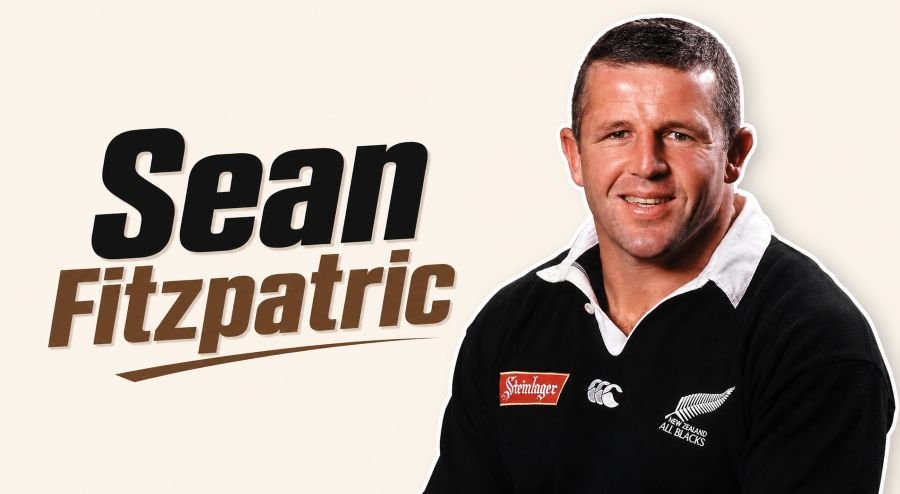
Sean Fitzpatrick Biography: Inspiring Rugby Legacy
Discover Sean Fitzpatrick’s age, family background, education, rugby career, achievements, leadership and current work.

introdution
Sean Fitzpatrick is a former New Zealand rugby union player who became one of the greatest hookers in the history of the sport.
He represented the All Blacks in 92 Test matches, captained the national team 51 times and helped New Zealand win the first Rugby World Cup in 1987.
Like Australian legend David Campese, Fitzpatrick played with courage, confidence and a strong desire to win at the highest level.
Quick Bio
| Field | Details |
|---|---|
| Full Name | Sean Brian Thomas Fitzpatrick |
| Popular Name | Sean Fitzpatrick |
| Nickname | Fitzy |
| Date of Birth | 4 June 1963 |
| Age | 63 years old as of 2026 |
| Birthplace | Auckland, New Zealand |
| Nationality | New Zealander |
| Profession | Former rugby union player, analyst, speaker and sports administrator |
| Famous For | Captaining the New Zealand All Blacks |
| Playing Position | Hooker |
| Height | 1.83 m |
| Playing Weight | Around 105 kg |
| National Team | New Zealand All Blacks |
| Test Career | 1986–1997 |
| Test Matches | 92 |
| Tests as Captain | 51 |
| Test Wins | 74 |
| Major Achievement | 1987 Rugby World Cup winner |
| Father | Brian Fitzpatrick |
| Wife | Bronwyn Fitzpatrick |
| Children | Two daughters |
| Honour | Officer of the New Zealand Order of Merit |
| Current Public Role | Chairman of the Laureus World Sports Academy |
Who Is Sean Fitzpatrick?
Sean Fitzpatrick is a retired New Zealand rugby union player, former All Blacks captain and respected international rugby personality.
He played as a hooker, a physically demanding position that requires strength, accuracy, courage and a clear understanding of the game.
Fitzpatrick became famous for his leadership, durability and ability to perform under pressure. He was also highly effective in open play, making him different from many traditional hookers of his era.
His international career lasted from 1986 until 1997. During that period, he became one of the most trusted and influential members of the New Zealand team.
Why Is Sean Fitzpatrick Famous?
Sean Fitzpatrick is famous for captaining the All Blacks during one of the most successful periods in New Zealand rugby history.
He was part of the team that won the inaugural Rugby World Cup in 1987. That victory gave New Zealand its first Webb Ellis Cup and established Fitzpatrick as an important international player.
He later led the All Blacks to a series victory against the British and Irish Lions in 1993.
His greatest captaincy achievement came in 1996 when New Zealand won its first Test series on South African soil.
Early Life and Family Background
Sean Brian Thomas Fitzpatrick was born on 4 June 1963 in Auckland, New Zealand.
Rugby was already an important part of his family. His father, Brian “BBJ” Fitzpatrick, represented the All Blacks between 1951 and 1954.
Growing up with a former international player gave Sean an early understanding of the discipline and responsibility connected with wearing the New Zealand jersey.
Other New Zealand-born rugby leaders, including Dylan Hartley, also developed their competitive character in a country where rugby has a powerful cultural influence.
Education and School Rugby
Sean Fitzpatrick attended Mt Carmel School before studying at Sacred Heart College in Auckland.
Sacred Heart College has a strong sporting tradition and has produced several successful rugby players.
His school years helped him develop the values of teamwork, discipline, preparation and personal responsibility.
Fitzpatrick later represented Auckland University and played for New Zealand Universities before reaching senior provincial rugby.
Early Rugby Development
Fitzpatrick represented New Zealand Colts in 1983 and 1984.
He also played for New Zealand Universities during the middle of the 1980s, giving him valuable experience against strong young players.
His performances eventually earned him a place with Auckland, one of the most successful provincial teams in New Zealand rugby.
He was mainly used as a hooker, although his power and forward skills allowed him to cover other front-row responsibilities during his development.
All Blacks Debut
Sean Fitzpatrick made his Test debut for New Zealand against France on 28 June 1986.
He entered the All Blacks team during the period commonly associated with the “Baby Blacks.” Several established players were unavailable, creating opportunities for younger members of the squad.
Fitzpatrick immediately showed that he had the physical strength and mental confidence required for international rugby.
His early performances helped him remain in the national setup and prepared him for the biggest breakthrough of his career.
The 1987 Rugby World Cup
Fitzpatrick entered the 1987 Rugby World Cup as the second-choice hooker behind All Blacks captain Andy Dalton.
Dalton suffered an injury, allowing Fitzpatrick to enter the starting team. He took the opportunity and started all six matches during the tournament.
New Zealand defeated France in the final at Eden Park to become the first Rugby World Cup champion.
The victory changed Fitzpatrick’s career. He was no longer viewed as a temporary replacement but as one of the most important forwards in the national team.
Rise as New Zealand’s Leading Hooker
After the 1987 World Cup, Fitzpatrick became New Zealand’s established first-choice hooker.
He developed a reputation for accurate lineout throwing, powerful scrummaging and strong defensive work.
His mobility also allowed him to support attacking moves and handle the ball confidently in open play.
These qualities helped him become a model for the modern hooker, who is expected to contribute in every part of the game.
Becoming All Blacks Captain
Sean Fitzpatrick became captain of the All Blacks in 1992.
The position placed him under enormous pressure because New Zealand rugby supporters expect the national team to compete for victory in every match.
Fitzpatrick responded by setting high standards for fitness, preparation and personal accountability.
His demanding leadership style can be compared with the focus on modern rugby leadership seen in other successful international captains.
Leadership Style
Fitzpatrick believed that a captain had to lead through actions rather than words alone.
He trained with intensity and expected his teammates to respect the standards connected with the All Blacks jersey.
His leadership was direct and competitive. He was not afraid to challenge players when he believed the team was falling below its expected level.
That approach helped create a strong team culture built around responsibility, preparation and trust.
The 1993 British and Irish Lions Series
One of Fitzpatrick’s first major successes as captain came against the British and Irish Lions in 1993.
New Zealand won the three-match series 2–1.
The Lions presented a physical and tactical challenge, but the All Blacks responded strongly in the deciding Test.
Winning the series strengthened Fitzpatrick’s reputation as a captain who could guide his team through pressure.
The 1995 Rugby World Cup
Fitzpatrick captained New Zealand at the 1995 Rugby World Cup in South Africa.
The All Blacks produced several impressive performances and reached the final after defeating England in the semi-final.
South Africa won the final after extra time. The defeat became one of the most painful moments of Fitzpatrick’s career.
However, reaching the final and leading the team during such an important tournament remained a major part of his rugby story.
Other World Cup-winning rugby players have also shown how major tournaments can define a player’s public image and long-term legacy.
Historic 1996 South Africa Series
The greatest achievement of Fitzpatrick’s captaincy came during New Zealand’s 1996 tour of South Africa.
Before that tour, the All Blacks had never won a Test series on South African soil.
New Zealand secured the series and completed one of the most important achievements in All Blacks history.
Fitzpatrick later identified the victory as the greatest moment of his rugby career because earlier generations had repeatedly tried to achieve the same result.
Auckland Provincial Career
Fitzpatrick played for Auckland during one of the strongest periods in the province’s history.
The Auckland team dominated New Zealand provincial rugby during the late 1980s and much of the 1990s.
He contributed through his forward play, experience and leadership.
His provincial career also allowed him to build strong combinations with several players who later became important members of the All Blacks.
Blues Career
Fitzpatrick joined the Blues when the Super 12 competition began in 1996.
The Blues won the first two Super 12 championships in 1996 and 1997.
His experience and professional standards helped the new team establish a winning culture from its earliest seasons.
In May 2026, Fitzpatrick became one of the first three players inducted into the Blues Hall of Fame, alongside Zinzan Brooke and Carlos Spencer.
Sean Fitzpatrick Career Statistics
According to his official World Rugby Hall of Fame profile, Fitzpatrick built one of the strongest records of his generation.
| Career Record | Total |
|---|---|
| All Blacks Test matches | 92 |
| Tests as captain | 51 |
| Test victories | 74 |
| Consecutive Tests | 63 |
| Test tries | 12 |
| Test points | 55 |
| Total All Blacks matches | 128 |
| Auckland appearances | 127 |
| Blues appearances | 25 |
His run of 63 consecutive Test appearances showed remarkable fitness and consistency.
He started 91 of his 92 Tests, demonstrating how important he was to New Zealand throughout his international career.
Major Achievements
Sean Fitzpatrick’s major rugby achievements include:
- Winning the 1987 Rugby World Cup
- Captaining the All Blacks in 51 Tests
- Playing 92 international Tests
- Winning 74 Tests with New Zealand
- Completing 63 consecutive Test appearances
- Winning the 1993 British and Irish Lions series
- Winning the first Tri-Nations competition in 1996
- Leading New Zealand to its first Test-series victory in South Africa
- Winning Super 12 titles with the Blues in 1996 and 1997
- Entering the World Rugby Hall of Fame
- Becoming an inaugural Blues Hall of Fame inductee in 2026
Awards and Honours
Fitzpatrick was appointed an Officer of the New Zealand Order of Merit in the 1997 New Year Honours.
The honour recognised his services to rugby and his contribution to New Zealand sport.
He was selected as the hooker in Rugby World magazine’s Team of the Century in 1999.
He later entered the International Rugby Hall of Fame, the New Zealand Sports Hall of Fame and the World Rugby Hall of Fame.
Playing Style and Strengths
Sean Fitzpatrick was a powerful and mobile hooker.
He performed the traditional duties of a front-row forward but also had the speed and handling ability to contribute in open play.
His lineout throwing was accurate, while his physical strength made him effective in scrums, tackles, rucks and mauls.
He was also known for understanding the flow of a match and appearing in useful positions at important moments.
Fitness and Work Ethic
Fitzpatrick’s 63 consecutive Tests reflected his exceptional durability.
International rugby is physically demanding, particularly for a front-row player who faces repeated contact throughout every match.
He maintained his place by combining natural strength with preparation, recovery and mental toughness.
His work ethic later became an important part of the leadership lessons he shared with businesses, athletes and public audiences.
Career Challenges
Fitzpatrick experienced defeats, injuries and intense public pressure during his international career.
The 1995 Rugby World Cup final loss was one of his biggest sporting disappointments.
He was also affected by a knee problem during the final stage of his playing career.
Despite those challenges, he continued representing New Zealand until his final Test against Wales at Wembley on 29 November 1997.
Retirement From Rugby
Sean Fitzpatrick retired after a Test career lasting more than 11 years.
His retirement ended an era in which he had become the most recognised hooker and captain in New Zealand rugby.
He left the game with 92 Test appearances, which was an outstanding total for a forward at that time.
His influence continued because later hookers were regularly compared with the standards he had established.
Life After Rugby
After retiring, Fitzpatrick remained closely connected to rugby.
He worked as a rugby consultant, television analyst, newspaper contributor and international sports speaker.
His media experience included rugby coverage for major broadcasters and appearances connected with Rugby World Cup tournaments.
His career also connected him with British sports journalism and the wider world of television analysis and sports commentary.
Business and Leadership Work
Fitzpatrick used lessons from professional rugby to build a career in leadership and business.
His public speaking focuses on preparation, teamwork, responsibility and the creation of high-performance cultures.
He has held board and advisory positions connected with rugby clubs, media organisations and sporting projects.
He has also been associated with sports hospitality and leadership ventures developed after his playing retirement.
Laureus and Charity Work
Sean Fitzpatrick joined the Laureus World Sports Academy in 2000.
He became chairman in May 2016 and continues to hold that position as of June 2026.
The Laureus World Sports Academy uses sport to support young people affected by poverty, discrimination, violence and limited opportunities.
Fitzpatrick has visited charitable sports programmes and publicly promoted the idea that sport can create confidence, discipline and social change.
Books Written by Sean Fitzpatrick
Fitzpatrick has written or co-written books about rugby, captaincy and leadership.
Fronting Up: The Sean Fitzpatrick Story explored his early life and rise through New Zealand rugby.
Turning Point: The Making of a Captain focused on his growth as a leader and the demands of captaining the All Blacks.
Winning Matters shared lessons from elite sport that could also be applied to business, teamwork and personal development.
Personal Life
Sean Fitzpatrick is married to Bronwyn Fitzpatrick.
The couple have two daughters and have lived in the United Kingdom for many years.
Fitzpatrick generally keeps his family life outside constant public attention.
His public work is mainly focused on rugby, leadership, charitable sport and major sporting events.
Public Image
Fitzpatrick is remembered as a tough, demanding and highly competitive leader.
Supporters respected his willingness to accept responsibility during both victories and defeats.
He was not known for seeking personal attention. His public identity was connected more closely with team performance and the standards of the All Blacks.
After retirement, he developed a calmer public role as an analyst and speaker while keeping the direct communication style that defined his captaincy.
Current Status
As of June 2026, Sean Fitzpatrick is retired from professional rugby but remains active in international sport.
He continues serving as chairman of the Laureus World Sports Academy.
He also appears at rugby events, leadership programmes, charity activities and media discussions.
His 2026 induction into the Blues Hall of Fame provided fresh recognition of his contribution to Auckland and Super Rugby history.
Interesting Facts About Sean Fitzpatrick
- His father, Brian Fitzpatrick, was also an All Black.
- Sean was originally the second-choice hooker at the 1987 Rugby World Cup.
- He started every match after receiving his opportunity during the tournament.
- He played 63 consecutive Tests for New Zealand.
- He captained the All Blacks 51 times.
- He started 91 of his 92 Test appearances.
- His greatest rugby memory was the 1996 series victory in South Africa.
- He became one of the first inductees into the Blues Hall of Fame in 2026.
Sean Fitzpatrick’s Legacy
Sean Fitzpatrick is widely regarded as one of the greatest hookers in rugby union history.
His legacy includes a Rugby World Cup victory, historic Test-series success, international captaincy and remarkable consistency.
He helped change expectations around the hooker position by combining strength with mobility, handling and support play.
His work after retirement has extended his influence into sports administration, broadcasting, charity and leadership education.
Conclusion
Sean Fitzpatrick built an inspiring career through discipline, courage and a powerful commitment to team standards.
From his early years in Auckland to winning the 1987 Rugby World Cup, he became a central figure in New Zealand rugby history.
His 92 Tests, 51 captaincies and historic 1996 series victory in South Africa secured his place among the greatest All Blacks.
Even after retirement, his work with Laureus, rugby media and leadership organisations has allowed his experience to continue influencing sport around the world.
FAQs
Who is Sean Fitzpatrick?
He is a former New Zealand rugby union hooker and captain of the All Blacks.
What is Sean Fitzpatrick’s full name?
His full name is Sean Brian Thomas Fitzpatrick.
How old is Sean Fitzpatrick?
He is 63 years old as of June 2026.
Where was he born?
He was born in Auckland, New Zealand.
What position did he play?
He played as a hooker.
How many Tests did he play for New Zealand?
He represented the All Blacks in 92 Test matches.
Did Sean Fitzpatrick win the Rugby World Cup?
Yes, he helped New Zealand win the inaugural Rugby World Cup in 1987.
How many times did he captain the All Blacks?
He captained New Zealand in 51 Test matches.
Who was Sean Fitzpatrick’s father?
His father was Brian Fitzpatrick, who also represented the All Blacks.
What does Sean Fitzpatrick do now?
He works in sports leadership, media and charity and chairs the Laureus World Sports Academy.
Category: Biographies
Tags:
SEO Title:
Meta Description:
Focus Keyword: Sean Fitzpatrick Biography