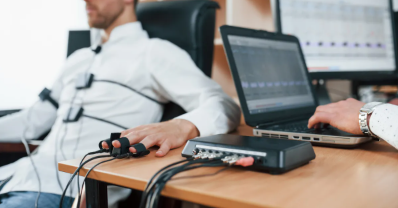

A polygraph test sounds almost mythical the first time you hear about it. Wires hooked up to your body. A machine quietly tracing your breathing, pulse, and sweat. An examiner watching closely while you answer simple yes-or-no questions. It feels like something that can peer straight into your mind and pull out the truth.
But here’s the thing—polygraphs don’t actually detect lies.
They detect stress.
And that changes everything.
What a Polygraph Really Measures
At its core, a polygraph test is a physiological monitoring tool. It tracks a few key signals: heart rate, blood pressure, respiration, and skin conductivity. When your body reacts—say your pulse spikes or your palms get sweaty—the machine records it.
The assumption is simple: when people lie, they feel stress. That stress triggers physical reactions. The machine picks them up.
Sounds reasonable, right?
But real life isn’t that clean.
Imagine you’re sitting in a quiet room, hooked up to a machine, being asked questions about something serious—maybe even something you didn’t do. Your body doesn’t know you’re innocent. It just knows the situation feels tense. Your heart rate goes up anyway.
Now flip it. Someone who’s lying but feels calm—maybe they’ve rehearsed, maybe they don’t feel guilt—might not show much reaction at all.
That’s the first crack in the idea that polygraphs are “truth machines.”
The Role of Anxiety and Personality
People don’t respond to stress the same way. That’s where psychology steps in.
Some people get nervous ordering coffee. Others can lie under pressure without breaking a sweat. A polygraph test doesn’t adjust for personality differences very well, even though those differences are huge.
Think about two people:
One is naturally anxious. They overthink everything. Even harmless questions make them tense.
The other is cool-headed, maybe even a bit detached. They stay calm in most situations.
Put both in a polygraph test. Ask them the same questions.
The anxious person might look deceptive. The calm one might look truthful—even if the opposite is true.
This isn’t a rare edge case. It’s common.
And it’s one of the biggest reasons polygraphs are controversial.
How the Test Is Structured
Polygraph tests aren’t just random questions. There’s a method behind them.
Examiners usually use something called the “control question test.” It works like this: they mix relevant questions (about the issue at hand) with control questions (broad, uncomfortable questions most people would feel uneasy answering).
For example, a control question might be:
“Have you ever lied to someone who trusted you?”
Almost everyone has. Even if it’s minor.
The idea is to compare your reactions. If you react more strongly to the relevant questions than the control ones, that might indicate deception.
But here’s where it gets tricky.
People interpret questions differently. One person might shrug off a control question. Another might spiral internally, thinking about past mistakes. Their reactions won’t be consistent, and that messes with the comparison.
The Power of Suggestion
A big part of a polygraph test isn’t the machine—it’s the setup.
Examiners often explain the test in a way that makes it seem extremely accurate. Not casually accurate. Nearly foolproof.
That’s intentional.
If you believe the machine will catch you no matter what, you’re more likely to feel stress when lying. That stress makes the readings more pronounced. In other words, the belief in the machine helps create the effect the machine is supposed to detect.
It’s a bit of a psychological loop.
There’s even a term for this kind of effect: expectancy. When people expect something to happen, their behavior often shifts in that direction.
So the polygraph isn’t just measuring your body. It’s also leaning on your beliefs.
Real-Life Moments Inside the Chair
Picture someone named Alex sitting for a polygraph as part of a job screening.
Alex hasn’t done anything wrong. But the stakes feel high. This job matters.
The examiner asks a control question: “Have you ever broken a rule at work?”
Alex remembers a small incident—taking a long lunch once, maybe bending a minor policy. It suddenly feels bigger under pressure. Heart rate rises.
Later, a relevant question comes: “Have you ever stolen from an employer?”
Alex answers truthfully: “No.”
But the reaction might be smaller than the earlier one. Why? Because the emotional weight attached to that remembered incident was stronger.
From the machine’s perspective, that pattern might look “clean.”
Now imagine someone else, Sam, who actually did something they’re hiding—but they’ve rationalized it. They don’t feel much guilt. When asked, they stay calm.
The machine might not flag them.
That gap between reality and measurement is where things get messy.
Can People Beat a Polygraph?
This question comes up a lot, and the honest answer is… sometimes.
People have tried different techniques to manipulate results. Some focus on controlling breathing. Others try to create stress during control questions—like doing mental math or recalling something upsetting—to even out their responses.
Some methods are exaggerated in movies, but the underlying idea isn’t entirely fiction.
Because the test relies on relative reactions, if someone can influence those reactions—especially during control questions—they might skew the results.
That said, it’s not easy to pull off consistently. Examiners are trained to watch for suspicious patterns. And trying too hard can backfire.
Still, the fact that this is even possible raises questions about reliability.
Why Polygraphs Still Exist
Given all the limitations, you might wonder why polygraph tests are still used.
Part of the answer is tradition. They’ve been around for decades, especially in law enforcement and government settings.
Another part is practical value—not as a lie detector, but as a psychological tool.
The process itself can encourage people to talk.
When someone believes the test will expose them, they might confess before or during the exam. In that sense, the polygraph acts more like a pressure mechanism than a truth machine.
It’s also used in specific contexts, like security screenings, where it’s just one piece of a larger evaluation—not the final word.
Still, many courts don’t accept polygraph results as solid evidence. That says a lot.
The Human Factor That Can’t Be Removed
At the end of the day, a polygraph test isn’t just about wires and data. It’s about interpretation.
The examiner plays a huge role. They decide how to phrase questions, how to read the charts, how to interpret patterns.
Two different examiners might look at the same results and come to different conclusions.
That subjectivity is hard to eliminate.
And then there’s the person being tested. Their mood, their past experiences, even how well they slept the night before—it all feeds into their physiological responses.
You can’t isolate “truth” from all of that noise.
What Polygraphs Reveal About Us
Here’s where it gets interesting.
Polygraphs say less about whether we can detect lies and more about how complex human behavior really is.
We like the idea of clear answers. Truth or lie. Yes or no.
But human reactions don’t follow clean lines.
We feel stress for all kinds of reasons—fear, guilt, embarrassment, pressure, even anticipation. A machine can pick up the signal, but it can’t always tell you the cause.
And that’s the core limitation.
In a way, polygraphs expose our desire for certainty. We want a tool that can cut through ambiguity. Something objective. Something final.
But the reality is messier.
So, Are Polygraph Tests Reliable?
Short answer: not reliably enough to be considered definitive.
They can provide clues. They can highlight patterns. They can even be useful in certain controlled situations.
But they’re not mind readers.
If you treat them as one piece of a bigger picture, they make more sense. If you treat them as a magic truth detector, you’re setting yourself up for disappointment.
Even professionals who use polygraphs often understand this nuance, even if it’s not always obvious from the outside.
The Takeaway
A polygraph test feels powerful because it taps into something deeply human—the fear of being exposed. It wraps that fear in technology and gives it a scientific look.
But underneath, it’s still dealing with something unpredictable: human emotion.
Stress doesn’t equal lying. Calm doesn’t equal truth.
And once you really understand that, the mystique starts to fade a bit.
What’s left is a tool—imperfect, sometimes useful, often misunderstood—that tells us less about deception and more about how complicated we are under pressure.