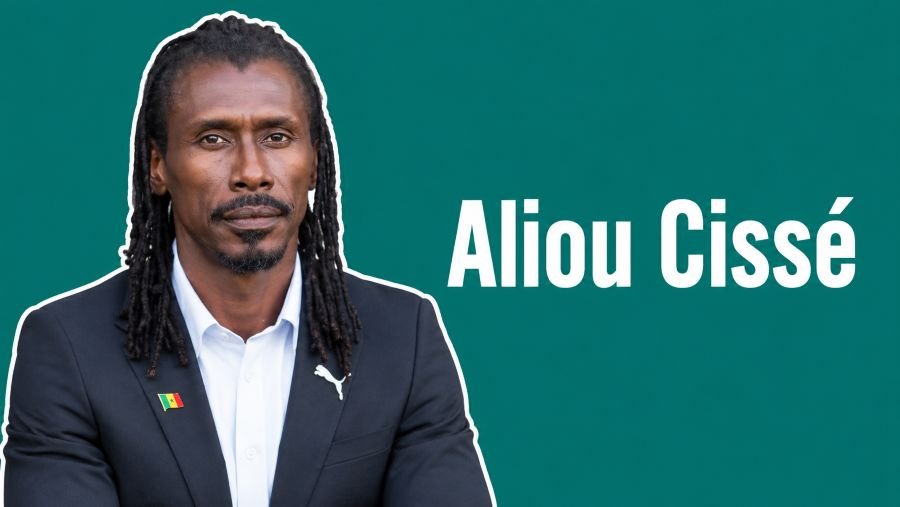
Aliou Cissé: Powerful Rise, Painful Setback, Historic Legacy
A complete human-written biography of the Senegalese football coach, former player, leader, and African football icon.

Introduction
Aliou Cissé is a respected Senegalese football coach and former professional footballer known for leadership, discipline, and national pride. He first became widely recognized as the captain of Senegal’s famous 2002 FIFA World Cup team, then became even more important in African football as the coach who guided Senegal to its first Africa Cup of Nations title.
His story includes success, pressure, painful defeat, and historic redemption. As a player, he represented Senegal with passion. As a coach, he helped turn a talented national team into continental champions. Today, he remains an important figure in African football and continues his coaching journey as head coach of Angola.
Quick Bio
| Field | Information |
|---|---|
| Full Name | Aliou Cissé |
| Real Name | Aliou Cissé |
| Alternative Name | Aliou Cisse |
| Gender | Male |
| Date of Birth | 24 March 1976 |
| Age | 50 years old |
| Birthplace | Ziguinchor, Senegal |
| Nationality | Senegalese |
| Citizenship | Senegal and France |
| Profession | Football coach, former footballer |
| Current Team | Angola national football team |
| Current Role | Head coach |
| Coaching Licence | CAF Pro Licence |
| Playing Position | Defensive midfielder, centre-back |
| Height | 1.80 m |
| Famous For | Senegal 2002 World Cup leadership and AFCON-winning coaching career |
Who Is Aliou Cissé?
Aliou Cissé is a former footballer who built his reputation through hard work, defensive strength, and leadership. During his playing career, he operated mainly as a defensive midfielder and could also play as a centre-back. His playing style was based on commitment, positioning, and physical presence rather than glamour.
He is now best known as a Senegalese football coach who made history with Senegal. His greatest coaching achievement came when he led the national team to its first Africa Cup of Nations title. That achievement gave him a special place in Senegalese football history.
Early Life and Background
Aliou Cissé was born in Ziguinchor, Senegal, on 24 March 1976. Ziguinchor is a city with a strong cultural identity, and his Senegalese roots have always been central to his public image. His journey from Senegal to professional football in Europe shows how talent, discipline, and opportunity shaped his path.
He later developed his football career in France, where he played for several clubs before moving to English football. His early football development prepared him for the demands of professional competition and helped him become a strong defensive player.
Football Formation and Coaching Training
Aliou Cissé’s formal school or university details are not added here because they are not publicly confirmed in reliable records. However, his football education came through years of professional playing experience in France, England, and international football with Senegal.
As a coach, he holds a CAF Pro Licence. This qualification reflects his professional coaching preparation and his ability to manage national teams at a high level. His coaching career shows how he transformed playing experience into leadership from the technical area.
Playing Career Start
Aliou Cissé began his senior football journey in France. He played for Lille and Sedan before joining Paris Saint-Germain, one of the most recognized clubs in French football. Playing in France gave him valuable experience in competitive European football.
His early years helped build his profile as a reliable defensive footballer. He was not mainly known for scoring goals, but for protecting the team, breaking up attacks, and bringing balance to midfield or defence.
Club Career Overview
During his club career, Aliou Cissé played for Lille, Sedan, Paris Saint-Germain, Montpellier, Birmingham City, Portsmouth, Sedan again, and Nîmes. These clubs gave him experience in different football cultures and competitive environments.
His time in England with Birmingham City and Portsmouth brought him into the Premier League spotlight. Playing in England tested his physical game and showed that his defensive qualities could fit demanding football systems.
Senegal International Career
Aliou Cissé became a major figure for Senegal during the 2002 FIFA World Cup. He captained a team that surprised the football world and reached the quarter-finals. That tournament remains one of Senegal’s proudest football moments.
He was also part of Senegal’s 2002 Africa Cup of Nations campaign. The team reached the final but lost on penalties. That painful experience later became part of his larger story because he eventually returned as coach and helped Senegal win the tournament.
Career Timeline
| Year / Period | Role / Team | Key Detail |
|---|---|---|
| 1990s | Lille | Early senior club career |
| Late 1990s | Sedan | Continued club development |
| 1998–2002 | Paris Saint-Germain | Major French club experience |
| 2001–2002 | Montpellier | Loan spell |
| 2002–2004 | Birmingham City | Premier League experience |
| 2004–2006 | Portsmouth | English football spell |
| 2006–2008 | Sedan | Returned to France |
| 2008–2009 | Nîmes | Final playing club |
| 1999–2005 | Senegal | International career |
| 2012 | Senegal | Caretaker coaching role |
| 2013–2015 | Senegal U23 | Youth national-team coaching |
| 2015–2024 | Senegal | Senior national-team head coach |
| 2025–2026 | Libya | National-team head coach |
| 2026–Present | Angola | National-team head coach |
Coaching Career Start
After retiring as a player, Aliou Cissé moved into coaching and became involved with Senegal’s national-team structure. His early coaching work included roles connected with Senegal’s senior team and under-23 setup.
This period was important because it helped him understand player development, national-team pressure, and the responsibility of representing a country. His leadership skills as a former captain made his move into coaching feel natural.
Senegal Coaching Success
Aliou Cissé became Senegal head coach in 2015 and stayed in charge until 2024. During that time, Senegal became one of Africa’s strongest and most consistent national teams. His work brought structure, confidence, and stability to the squad.
Under his leadership, Senegal reached the 2019 Africa Cup of Nations final and then won the delayed 2021 Africa Cup of Nations in 2022. That victory was historic because it was Senegal’s first AFCON title.
Breakthrough Moment
His breakthrough as a player came in 2002 when he captained Senegal at the FIFA World Cup. Senegal defeated world champions France in the opening match and reached the quarter-finals, earning global respect.
His breakthrough as a coach came when Senegal won the Africa Cup of Nations. That victory changed his legacy because it connected the pain of 2002 with the pride of 2022.
Current Team and Latest Status
Aliou Cissé is currently the head coach of the Angola national football team. He was appointed in April 2026 after leaving his role with Libya. His new job gives him another chance to shape an African national team.
With Angola, his focus is expected to be team organization, qualification campaigns, and long-term improvement. His experience with Senegal gives him strong credibility for this new challenge.
Major Achievements
Aliou Cissé captained Senegal during the 2002 FIFA World Cup and helped the country reach the quarter-finals. That tournament made him a national football symbol and one of the most recognizable Senegalese football figures of his generation.
As a coach, his biggest achievement was leading Senegal to its first Africa Cup of Nations title. He also guided Senegal to major tournaments and helped build one of the most respected national teams in Africa.
Awards and Honors
Aliou Cissé earned major recognition for his coaching success with Senegal. He was named AFCON Coach of the Tournament for the 2021 edition after Senegal’s title-winning campaign.
He was also recognized as CAF Men’s Coach of the Year in 2022. These honors reflect his impact as a Senegalese football coach and his place among the leading African coaches of his era.
Career Statistics
Aliou Cissé’s playing career included appearances across French and English football. Public football records list him as a defensive midfielder and centre-back with professional experience at clubs such as Paris Saint-Germain, Birmingham City, Portsmouth, Sedan, and Nîmes.
For Senegal, he represented the national team during one of its most memorable periods. His international career is remembered less for numbers and more for leadership, captaincy, and historic influence.
Public Image and Personality
Aliou Cissé is widely seen as disciplined, serious, calm, and focused. His public image is strongly connected with leadership and national pride. He often appears composed on the touchline and carries himself with authority.
His personality as a coach reflects patience and determination. He experienced painful defeats, criticism, and pressure, but his career shows resilience and belief in long-term progress.
Playing Style and Coaching Style
As a player, Aliou Cissé was known for defensive responsibility, strength, and tactical awareness. He was the kind of footballer who helped protect teammates and gave structure to the team.
As a coach, he is associated with organization, discipline, and team unity. His Senegal teams often played with physical strength, defensive balance, and emotional commitment.
Family Background and Personal Life
Aliou Cissé keeps most of his private family life away from public attention. One verified and emotional part of his family story is the 2002 Le Joola ferry disaster, in which he lost several family members.
That tragedy is an important part of his life story because it happened during a period when he was already a major national figure. His ability to continue his professional journey after personal loss shows strength and emotional resilience.
Philanthropy and Charity Work
Aliou Cissé has also been connected with charity and children’s rights work. He became a UNICEF National Ambassador in Senegal, a role linked to leadership, public influence, and support for children.
This part of his life adds another layer to his public image. He is not only known for football success but also for using his recognition to support social causes.
Biggest Success and Biggest Setback
The biggest success of Aliou Cissé’s career is winning the Africa Cup of Nations with Senegal as head coach. That moment gave Senegal its first title and completed a powerful football story.
One of his biggest setbacks was the 2002 AFCON final defeat as a player. Senegal lost on penalties, and the disappointment remained part of his public story until he returned as coach and helped the country win the trophy.
Legacy and Impact
Aliou Cissé’s legacy is built on two strong foundations: leadership as a player and achievement as a coach. He helped represent Senegal during a golden generation and later became the coach who delivered the country’s most important continental trophy.
His impact goes beyond one tournament. He helped show that African coaches can lead major national teams successfully, build long-term projects, and win at the highest level in continental football.
Conclusion
Aliou Cissé is one of the most important football personalities in Senegal’s modern history. His journey includes a powerful rise as a national-team captain, painful defeats, personal tragedy, and historic success as a coach.
As a Senegalese football coach, he turned experience into achievement and pressure into legacy. From Ziguinchor to the World Cup, from AFCON heartbreak to AFCON glory, his story remains one of discipline, resilience, and national pride.
FAQs
Who is Aliou Cissé?
He is a Senegalese football coach and former professional footballer.
When was he born?
He was born on 24 March 1976.
Where was he born?
He was born in Ziguinchor, Senegal.
What is his nationality?
He is Senegalese.
What is he famous for?
He is famous for captaining Senegal in 2002 and coaching Senegal to its first AFCON title.
What position did he play?
He played mainly as a defensive midfielder and could also play as a centre-back.
What personal tragedy affected his life?
He lost several family members in the 2002 Le Joola ferry disaster.
What is his current coaching role?
He is the head coach of Angola’s national football team.
What was his biggest coaching achievement?
He led Senegal to its first Africa Cup of Nations title.