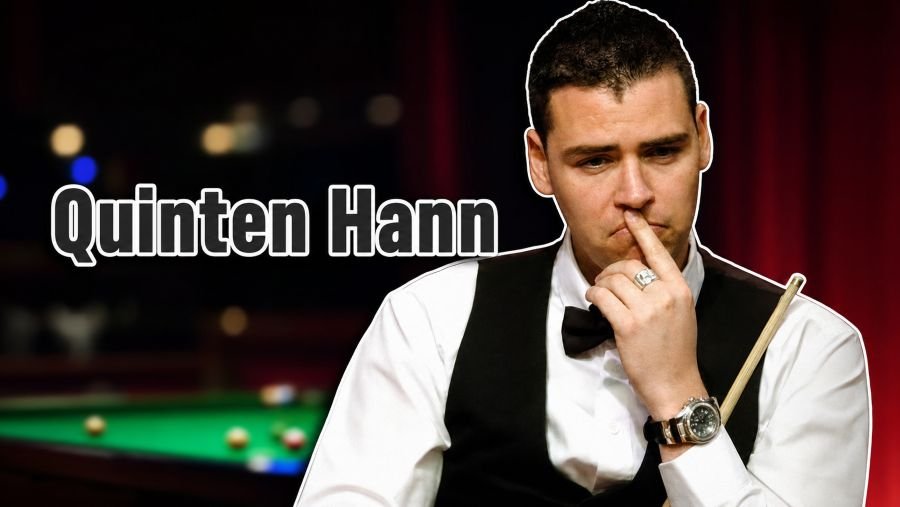
Quinten Hann Biography: Age, Snooker Career, Titles and Life Today
Quinten Hann was one of Australia’s most naturally talented and controversial snooker players, reaching the world’s top 16 before his professional career ended in 2006.

Introduction
Quinten Hann is an Australian former professional snooker and pool player. He became famous for his fearless attacking game, unusual pool-style break-off and unpredictable behaviour at major tournaments.
Hann reached a career-high world ranking of No. 14 and remained at that position for two seasons. He also won the 1994 IBSF World Under-21 Snooker Championship and the 1999 WEPF World Eight-ball Championship.
However, his promising career ended after he resigned from professional snooker and received an eight-year WPBSA suspension in 2006. This Quinten Hann biography explains his age, early life, career, achievements, controversy and verified life after snooker.
Who Is Quinten Hann?
Quinten Hann is a former Australian professional snooker player who competed on the main tour from 1995 until 2006. He was born on 4 June 1977 in Wagga Wagga, New South Wales, Australia.
He was known as “The Wizard of Oz” because of his Australian background and impressive cue skills. At his best, Hann could compete against many of the leading players in the world.
His powerful and entertaining playing style made him popular with some viewers. However, his early concessions, emotional reactions and unconventional shots also made him a controversial figure.
Readers interested in other well-researched personalities can explore more sports and public-figure stories on Bllog.
Quinten Hann Quick Facts
| Detail | Verified Information |
|---|---|
| Full name | Quinten Hann |
| Other documented name | Quinten Hunter |
| Date of birth | 4 June 1977 |
| Age | 49 years old, as of July 2026 |
| Birthplace | Wagga Wagga, New South Wales, Australia |
| Nationality | Australian |
| Profession | Former professional snooker and pool player |
| Nickname | The Wizard of Oz |
| Professional career | 1995–2006 |
| Highest world ranking | No. 14 |
| Major amateur title | 1994 IBSF World Under-21 Championship |
| Major pool title | 1999 WEPF World Eight-ball Championship |
| Best ranking-event result | 2004 Irish Masters semi-final |
| Current status | Retired from professional snooker |
Early Life and Childhood
Hann showed an unusual talent for cue sports when he was still a child. His mother, Amanda, reportedly supported his development and helped him receive proper snooker coaching.
He began playing pool at a young age and practised snooker on a table his mother bought for him. According to the Museum of the Riverina, Hann made his first century break when he was only ten.
At the age of 12, he qualified for the Australian men’s open snooker championship. He reached the last 16, an impressive achievement for someone so young.
Hann later became one of the youngest players to make a century break in an internationally televised competition. His early results showed that he had the skill to build a serious professional career.
His family moved to England to help him find better competitive opportunities. This was an important step because most of the world’s major professional snooker tournaments were based in the United Kingdom.
Amateur Career and World Under-21 Title
Hann reached the Australian Amateur Championship final while still in his early teenage years.
His biggest amateur achievement came in 1994 when he entered the IBSF World Under-21 Snooker Championship in Helsinki, Finland. He defeated English player David Gray 11–10 in a close final to become the world under-21 champion.
The victory confirmed that Hann was one of the most talented young snooker players of his generation. It also helped him prepare for the professional tour.
Beginning of His Professional Snooker Career
Quinten Hann turned professional in 1995.
His early seasons were mainly spent playing qualifying and satellite events. He gradually improved his ranking and started appearing in the televised stages of important tournaments.
In 1996, Hann represented Australia at the Snooker World Cup alongside Robby Foldvari and Stan Gorski. The Australian team reached the quarter-finals before losing to England.
Hann made a major step forward during the 1996–97 season. He reached the Thailand Open quarter-finals and moved significantly higher in the world rankings.
First Appearance at the Crucible
Hann qualified for the World Snooker Championship for the first time in 1998.
He faced future world champion Mark Williams in the first round at the Crucible Theatre in Sheffield. Hann produced a strong performance but lost the match 10–9.
Although he did not win, taking a leading player to the deciding frame increased his reputation. It proved that he could compete at snooker’s most famous venue.
Success in Pool
Hann was not limited to traditional snooker. His attacking instincts also made him an effective pool player.
He won the Lindrum Masters multi-cue tournament in New South Wales in 1998 and successfully defended the title in 1999.
Later in 1999, Hann won the WEPF World Eight-ball Championship. He defeated Terry Hunt 11–4 in the final and became the first player born outside the United Kingdom and Ireland to win the competition.
His pool background influenced how he played snooker. Instead of always using the traditional controlled break-off, Hann sometimes hit the pack of reds with power, scattering the balls around the table.
Rise Into the World’s Top 16
Hann continued improving during the early 2000s.
He reached the quarter-finals of the 2000 UK Championship despite breaking a bone in his foot during a parachute jump. Because of the injury, he famously played without shoes.
He also reached the Thailand Masters quarter-finals in 2001.
The 2001–02 season became one of the most important periods of his career. Hann defeated world No. 4 Ken Doherty at the Scottish Open and gained enough ranking points to enter the world’s top 16.
His official ranking rose to No. 14 for the 2002–03 season. He remained at No. 14 for the following season, making it the highest ranking of his professional career.
Memorable World Championship Matches
One of Hann’s most famous victories came at the 2002 World Snooker Championship.
He faced three-time Masters champion Paul Hunter in the first round. Hann recovered from a difficult position and won the match 10–9 in a deciding frame.
The result took him into the last 16, where he lost 13–3 to Stephen Lee.
Hann returned to the Crucible in 2003 and defeated former world champion John Parrott 10–5. He then faced Mark Williams in the second round.
Hann won the opening two frames, but Williams responded by winning 13 consecutive frames. Williams completed a 13–2 victory and later won the world title.
Best Professional Tournament Result
Hann’s best performance in a world-ranking tournament came at the 2004 Irish Masters.
He defeated John Higgins 6–4 in the quarter-final, giving him one of the biggest wins of his career. He then played Peter Ebdon in the semi-final.
The match was close, but Ebdon won 6–5. Despite the defeat, reaching the semi-final was Hann’s strongest result in a professional ranking event.
Hann never won a professional snooker ranking title.
Quinten Hann Career Statistics
Career databases record the following professional results for Hann:
- 246 matches played
- 158 matches won
- 88 matches lost
- Match-winning rate of approximately 64.23%
- 2,066 frames played
- 1,126 frames won
- Career-high world ranking of No. 14
- No professional ranking titles
- No official maximum 147 break
Cue-sports databases disagree slightly about his highest professional break. CueTracker records a break of 142 during the 1996–97 season, while some older profiles list 141 or 143.
Playing Style and Public Image
Hann was an attacking player who enjoyed taking difficult shots. He had strong potting skills and could quickly build frame-winning breaks when he was confident.
His most recognisable move was the pool-style break-off. Instead of gently sending the cue ball into the pack of reds and returning it to safety, Hann sometimes struck the reds with power.
The tactic created an open table, but it could also give his opponent an immediate scoring opportunity.
Hann’s behaviour was often as widely discussed as his talent. He occasionally conceded frames when many balls remained on the table and sometimes appeared frustrated during matches.
These actions divided snooker viewers. Some found him entertaining, while others believed his conduct did not match the traditions of the sport.
Why Did Quinten Hann Leave Snooker?
In 2005, undercover newspaper reporters recorded Hann discussing an arrangement to manipulate the result of a future match for money.
The planned arrangement was not completed. No money changed hands, and the related China Open match was played normally. However, the WPBSA opened a disciplinary investigation.
Hann resigned from the World Professional Billiards and Snooker Association in February 2006, shortly before the hearing. His resignation effectively ended his professional career.
The independent disciplinary panel proceeded without him. It found that Hann had entered an unlawful agreement to fix snooker results for financial gain.
He received an eight-year suspension from WPBSA tournaments and was ordered to pay £10,000 in legal costs. Contemporary reporting by The Guardian explained Hann’s suspension and the disciplinary finding.
The suspension lasted until 2014, but Hann did not return to the professional snooker tour.
Other Legal Cases
Hann faced serious criminal allegations during his professional career, but the outcomes must be reported accurately.
In 2002, an Old Bailey jury acquitted him of rape. Hann maintained that the encounter had been consensual.
In 2005, another jury found him not guilty of two sexual-assault charges, actual bodily harm and common assault.
Therefore, Hann was not convicted in either of these criminal cases. These acquittals were separate from the WPBSA disciplinary finding concerning match-fixing.
Life After Professional Snooker
Following his departure from snooker, Hann worked in Australia’s financial-services industry under the name Quinten Hunter.
He became associated with Monarch FX Group, where he worked as a director and general manager. The business provided foreign-exchange trading signals to customers.
In December 2014, Australia’s Federal Court found that Monarch FX had provided certain financial services without the necessary licence or authorisation.
The court restrained Monarch FX and Hunter from carrying on a financial-services business for four years. The Australian Securities and Investments Commission records also confirm that Quinten Hunter used the names James Sonny Quinten Hunter and Quinten Hann.
No reliable recent source confirms Hann’s occupation after this period.
Where Is Quinten Hann Now?
As of July 2026, Quinten Hann remains retired from professional snooker.
There is no verified evidence that he is planning a competitive comeback. His current employer, business activities and place of residence have not been confirmed by reliable recent sources.
Hann does not appear to maintain a clearly verified public presence on major social-media platforms.
Because his present life is largely private, claims about his current location or occupation should be treated carefully unless supported by an official source.
Quinten Hann’s Net Worth
Quinten Hann’s current net worth is not publicly verified.
Some entertainment and biography websites may publish estimated figures, but these numbers are not supported by reliable financial documents. His exact career earnings, investments, property and current income are also not publicly confirmed.
It would therefore be misleading to give Hann a precise net-worth figure.
Is Quinten Hann Married?
Reliable public sources do not confirm Hann’s current marital status, wife, partner or children.
There are also no trustworthy records providing a verified relationship timeline. Private or unsupported relationship claims should not be presented as facts.
Quinten Hann’s Legacy
Quinten Hann remains one of the most unusual Australian players to compete at professional snooker’s highest level.
His achievements were significant. He became a world under-21 champion, won a world eight-ball title, reached No. 14 in the snooker rankings and defeated several established champions.
He was also one of the first Australian players after Eddie Charlton to reach the world’s top 16.
However, Hann’s career is equally remembered for unpredictable behaviour and the disciplinary case that ended his time on the professional tour.
His story shows how natural ability can create major opportunities, but it also demonstrates how decisions away from the table can change an athlete’s career.
Frequently Asked Questions
How Old Is Quinten Hann?
Quinten Hann was born on 4 June 1977. He is 49 years old as of July 2026.
What Is Quinten Hann Famous For?
He is famous for being an Australian professional snooker player who reached world No. 14. He also won the 1994 IBSF World Under-21 Championship and the 1999 WEPF World Eight-ball Championship.
Did Quinten Hann Win a Ranking Title?
No. His best ranking-event result was reaching the semi-final of the 2004 Irish Masters.
What Was Quinten Hann’s Highest World Ranking?
His highest professional snooker ranking was world No. 14. He held that position during the 2002–03 and 2003–04 seasons.
Why Was Quinten Hann Banned?
A WPBSA disciplinary panel found in 2006 that Hann had entered an agreement to manipulate snooker results for financial gain. He received an eight-year suspension and was ordered to pay £10,000 in legal costs.
Did Quinten Hann Return After His Ban?
No verified evidence shows that Hann returned to the professional snooker tour after his suspension ended.
What Does Quinten Hann Do Now?
His current occupation is not publicly confirmed. The latest reliable records establish that he is a former professional player, but they do not identify a current employer or business role.
Final Words
Quinten Hann had the ability to become one of Australia’s greatest modern snooker players. He won important junior and pool titles, entered the world’s top 16 and produced memorable performances at the Crucible.
His professional journey ended much earlier than expected, leaving a complicated legacy of talent, entertainment and controversy. Today, he remains a recognised name in snooker history, even though little verified information is available about his current private life.