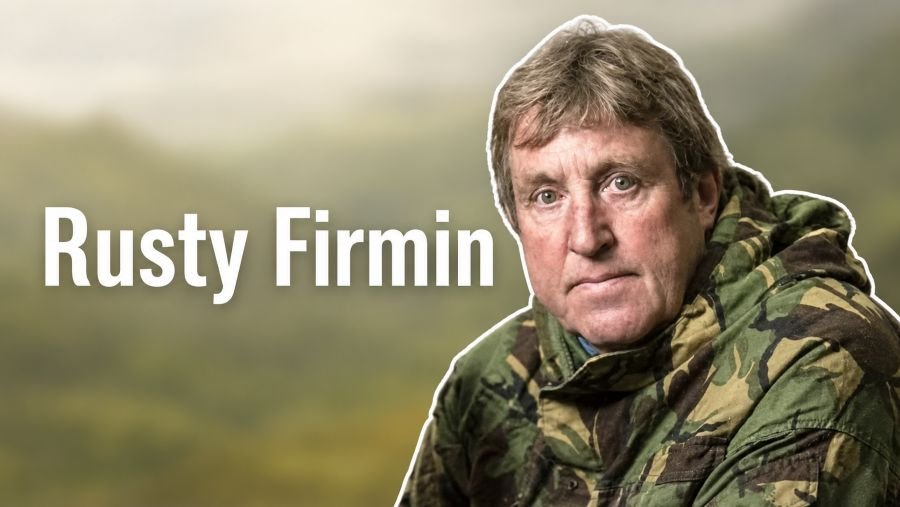
Rusty Firmin: Fearless SAS Veteran Behind Operation Nimrod
How a Carlisle teenager became an SAS assault-team leader, author, security consultant and respected public speaker

Introdution
Rusty Firmin is a former British Army soldier best known for his part in the SAS assault that ended the 1980 Iranian Embassy siege in London. He led one of the assault elements during Operation Nimrod, an event watched by millions on live television.
His story did not begin with fame or privilege. He entered military life as a teenager, served in the Royal Artillery and 29 Commando, passed the difficult SAS selection process and completed dangerous assignments in Northern Ireland, the Falklands and other locations.
Quick Bio
| Field | Details |
|---|---|
| Public name | Rusty Firmin |
| Birth year | 1950 |
| Birthplace | Carlisle, Cumbria, England |
| Nationality | British |
| Profession | Former soldier, author, security consultant and public speaker |
| Famous for | Leading part of the SAS assault during Operation Nimrod |
| British Army service | 27 years |
| SAS service | 15 years |
| SAS unit | B Squadron, 22 SAS |
| Previous units | Royal Artillery and 29 Commando Royal Artillery |
| Notable conflicts | Northern Ireland and the Falklands |
| Books | The Regiment and Go! Go! Go! |
| Film connection | Technical adviser and real-life subject portrayed in 6 Days |
| Current public work | Speaking, consultancy, media appearances and writing |
Who Is Rusty Firmin?
Born in Carlisle in 1950, Firmin became a British Army veteran whose career covered conventional artillery service, Commando training, counterterrorism and special operations.
He entered the Army at 15 and remained in military service for 27 years. His official website now presents him as an author, public figure, television personality, motivational speaker and consultant based in Surrey.
Although the Iranian Embassy operation made him publicly recognisable, it represented only one part of a much longer career. He spent ten years in the Royal Artillery before serving approximately 15 years with the SAS.
Early Life and Entry into the Army
His early years were not always stable. At the age of 15, he was taken to the Junior Leaders Regiment Royal Artillery at Bramcote, near Nuneaton.
At that point, he reportedly wanted to follow the style and energy of musicians such as Mick Jagger rather than become a career soldier. Military life gradually gave him discipline, practical skills, strong friendships and a sense of direction.
He later joined 49 Field Regiment Royal Artillery. His early Army career included service in Northern Ireland, where soldiers operated in a tense and dangerous environment.
This progression from teenage recruit to experienced soldier offers a different form of military leadership from the senior-command career of Richard Dannatt, who later became Chief of the General Staff.
Royal Artillery and Commando Training
After gaining experience in the Royal Artillery, Firmin volunteered for 29 Commando Regiment Royal Artillery.
Passing the Commando Course required physical strength, endurance, field skills and mental resilience. Successful completion allowed him to wear the Green Beret associated with Commando-trained personnel.
His sporting background helped him meet the physical demands of military life. He played football at a high level and represented the British Army. The W&N author profile describes him as a fitness enthusiast who played Army football before progressing into special-forces service.
The Commando environment also exposed him to more advanced operational training. This experience encouraged him to attempt SAS selection.
Joining the SAS
Firmin passed the Special Air Service selection process and joined B Squadron, 22 SAS, in 1977.
SAS selection is designed to test endurance, independent thinking, navigation, physical fitness and a candidate’s ability to work under intense pressure. Passing selection was therefore one of the most important turning points in his career.
His later training covered areas such as close-quarter combat, parachuting, demolitions, medical work, counterterrorism and personal protection.
The secretive nature of such work means that many operational details have never been released. Similar limits affect public information about intelligence figures such as former MI6 chief Alex Younger, whose most sensitive duties also remained outside public view.
The Iranian Embassy Siege
On 30 April 1980, six armed men entered the Iranian Embassy in South Kensington, London. They took 26 people hostage, including embassy employees, visitors and a police officer.
The crisis lasted six days. Police negotiators initially worked to secure a peaceful outcome, but the situation became more dangerous after a hostage was killed.
The government then authorised the SAS to storm the building. The rescue mission was given the codename Operation Nimrod. The National Army Museum describes it as one of the most famous counterterrorism operations in British history.
Rusty Firmin’s Role in Operation Nimrod
At the time of the siege, Firmin was a junior SAS non-commissioned officer. He was given command responsibility within one of the two main assault teams.
His element entered from the rear of the embassy as different SAS groups attacked several points almost simultaneously. The operation involved explosives, stun grenades, close-quarter movement and the urgent evacuation of hostages.
The raid ended the siege in approximately 17 minutes. Most of the remaining hostages were rescued, five gunmen were killed and one was captured.
The assault was shown live on British television. It transformed the SAS from a largely secretive military unit into an organisation recognised around the world.
Firmin later became known as “the man with no gloves” because photographs showed him entering the operation without the black gloves worn by many of the other soldiers.
Readers can hear his own account through the Legasee veteran interview, in which he discusses his military service, Northern Ireland and the Falklands.
Why Operation Nimrod Became So Important
The mission was important for several reasons.
First, it demonstrated how specialist military units could respond to a hostage crisis in a crowded capital city. Second, millions of viewers watched the operation as it happened, giving the public a rare look at the SAS.
It also influenced later thinking about counterterrorism, crisis management, police negotiation and special-forces training.
The mission’s success depended on preparation, teamwork and fast decision-making. Those qualities also appear in strategic national-security careers such as that of former diplomat and intelligence leader John Sawers.
Service in Northern Ireland and the Falklands
Operation Nimrod was not Firmin’s only dangerous assignment.
He served on missions connected with Northern Ireland and later took part in the 1982 Falklands conflict. His published memoir identifies both campaigns as major parts of his SAS experience.
His Falklands service included deployment with B Squadron. The conflict required British forces to operate far from home in difficult weather, rough seas and challenging terrain.
Some details of his operational assignments remain restricted because of the confidential nature of special-forces work. His confirmed record nevertheless shows experience in counterterrorism, overseas operations, surveillance, protection and hostile environments.
Later SAS Career
He remained connected with SAS service for approximately 15 years.
During his later career, he worked in specialist training and support roles. His experience covered preparation for counterterrorist incidents, protective security and the development of other personnel.
He eventually moved from B Squadron to an appointment connected with 23 SAS before completing his Army career.
His combination of operational experience and instructional work meant that he was not only carrying out missions. He was also passing skills, standards and lessons to other soldiers.
Life After the British Army
After leaving the Army, Firmin moved into private security and consultancy.
His post-service work reportedly included close protection, risk assessment, security management, hostile-environment training and operational advice. He worked internationally and applied military planning methods to civilian security problems.
His official professional history also describes assignments involving diplomats, corporate personnel, media teams and other clients operating in potentially dangerous areas.
This move from secretive public service to writing and consultancy has similarities with former MI5 officer and author Tom Marcus, who also used professional security experience to educate a wider audience.
Books Written by Rusty Firmin
The Regiment: 15 Years in the SAS
The Regiment tells the story of his childhood, early Army service, Commando training, SAS selection and operational career.
The book covers Northern Ireland, the Iranian Embassy siege, the Falklands and his later years in the military. Osprey Publishing describes it as a personal account of 15 years inside one of the world’s best-known special-operations units.
Readers can find the verified publication information on the official Osprey Publishing page for The Regiment.
Go! Go! Go!
Firmin also co-authored Go! Go! Go! with Will Pearson.
The book examines the complete Iranian Embassy crisis rather than focusing only on the final assault. It covers the hostages, gunmen, police negotiators, government decisions, SAS preparations and events inside the embassy.
W&N describes it as a detailed account drawing on material from the former soldier, police and British government sources.
Connection to the Film 6 Days
The 2017 film 6 Days dramatised the Iranian Embassy siege.
British actor Jamie Bell played Firmin in the film. The former soldier helped the production by sharing first-hand knowledge and advising on the movement, equipment and behaviour of an SAS assault team.
His official website continues to highlight the film and explains that Bell portrayed him during the retelling of the siege.
The film introduced the story to younger viewers who had not seen the original television coverage. However, it remains a dramatisation rather than a complete historical record.
Public Speaking and Leadership Lessons
Firmin later became a public and motivational speaker.
His talks commonly focus on preparation, fear, teamwork, risk and leadership under pressure. He explains how disciplined training helps people make decisions when normal plans begin to fail.
His message is not that effective leaders feel no fear. Instead, good preparation allows them to control their reaction and continue working towards the objective.
These lessons connect his story with wider discussions about military command, including the international leadership career of former NATO commander Wesley Clark.
Public Image and Values
His public reputation is built around direct experience rather than military entertainment.
In interviews, he has criticised unrealistic portrayals of SAS selection and operations. He has also challenged people who make false claims about military service.
The values most clearly associated with his public work are:
- Preparation before action
- Loyalty to the team
- Physical and mental discipline
- Responsibility for decisions
- Respect for genuine service
- Calm thinking during danger
These principles reflect the culture of professional military units, where individual ability must support the wider team.
Current Work
His official website continues to present him as an author, consultant, public speaker and media contributor.
It promotes his books, interviews, speaking work and first-hand material connected with Operation Nimrod. The site also states that he served for 27 years in the British Army and describes that service as a central part of his life.
Career Timeline
| Year | Career event |
|---|---|
| 1950 | Born in Carlisle, England |
| 1965 | Entered the Junior Leaders Regiment Royal Artillery |
| Late 1960s | Joined 49 Field Regiment Royal Artillery |
| Later Army service | Completed Commando training and served with 29 Commando Royal Artillery |
| 1977 | Passed SAS selection and joined B Squadron, 22 SAS |
| 1980 | Led part of the assault during Operation Nimrod |
| 1982 | Served during the Falklands conflict |
| Later 1980s | Continued specialist SAS operations and training |
| Early 1990s | Completed approximately 27 years in the British Army |
| Post-Army career | Worked in private security, protection, training and consultancy |
| Later public career | Published books and became a speaker and media contributor |
| 2017 | Portrayed by Jamie Bell in 6 Days |
The main dates and roles are supported by publisher records, his official profile and his recorded veteran interview.
Frequently Asked Questions
What is Rusty Firmin famous for?
He is famous for leading part of the SAS assault during Operation Nimrod, which ended the 1980 Iranian Embassy siege in London.
When was Rusty Firmin born?
He was born in Carlisle in 1950. He is therefore 75 or 76 during 2026, depending on his birthday.
Was Rusty Firmin in the SAS?
Yes. He joined B Squadron, 22 SAS, in 1977 after serving in the Royal Artillery and 29 Commando Royal Artillery.
How long did he serve in the Army?
His official website states that he served for 27 years in the British Army. Approximately 15 of those years were spent in SAS service or related appointments.
Did he serve in the Falklands?
Yes. His military record and published work confirm service connected with the 1982 Falklands conflict.
Which books did he write?
His major published works are The Regiment: 15 Years in the SAS and Go! Go! Go!, written with Will Pearson.
Who played Rusty Firmin in 6 Days?
Jamie Bell portrayed him in the 2017 film about the Iranian Embassy siege.
What does he do now?
His current public work includes speaking, writing, consultancy and media appearances.
Final Thoughts
Rusty Firmin’s journey from a teenage Royal Artillery recruit to an SAS assault-team leader is a story of training, discipline and responsibility.
Operation Nimrod made him publicly recognisable, but his wider record includes 27 years of Army service, Commando training, SAS operations, the Falklands conflict, private-security work, published books and public speaking.
His lasting importance comes not only from one dramatic event. It also comes from the lessons he shares about preparation, teamwork and remaining focused when a situation becomes dangerous.