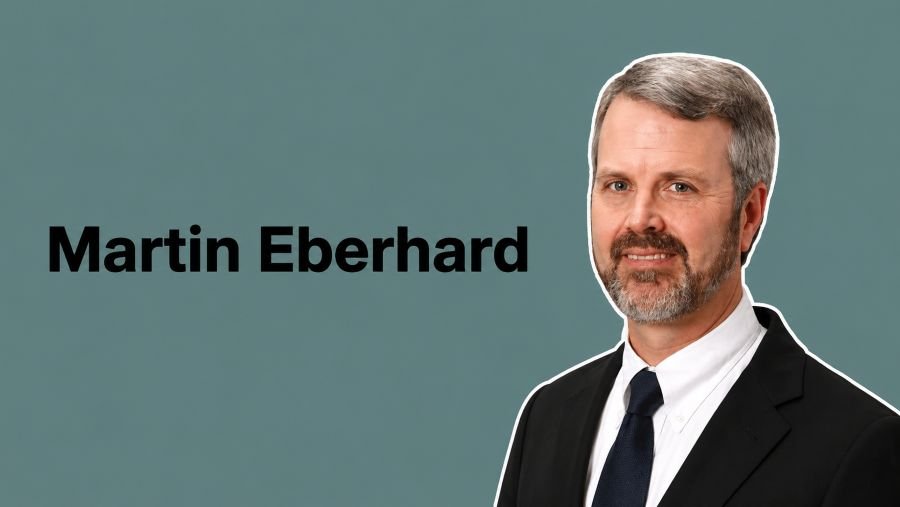
Martin Eberhard Biography: Powerful Tesla Visionary
The engineer who helped turn electric cars into fast, desirable and practical vehicles

Introdution
Martin Eberhard is an American engineer, inventor and technology entrepreneur best known as a co-founder and the original chief executive officer of Tesla Motors.
Long before electric cars became common, he believed battery-powered vehicles could deliver speed, long driving range and an exciting experience without depending on petrol.
He is the engineer whose early vision and business strategy helped create the original Tesla Roadster.
Quick Bio
| Field | Information |
|---|---|
| Full Name | Martin Forest Eberhard |
| Public Name | Martin Eberhard |
| Date of Birth | May 15, 1960 |
| Age | 66 years old, as of June 2026 |
| Birthplace | Berkeley, California, United States |
| Raised In | Kensington, California |
| Nationality | American |
| Profession | Engineer, inventor and entrepreneur |
| Education | BS in Computer Engineering and MS in Electrical Engineering |
| University | University of Illinois Urbana-Champaign |
| Famous For | Co-founding Tesla Motors |
| Tesla Role | Co-founder, original chairman and founding CEO |
| Spouse | Carolyn Eberhard |
| Children | Two |
| Current Status | Retired entrepreneur and engineer |
Who Is Martin Eberhard?
Martin Forest Eberhard is a Silicon Valley engineer whose career connects computer terminals, electronic books, battery technology and electric vehicles.
He co-founded Tesla Motors with Marc Tarpenning in 2003 and served as its first CEO. His goal was not simply to build an environmentally friendly car.
He wanted to prove that an electric vehicle could be faster, more efficient and more enjoyable than many traditional petrol-powered cars.
His work helped change the public image of electric vehicles. Instead of presenting them as slow or limited machines, Tesla introduced a premium sports car built around performance.
Early Life and Interest in Engineering
He was born on May 15, 1960, in Berkeley, California. He spent much of his childhood in Kensington, a community in the Berkeley Hills.
His interest in electronics appeared at a young age. During his school years, he experimented with electronic equipment and learned through practical projects.
He has explained that he built his own computer before receiving formal engineering training. This early curiosity later developed into a professional interest in computers, product design and electrical systems.
His childhood interest was not limited to studying existing technology. He enjoyed understanding how machines worked and how they could be improved.
Education at the University of Illinois
Eberhard attended the University of Illinois Urbana-Champaign, where he developed the technical knowledge required for his future career.
He completed a bachelor’s degree in computer engineering in 1982. He then earned a master’s degree in electrical engineering in 1984.
According to his University of Illinois engineering profile, his education gave him a strong foundation in computer systems, electronics and problem-solving.
He has spoken positively about professors who challenged him to think deeply instead of accepting simple answers.
He has also encouraged engineering students to study writing, philosophy and history. In his view, engineers benefit from understanding people and society as well as technology.
Beginning of His Professional Career
Eberhard began his career as an electrical engineer at Wyse Technology.
One of his first important commercial projects was the WY-30 ASCII computer terminal. The work gave him direct experience in developing products that could be manufactured and sold at scale.
He later worked as vice president of electronics at Belfort Memory International.
These early positions taught him that successful technology requires more than a strong idea. A product must also be reliable, manufacturable and useful to customers.
Network Computing Devices
In 1987, he co-founded Network Computing Devices, commonly called NCD.
He worked as the company’s chief engineer and helped develop network terminals based on the X Window System.
The company eventually completed an initial public offering. This experience introduced him to the challenges of building a technology company, managing engineering teams and bringing complex products to market.
It also prepared him for larger entrepreneurial projects later in his career.
NuvoMedia and the Rocket eBook
During the 1990s, Eberhard began working closely with Marc Tarpenning.
The two entrepreneurs co-founded NuvoMedia in 1997. The company developed the Rocket eBook, one of the earliest dedicated electronic reading devices.
The product allowed readers to purchase and receive digital books through the internet. Eberhard served as chairman and CEO, while Tarpenning played a major role in product development.
NuvoMedia was sold to Gemstar–TV Guide International in 2000 for a reported $187 million.
The experience became important to Tesla’s later development because the founders learned how to source and manage lithium-ion battery cells for portable devices.
Why He Wanted to Build an Electric Car
After leaving NuvoMedia, Eberhard began studying the environmental and economic problems connected with petrol-powered transport.
He was concerned about carbon emissions, global warming and dependence on imported oil.
He compared battery-electric vehicles with hydrogen fuel cells and other alternative technologies. His research convinced him that battery-powered vehicles offered the strongest combination of efficiency and practical performance.
However, he recognised a major business problem. A new company could not immediately build an inexpensive electric car and compete with established global manufacturers.
His solution was to enter the premium sports-car market first. This approach allowed a startup to use the high torque and quick acceleration of an electric motor as major selling points.
Founding Tesla Motors
Eberhard and Marc Tarpenning founded Tesla Motors in 2003.
The company was named after Nikola Tesla, the inventor whose work on alternating-current motors influenced modern electrical engineering.
Eberhard became Tesla’s original chairman and founding CEO. He helped establish its early product plan, engineering direction and market strategy.
The company later received major financial support from investors, including Elon Musk, who led Tesla’s first large investment round and became chairman.
Tesla’s legally recognised co-founder group eventually included Eberhard, Tarpenning, Musk, JB Straubel and Ian Wright.
However, Eberhard and Tarpenning were the original partners who created and incorporated the company.
Development of the Tesla Roadster
Tesla’s first major project was the Roadster, a high-performance electric sports car.
Eberhard supported the use of thousands of lithium-ion cells instead of older lead-acid battery technology.
The battery pack required careful cooling, monitoring and safety systems. These engineering challenges influenced many of the patents connected with his career.
The Roadster was designed to prove that electric cars could offer strong acceleration, useful range and an enjoyable driving experience.
Its development shared the same performance-focused engineering culture seen in stories about an inspiring F1 engineering rise, where technical knowledge directly affects vehicle performance.
Tesla publicly introduced the Roadster prototype in 2006. Customer deliveries began in 2008.
Martin Eberhard’s Original Tesla Strategy
His early business plan was based on starting with an expensive, low-volume sports car.
Revenue, experience and public interest from that product could then support the development of more practical vehicles.
The company would gradually move towards family cars and less expensive models as battery technology and manufacturing improved.
This strategy was important because it presented electric transport as desirable rather than as a sacrifice.
The Roadster attracted drivers who valued speed and advanced technology. It also gained attention from the wider car industry and automotive media.
Readers interested in changing attitudes towards vehicles can also explore the career of an automotive journalist and car expert.
Departure from Tesla
Eberhard stopped serving as Tesla’s CEO in 2007 during a difficult stage of Roadster development.
The company was facing production delays, rising costs and internal disagreements about leadership and management.
He was moved into another role before leaving Tesla’s executive operations.
Eberhard and Tesla later presented different accounts of the circumstances surrounding his departure. These accounts should be treated as competing claims rather than one fully agreed story.
In 2009, he filed a lawsuit against Elon Musk and Tesla involving defamation, breach of contract and his treatment during the leadership dispute.
The case ended in a private settlement. Its financial terms were not publicly disclosed.
Career After Tesla
After Tesla, Eberhard worked as an entrepreneur in residence at Mayfield Fund.
He later joined Volkswagen’s Electronics Research Laboratory as director of electric-vehicle development.
His work included advanced battery and electric-vehicle projects associated with Volkswagen and Audi.
He later founded InEVit, a company focused on modular battery systems, electric drivetrains and vehicle architecture.
SF Motors acquired InEVit in 2017. Eberhard then took senior innovation and board responsibilities within the business before leaving in 2018.
He later launched Tiveni, a startup focused on intelligent battery systems for electric vehicles.
His ability to move from engineering into company building reflects the wider connection between technical knowledge and motorsport business leadership.
Patents and Technical Skills
Eberhard is named as an inventor on numerous patents covering several areas of technology.
His early inventions included computer keyboards, communication systems and network-computing technology.
During his NuvoMedia period, his patent work included portable reading devices, electronic-book design and display systems.
His electric-vehicle patents covered battery cooling, battery mounting, charging systems, cell balancing and vehicle battery packaging.
These inventions show that his contribution was not limited to executive leadership. He was directly involved in solving difficult engineering problems.
Leadership Style and Work Philosophy
Eberhard’s public image is that of an engineer-first entrepreneur.
He normally explains business decisions through efficiency, product performance, technical feasibility and environmental impact.
He has advised young professionals to select jobs based on the quality of the people they will work with rather than salary alone.
His approach also shows the importance of combining specialist knowledge with practical management, a quality found in many modern stories of technology leadership.
He believes engineering is a collection of tools that should be used to solve meaningful real-world problems.
This philosophy influenced his work in digital publishing, cleaner transport and advanced battery systems.
Views on Electric Vehicles and Technology
Eberhard has consistently argued that an electric vehicle should not feel like a compromise.
He believes strong technology choices can produce a battery-powered car that competes with or improves upon traditional vehicles.
He has also spoken about the social responsibility of engineers.
In public discussions, he has raised concerns about the possible effects of artificial intelligence on jobs, education and the value of newly learned skills.
His thoughts connect with wider discussions around entrepreneurship, innovation and the modern business and AI journey.
He has encouraged engineering schools to include ethical thinking so that students consider whether a possible invention will genuinely benefit society.
Personal Life and Family
Eberhard is married to Carolyn, whom he met during his college years.
The couple have two children.
His public biography mainly focuses on engineering, entrepreneurship and electric vehicles rather than private family matters.
He has generally kept his children and personal relationships outside media attention.
Awards and Recognition
Eberhard was inducted into the University of Illinois Engineering Hall of Fame in 2015.
The university recognised his entrepreneurship and pioneering contributions to the development of electric vehicles.
In 2025, he was elected to the National Academy of Engineering for leadership in electric-vehicle development and entrepreneurship.
His other professional honours have included alumni awards from the University of Illinois and recognition connected with Tesla, the Rocket eBook and product innovation.
These awards reflect his influence across more than one technology industry.
Current Status in 2026
As of June 2026, Eberhard describes himself professionally as retired.
He is no longer publicly confirmed as the chief executive of an active electric-vehicle company.
However, his ideas continue to appear in conversations about Tesla’s origins, battery design, electric transport and startup leadership.
His 2025 election to the National Academy of Engineering added another major honour to his professional record.
Career Timeline
| Year | Career Event |
|---|---|
| 1960 | Born in Berkeley, California |
| 1982 | Earned his bachelor’s degree |
| 1984 | Completed his master’s degree |
| 1980s | Worked at Wyse Technology |
| 1987 | Co-founded Network Computing Devices |
| 1997 | Co-founded NuvoMedia |
| 1998 | Rocket eBook was released |
| 2000 | NuvoMedia was sold to Gemstar |
| 2003 | Co-founded Tesla Motors |
| 2006 | Tesla Roadster prototype was introduced |
| 2007 | Left the Tesla CEO position |
| 2009 | Tesla legal dispute ended in settlement |
| 2010s | Worked with Volkswagen and other EV companies |
| 2015 | Entered the University of Illinois Engineering Hall of Fame |
| 2017 | InEVit was acquired by SF Motors |
| 2019 | Founded battery company Tiveni |
| 2025 | Elected to the National Academy of Engineering |
| 2026 | Publicly identified as retired |
Interesting Facts About Martin Eberhard
- His full name is Martin Forest Eberhard.
- He developed an interest in electronics before attending university.
- His first major commercial product was a computer terminal.
- He helped create an early electronic-book reader before founding Tesla.
- Experience with eBook batteries helped shape his interest in lithium-ion cells.
- He believed Tesla should begin with a premium sports car.
- He served as Tesla’s original chairman and first CEO.
- He is named on patents involving computers, eBooks and electric vehicles.
- He later worked on EV projects connected with Volkswagen and Audi.
- He was elected to the National Academy of Engineering in 2025.
Conclusion
Martin Eberhard’s biography is the story of an engineer who repeatedly used technology to challenge established industries.
He helped develop network computers, an early electronic-book system and one of the world’s most influential electric-car companies.
His greatest contribution was helping prove that an electric vehicle could be fast, desirable and commercially valuable.
Although his departure from Tesla was difficult, his role in the company’s original creation and Roadster strategy remains an important part of modern automotive history.
His journey shows how engineering knowledge, environmental concern and a clear business plan can work together to change public behaviour and influence an entire industry.
Frequently Asked Questions
Who is Martin Eberhard?
He is an American engineer and entrepreneur best known as a co-founder and the first CEO of Tesla Motors.
What is Martin Eberhard’s full name?
His full name is Martin Forest Eberhard.
When was he born?
He was born on May 15, 1960.
How old is he?
He is 66 years old as of June 2026.
Where was he born?
He was born in Berkeley, California, and grew up in Kensington.
What did he study?
He studied computer engineering and electrical engineering at the University of Illinois.
Did he create Tesla alone?
No. He originally founded Tesla Motors with Marc Tarpenning, while other early leaders were later legally recognised as co-founders.
What was his role at Tesla?
He served as its original chairman and founding chief executive officer.
Is he married?
Yes. He is married to Carolyn Eberhard, and they have two children.
What is he doing now?
As of June 2026, he is publicly identified as a retired engineer and entrepreneur.