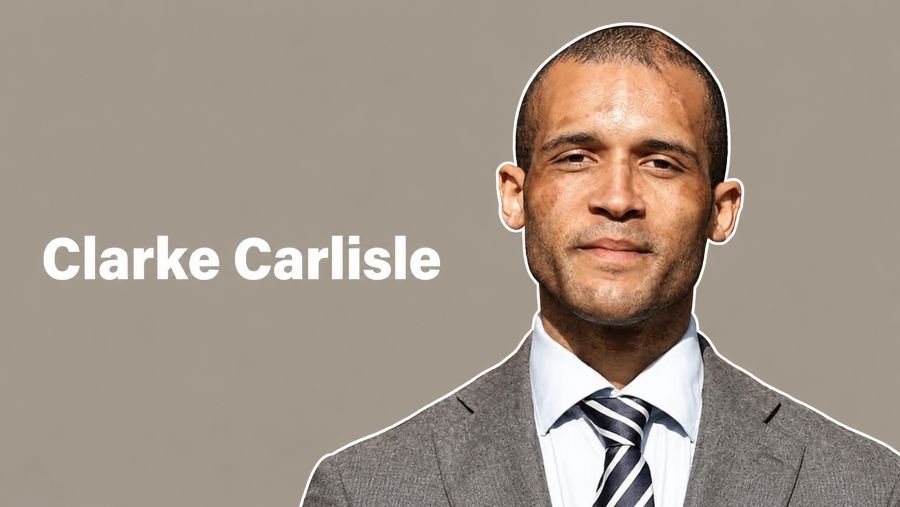
Clarke Carlisle Biography: Powerful Story of Recovery
From Premier League football and PFA leadership to mental-health advocacy, education and an important new role at Mind.

introdution
Clarke Carlisle is an English former professional footballer, broadcaster, author and mental-health campaigner. He played as a central defender for nine clubs and competed across all four professional divisions of English football.
His life story includes promotion success, serious injuries, addiction, depression and a major career beyond the pitch. Carlisle now uses his education and lived experience to improve mental-health support in sport, workplaces and wider society.
Clarke Carlisle is best known for his football career, former PFA chairmanship and open mental-health advocacy.
Quick Bio
| Field | Verified details |
|---|---|
| Full name | Clarke James Carlisle |
| Professional name | Clarke Carlisle |
| Date of birth | 14 October 1979 |
| Age | 46 years old |
| Birthplace | Preston, Lancashire, England |
| Nationality | English |
| Profession | Former footballer, broadcaster, author, speaker and charity leader |
| Playing position | Centre-back |
| Height | 1.88 m, or 6 ft 2 in |
| Senior career | 1997–2013 |
| England representation | England Under-21 |
| International caps | Three |
| Major former role | Chairman of the Professional Footballers’ Association |
| Current spouse | Carrie Carlisle |
| Current status | Appointed Chair of Mind in May 2026 |
| Education | BSc Honours in Psychology with Counselling |
| Further study | MBA studies |
| Famous for | Football, PFA leadership and mental-health campaigning |
Why Is Clarke Carlisle Famous?
Clarke Carlisle became famous as a strong central defender who played more than 500 senior matches during a 17-year professional career.
He represented Blackpool, Queens Park Rangers, Leeds United, Watford, Luton Town, Burnley, Preston North End, York City and Northampton Town.
His biggest achievement on the pitch came with Burnley. He was named man of the match when the club defeated Sheffield United in the 2009 Championship play-off final and earned promotion to the Premier League.
Carlisle also became an influential football representative. He served as chairman of the Professional Footballers’ Association and spoke publicly about player welfare, equality and discrimination.
After retirement, his honest discussion of depression, addiction and recovery made him an important voice in British mental-health campaigning.
Early Life and Family Background
Clarke James Carlisle was born in Preston, Lancashire, on 14 October 1979.
He grew up in Preston and developed an interest in football at an early age. His father played the sport at semi-professional level, giving him an early connection to organised football.
Carlisle represented Lancashire at youth level before joining Blackpool’s development system.
His childhood ambition was to build a professional football career. Blackpool gave him the opportunity to turn that ambition into reality.
Public information about his wider family remains limited. His biography is mainly shaped by his football career, education, marriage and advocacy work.
Education and Academic Development
Carlisle attended Balshaw’s Church of England High School in Lancashire.
He was recognised as a strong student alongside his football ability. During a long injury absence, he studied mathematics and politics at college.
He later completed a qualification in Professional Sports Writing and Broadcasting at Staffordshire University.
Carlisle also earned a BSc Honours degree in Psychology with Counselling. His education strengthened his understanding of behaviour, emotional wellbeing and mental-health support.
As of 2026, he is studying for an MBA. This combination of psychology and business education supports his work in charity leadership, workplace wellbeing and organisational development.
Start of His Professional Football Career
Blackpool signed Carlisle as a professional player in August 1997.
He made his Football League debut against Wrexham on 2 September 1997. Blackpool won the match 4–3.
Carlisle scored his first professional goal in his next match. His late goal gave Blackpool a 2–1 victory over Carlisle United.
His early performances showed his strength, aerial ability and confidence as a young defender.
After developing at Blackpool, he joined Queens Park Rangers in 2000 and entered an important new stage of his career.
Queens Park Rangers and England Under-21 Career
Queens Park Rangers signed Carlisle in May 2000.
His form helped him earn three appearances for England Under-21 during the same year. He did not score at international level but gained experience among some of England’s leading young players.
A serious knee-ligament injury later placed his career in danger. He remained away from competitive football for a long period and faced uncertainty over whether he would play professionally again.
Carlisle eventually returned and helped QPR win promotion during the 2003–04 season.
That comeback showed the determination that would become a major theme throughout his life.
Leeds United and Watford
Carlisle joined Leeds United on a free transfer in 2004.
He spent one season at Elland Road and made 38 appearances in all competitions, scoring four goals.
Watford signed him in the summer of 2005. He became part of the squad that gained promotion to the Premier League through the 2006 Championship play-offs.
Injuries restricted his playing time after promotion. He later spent a short period on loan with Luton Town before leaving Watford.
His career path can be compared with other English players, including Sam Field’s football journey, where discipline and adaptation are important parts of long-term development.
Burnley Career and Premier League Promotion
Burnley signed Carlisle in August 2007.
He became a regular centre-back and developed a strong partnership within the club’s defence. His physical presence also made him dangerous during corners and free kicks.
The 2008–09 season became the greatest club campaign of his career.
Burnley reached the Championship play-off final at Wembley and defeated Sheffield United 1–0. Carlisle delivered an excellent defensive performance and received the man-of-the-match award.
The victory returned Burnley to the top division after an absence of 33 years.
Later Clubs and Retirement
Carlisle remained with Burnley until 2012, although the club sent him on loan during his final season.
He joined his hometown club Preston North End on loan in 2011. He later had spells with Northampton Town and York City.
His complete professional career record covers nine clubs and every level of the English professional football system.
Carlisle returned to Northampton permanently for the final stage of his playing career.
He announced his retirement from professional football in May 2013.
Career Timeline
| Period | Club or role |
|---|---|
| 1997–2000 | Blackpool |
| 2000–2004 | Queens Park Rangers |
| 2000 | England Under-21 |
| 2004–2005 | Leeds United |
| 2005–2007 | Watford |
| 2007 | Luton Town loan |
| 2007–2012 | Burnley |
| 2011–2012 | Preston North End loan |
| 2012 | Northampton Town loan |
| 2012 | York City |
| 2012–2013 | Northampton Town |
| 2010–2013 | PFA Chairman |
| 2013 | Retired from professional football |
| 2026 | Appointed Chair of Mind |
Playing Style and Strengths
Carlisle mainly played as a central defender.
He was known for physical strength, aerial ability and leadership inside the penalty area. His height made him useful when defending crosses and attacking set pieces.
He was not known for exceptional pace, so he relied on positioning, awareness and reading the movement of opposing attackers.
Carlisle studied the methods of experienced defenders and developed a more thoughtful approach as his career progressed.
His journey from centre-back to leadership has similarities with the career development explored in Valérien Ismaël’s biography.
Major Football Achievements
Carlisle earned three England Under-21 caps in 2000.
He helped Queens Park Rangers gain promotion during the 2003–04 season.
He was part of Watford’s promotion-winning squad during the 2005–06 Championship campaign.
His greatest playing achievement was winning the 2009 Championship play-off final with Burnley.
He was named man of the match at Wembley and finished his professional career with more than 500 senior appearances.
PFA Leadership and Player Welfare
Carlisle became chairman of the Professional Footballers’ Association in November 2010.
The position gave him responsibility for representing professional players and discussing major issues affecting the game.
He spoke about racism, equality, homophobia, player welfare and mental-health support.
Carlisle also supported inclusion initiatives connected with football and challenged attitudes that could prevent players from asking for help.
His advocacy work shares themes with Thomas Hitzlsperger’s work for inclusion, particularly the belief that sport should protect dignity and equality.
Mental Health, Addiction and Recovery
Carlisle has publicly discussed living with recurrent depression and experiencing addiction problems.
A major knee injury during his QPR career affected both his professional identity and emotional health. He later explained that football results had become closely connected to how he valued himself.
He received treatment for alcohol-related difficulties during his playing career.
Carlisle has also spoken about gambling harm and several mental-health crises. In December 2014, he survived a suicide attempt involving a road collision near York.
His honesty places him among former players such as Keith Gillespie, who have used difficult personal experiences to raise awareness about addiction, pressure and life after football.
Important Turning Points
The first major turning point came when Carlisle suffered the serious knee injury that threatened his football career.
His treatment for alcohol problems became another important moment because it forced him to recognise the connection between emotional distress and harmful coping methods.
Retirement in 2013 created a difficult transition away from the structure and identity of professional football.
The crisis in December 2014 became a major point in his recovery story. He later began speaking more openly about suicide prevention, depression and addiction.
Education, family support and professional treatment helped him build a new career based on advocacy, public speaking and leadership.
Marriage and Personal Life
Clarke Carlisle is married to Carrie Carlisle.
Carrie is a writer, presenter, speaker and mental-health advocate. The couple work together on talks, workplace programmes and educational projects.
Their presentations explain mental illness from two viewpoints: the experience of the person living with a condition and the experience of the family member offering support.
They have spoken about communication, boundaries, relationships, recovery and the need for supporters to protect their own wellbeing.
Carlisle has also publicly discussed the importance of his Christian faith, family relationships, reflection and meditation.
Broadcasting and Television Work
Carlisle developed a broadcasting career alongside and after professional football.
He worked as a commentator and football analyst for television and radio organisations, including ITV Sport and Absolute Radio.
He appeared on football programmes and became the first active professional footballer to appear on the BBC political programme Question Time.
Carlisle presented the BBC documentaries Is Football Racist? and Football’s Suicide Secret.
These programmes allowed him to explore discrimination, depression and suicide within professional sport.
Books and Writing
Carlisle published his autobiography, You Don’t Know Me, But…: A Footballer’s Life, in 2013.
The book discusses his football journey, personal struggles and experiences inside the professional game.
His background in sports writing and broadcasting helped him communicate complicated experiences in a clear way.
Carlisle has also contributed to interviews, educational discussions and public conversations about mental health.
His writing and speaking focus on honesty rather than presenting professional sport as a life without fear or difficulty.
Television Quiz Success
Carlisle became known as one of football’s most intelligent public figures.
In 2002, he won the television title Britain’s Brainiest Footballer.
He later appeared on the Channel 4 game show Countdown and won his first two matches.
In 2025, Carlisle competed in a celebrity edition of ITV’s The 1% Club.
He won £100,000 for UNICEF through the Soccer Aid charity campaign.
CHAMPs Mental-Health Programme
Clarke and Carrie Carlisle worked with the University of Central Lancashire to create the Collaborative Health and Mind Programme, known as CHAMPs.
The programme provides academic and practical training for people who support others with mental-health difficulties.
It teaches advocates how to recognise boundaries, protect their own wellbeing and guide people towards suitable professional help.
Carlisle has explained that mental-health supporters can become emotionally exhausted when they ignore their own needs.
His message is that people must care for themselves if they want to provide safe and effective support to others.
Public Speaking and Professional Work
Carlisle has spent years advising companies and public organisations about mental health, workplace wellbeing and equality.
His talks cover depression, addiction, suicide prevention, professional sport, leadership and the transition into retirement.
He uses personal experience but also draws on academic study and organisational work.
Carlisle has held charity governance roles, including chairing the Board of Trustees at Kaleidoscope Plus Group.
He also contributed as an expert adviser to the UK government’s Fan-led Review of Football Governance.
Gambling-Harm Advocacy
Carlisle has publicly shared how gambling harm affected his life and relationships.
He became an ambassador for Betknowmore UK, a charity supporting people affected by harmful gambling.
In late 2025, he moved into a business-development position with the organisation.
His role focuses on partnerships, lived experience and improving support for individuals and families affected by gambling.
This work connects with his broader message that addiction should be treated with understanding, evidence and professional care.
Current Status in 2026
On 6 May 2026, Clarke Carlisle was appointed as the new Chair of Mind.
He joined the charity’s Board of Trustees and began a short handover process with outgoing chair Stevie Spring CBE.
The appointment combines Carlisle’s lived experience with his education in psychology, governance knowledge and years of advocacy.
His move into national charity leadership reflects the wider importance of experienced figures in sport, similar to the leadership journey discussed in Debbie Jevans’s biography.
As of June 2026, he continues working with Mind, Betknowmore UK and organisations seeking better approaches to mental health, equality and employee wellbeing.
Public Image and Personal Values
Carlisle’s public image has changed greatly over time.
He was first known as an intelligent and physically strong football defender.
Later, the public learned about the depression and addictions hidden behind his successful career.
His willingness to accept responsibility while discussing the causes of harmful behaviour has made his advocacy more believable.
His public philosophy centres on honesty, compassion, education, personal accountability and early access to support.
Legacy and Influence
Clarke Carlisle’s football legacy includes more than 500 appearances, promotion success and leadership as PFA chairman.
His wider legacy comes from changing how people discuss mental illness inside professional sport.
By speaking openly, he has challenged the idea that physical strength, wealth or public success protects someone from depression.
His work has also drawn attention to the mental health of retired players and family members who support people during a crisis.
His appointment at Mind gives him an opportunity to influence national conversations about treatment, prevention and dignity.
Interesting Facts About Clarke Carlisle
- His full name is Clarke James Carlisle.
- He began his professional career with Blackpool.
- He earned three England Under-21 caps.
- He played for nine professional clubs.
- He competed in all four professional English football divisions.
- He won Britain’s Brainiest Footballer in 2002.
- He appeared on Countdown and won two matches.
- He presented documentaries about racism and mental health in football.
- He won £100,000 for UNICEF on The 1% Club.
- He was appointed Chair of Mind in May 2026.
Frequently Asked Questions
Who is Clarke Carlisle?
He is an English former professional footballer, broadcaster, author and mental-health campaigner.
What is Clarke Carlisle’s full name?
His full name is Clarke James Carlisle.
How old is Clarke Carlisle?
He is 46 years old as of June 2026.
Where was Clarke Carlisle born?
He was born in Preston, Lancashire, England.
What position did he play?
He played mainly as a centre-back.
Which clubs did Clarke Carlisle play for?
He played for Blackpool, QPR, Leeds United, Watford, Luton Town, Burnley, Preston North End, York City and Northampton Town.
Is Clarke Carlisle married?
Yes, he is married to writer and mental-health advocate Carrie Carlisle.
What is Clarke Carlisle doing now?
He works in mental-health and gambling-harm advocacy and was appointed Chair of Mind in May 2026.
Conclusion
Clarke Carlisle’s biography is a powerful story of football, difficulty, learning and recovery.
He achieved promotion with major clubs, represented England Under-21 and became an influential chairman of the PFA.
Away from football, he faced depression, addiction and serious personal crises. Instead of hiding those experiences, he used them to educate other people and improve access to support.
His work with Mind, Betknowmore UK and mental-health education programmes shows how a difficult life experience can develop into meaningful public leadership.