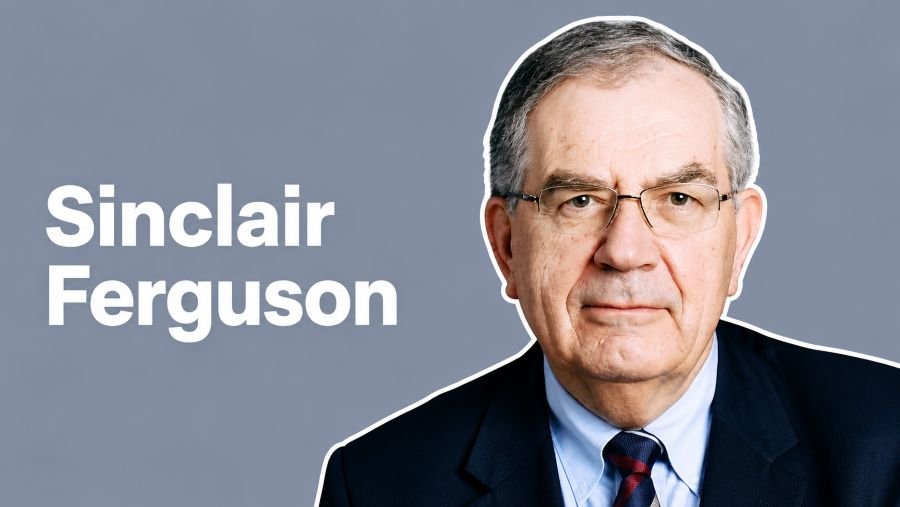
Sinclair Ferguson Biography: Inspiring Life and Legacy
Discover his early life, education, ministry journey, famous books, wife, family, beliefs, and current work.

introdution
Sinclair Ferguson is a Scottish theologian, Presbyterian minister, professor, preacher, and Christian author. He is respected for explaining deep theological subjects in clear and practical language.
His career has covered local church ministry, university-level teaching, international conferences, books, podcasts, and recorded Bible lessons. His influence is especially strong within Reformed and Presbyterian Christianity.
Sinclair Ferguson is best known for his pastoral teaching, systematic theology, and books such as The Whole Christ and The Holy Spirit.
Quick Bio
| Detail | Information |
|---|---|
| Full Name | Sinclair Buchanan Ferguson |
| Known As | Sinclair Ferguson |
| Date of Birth | February 21, 1948 |
| Age | 78 years old as of 2026 |
| Birthplace | Glasgow, Scotland |
| Nationality | Scottish |
| Religion | Reformed Presbyterian Christianity |
| Profession | Theologian, minister, professor, preacher, and author |
| Education | B.D., M.A., and Ph.D. from the University of Aberdeen |
| Main Field | Systematic theology |
| Wife | Dorothy Ferguson |
| Children | Three sons and one daughter |
| Famous Book | The Whole Christ |
| Current Church Role | Preaching Associate at Trinity Church Aberdeen |
| Current Academic Role | Chancellor’s Professor of Systematic Theology |
| Podcast | Things Unseen with Sinclair B. Ferguson |
Why Is Sinclair Ferguson Famous?
Sinclair Ferguson is famous for combining serious Christian scholarship with practical pastoral teaching. He does not present theology as a subject that belongs only inside universities.
Instead, he explains how Christian doctrine affects worship, personal character, preaching, family life, assurance, and service within a local church.
His teaching covers subjects such as grace, salvation, the Holy Spirit, union with Christ, sanctification, Christian maturity, and the authority of the Bible.
Ferguson has also become a respected voice in Christian leadership, particularly among ministers, theology students, and church members seeking thoughtful biblical guidance.
Early Life and Background
Sinclair Buchanan Ferguson was born on February 21, 1948, in Glasgow, Scotland. He grew up in the East End of the city.
His family did not regularly attend church, although Christianity remained an important part of Scottish education and culture during his childhood.
As a young boy, Ferguson attended Sunday school and became familiar with Bible passages, the Ten Commandments, the Lord’s Prayer, and the teachings of Jesus.
He began reading the Bible while still young. The example of serious Christian teachers later encouraged him to think more deeply about personal faith.
His upbringing was modest, but he has spoken positively about the love and support he received from his parents.
Conversion to Christianity
Ferguson became a Christian shortly before his fifteenth birthday.
During his teenage years, he began to feel a strong awareness of sin and his need for forgiveness. A brief meeting with an unknown man who asked whether he was saved left a lasting impression on him.
Several weeks later, Ferguson attended a church service where the minister preached from John 8:12, in which Jesus describes Himself as the light of the world.
That message became a major turning point in his life. His Christian conversion later shaped his education, ministry, teaching, and writing.
Rather than treating conversion as a single emotional experience, Ferguson developed a lifelong commitment to studying Scripture and serving the church.
Education and Academic Training
Ferguson completed his higher education at the University of Aberdeen in Scotland.
He earned a Bachelor of Divinity, a Master of Arts, and a Doctor of Philosophy. His doctoral studies focused on the theology of the English Puritan writer John Owen.
According to Reformed Theological Seminary, all three of his main academic qualifications came from the University of Aberdeen.
His studies gave him a strong foundation in systematic theology, church history, biblical interpretation, and Reformed Christian thought.
Unlike scholars whose main research explores science and religion, Ferguson concentrated mainly on Christian doctrine and its importance for everyday spiritual life.
William Still’s Influence
While studying in Aberdeen, Ferguson attended Gilcomston South Church.
The church was led by William Still, a respected Scottish minister known for detailed biblical preaching and close pastoral care.
Still became one of Ferguson’s most important mentors. Ferguson admired his commitment to Scripture, his love for his congregation, and his desire to point people towards Christ.
This influence helped shape Ferguson’s own preaching style. He learned that a minister should combine theological knowledge with genuine care for ordinary people.
The example of William Still remained important throughout Ferguson’s later work as a pastor and professor.
Career Start in Shetland
Ferguson was ordained as a minister in the Church of Scotland in 1971.
His first major pastoral appointment was at St John’s Church in Baltasound, on the island of Unst in Shetland.
Unst is one of the northernmost inhabited islands in the United Kingdom. It was far removed from the large cities and famous institutions where Ferguson later worked.
He served there for around ten years. The small community gave him valuable experience in preaching, visiting families, supporting church members, and handling everyday pastoral responsibilities.
This period showed his willingness to serve in a quiet place without seeking public recognition.
Academic Career at Westminster Seminary
During the 1980s, Ferguson was invited to teach at Westminster Theological Seminary in Philadelphia.
The opportunity introduced him to a wider academic and international audience. He later became Professor of Systematic Theology and held the Charles Krahe Chair of Systematic Theology.
His colleagues and theological friends included influential Christian teachers such as Edmund Clowney, R.C. Sproul, Tim Keller, and W. Robert Godfrey.
Ferguson became known as a professor who could explain difficult ideas without making them sound cold or distant.
His teaching connected doctrine with preaching, prayer, Christian growth, and the responsibilities of church leadership.
He also taught at Redeemer Seminary in Dallas and later accepted roles with other Reformed educational institutions.
Ministry at St George’s-Tron Church
Ferguson returned to Scotland and served at St George’s-Tron Church in Glasgow.
The city was important to him because it was where he had been born, raised, and converted to Christianity.
At St George’s-Tron, he continued the church’s strong tradition of Bible-centred preaching.
His sermons focused on explaining Scripture carefully while applying its message to modern life.
This period strengthened his reputation as both a scholar and an experienced local church minister.
First Presbyterian Church in Columbia
Ferguson later moved to the United States to become senior minister of First Presbyterian Church in Columbia, South Carolina.
He served the historic congregation for approximately eight years.
During this period, he balanced weekly preaching and pastoral duties with writing, teaching, and conference appearances.
His ministry in Columbia introduced his work to many American Christians who had previously known him mainly through books and theological lectures.
He retired from the senior ministry in 2013 and returned to Scotland.
Return to Scotland
After leaving First Presbyterian Church, Ferguson became involved with St Peter’s Free Church in Dundee.
He served as a preacher and elder, continuing to teach despite officially retiring from full-time pastoral leadership.
He later moved his main church service to Trinity Church Aberdeen, where he became a preaching associate.
His decision to serve a smaller Scottish congregation reflected his belief that meaningful ministry does not depend on fame, large audiences, or major institutions.
Ferguson has consistently placed local church service at the centre of his public philosophy.
Current Roles in 2026
As of June 2026, Sinclair Ferguson remains active in teaching, preaching, writing, and Christian broadcasting.
He serves as Chancellor’s Professor of Systematic Theology at Reformed Theological Seminary.
He is also a visiting professor at Reformation Bible College and a preaching associate at Trinity Church in Aberdeen.
Through Ligonier Ministries, he serves as a teaching fellow and vice-chairman.
Ferguson also hosts the weekday devotional podcast Things Unseen with Sinclair B. Ferguson. New episodes continued to appear in June 2026, showing that he remains active at the age of 78.
Sinclair Ferguson’s Books
Ferguson has written, edited, or contributed to more than 50 books.
His books cover Christian living, systematic theology, church history, biblical teaching, spiritual growth, pastoral ministry, and the work of the Holy Spirit.
Like a skilled historian and author, he often uses events and debates from the past to explain questions that still matter today.
Some of his most recognised books include:
- The Whole Christ
- The Holy Spirit
- The Christian Life
- In Christ Alone
- By Grace Alone
- Devoted to God
- Maturity
- Devoted to God’s Church
- The Dawn of Redeeming Grace
- Lessons from the Upper Room
- In the Year of Our Lord
- Union with Christ
- John Owen on the Christian Life
- Name Above All Names, written with Alistair Begg
His work places him among respected British authors and professors who have built careers through teaching, research, public communication, and published writing.
The Whole Christ
The Whole Christ is widely considered one of Ferguson’s most important books.
It examines grace, legalism, antinomianism, Christian assurance, and the historical Marrow Controversy within the Scottish church.
Legalism occurs when people treat obedience as a way to earn God’s acceptance. Antinomianism moves towards the opposite error by treating God’s moral law as unimportant.
Ferguson argues that both errors can develop when people misunderstand the character of God and the completeness of Christ’s work.
The book became popular among pastors, theology students, and readers interested in the relationship between grace and Christian obedience.
Main Theological Beliefs
Ferguson belongs to the Reformed and Presbyterian Christian tradition.
He teaches that the Bible is the authoritative Word of God and should guide Christian belief, worship, preaching, and behaviour.
His theology places strong emphasis on God’s grace, the work of Jesus Christ, and the activity of the Holy Spirit.
Another major subject in his teaching is union with Christ. This refers to the Christian belief that believers receive spiritual life and every saving benefit through their relationship with Jesus.
He also teaches that Christian growth should involve both correct belief and visible changes in character.
Teaching and Preaching Style
Ferguson is known for a calm, thoughtful, and pastoral teaching style.
He frequently explains complex theological language through stories, historical examples, personal memories, and simple illustrations.
His Scottish accent and gentle delivery have become recognisable features of his recorded sermons and lectures.
Although he is an academic theologian, his work rarely feels limited to academic debate. He usually asks how a doctrine should affect the life of an ordinary Christian.
This balance between scholarship and pastoral care is one of the main reasons his work has remained influential.
Public Image and Personal Values
Ferguson’s public image is built around humility, faithfulness, careful study, and long-term church service.
He has spent parts of his career at famous seminaries and large churches, but he has also served small congregations in remote or less prominent places.
His life shows that he values steady work more than celebrity status.
He regularly encourages pastors to know their congregations, preach Scripture carefully, and avoid treating ministry as a route towards personal fame.
His work also contributes to wider discussions about faith in public life without turning his ministry into a political campaign.
Wife and Family
Sinclair Ferguson is married to Dorothy Ferguson.
The couple have three sons and one daughter. Public profiles also report that they have twelve grandchildren.
Dorothy supported Ferguson throughout the demanding stages of his career, including periods when he travelled between Scotland and the United States.
Ferguson has spoken with gratitude about her care for his mother and her commitment to their family.
He generally keeps his family life away from unnecessary public attention, so only limited confirmed details are publicly available.
Major Achievements
One of Ferguson’s greatest achievements is the length and variety of his ministry.
He has served as a local pastor in Scotland and the United States, taught at respected seminaries, written more than 50 books, and spoken at international conferences.
His appointment as Chancellor’s Professor of Systematic Theology is a position of academic distinction within Reformed Theological Seminary.
A collection of essays titled Theology for Ministry was published in his honour in 2022.
The book included contributions from leading theologians and recognised Ferguson’s influence on preaching, doctrine, pastoral care, and theological education.
Challenges and Turning Points
One important turning point came when Ferguson left island ministry and entered theological education in the United States.
The move increased his public influence but also created difficult periods of travel and family separation.
Another major change came when he returned to Glasgow after working at Westminster Seminary.
His later move to First Presbyterian Church in Columbia introduced him to a new congregation and another national culture.
Retirement in 2013 did not end his work. Instead, it allowed him to continue teaching and preaching in a different and more flexible form.
Interesting Facts About Sinclair Ferguson
- He was a talented golfer during his youth.
- He considered studying at the University of St Andrews but chose Aberdeen instead.
- He became a Christian shortly before turning fifteen.
- He began ordained ministry in one of Scotland’s most remote communities.
- He has served churches in both Scotland and the United States.
- His doctoral work focused on the theologian John Owen.
- He has written or contributed to more than 50 books.
- His podcast Things Unseen releases short devotional episodes throughout the working week.
- He returned to Scotland after retiring from senior pastoral ministry.
Sinclair Ferguson’s Legacy
Sinclair Ferguson’s legacy comes from his ability to bring scholarship and pastoral ministry together.
He has helped generations of students understand systematic theology while encouraging ministers to remain focused on Christ, Scripture, and the local church.
His books continue to introduce readers to subjects such as grace, assurance, sanctification, union with Christ, and the Holy Spirit.
His influence is not built around a single institution. It extends through churches, seminaries, publishers, conferences, podcasts, recorded lectures, and personal mentorship.
Ferguson’s life demonstrates that deep learning can remain warm, practical, and centred on serving others.
Conclusion
Sinclair Ferguson is one of the most respected Scottish theologians of the modern Reformed tradition.
From his early ministry in Shetland to teaching at major seminaries and preaching in Scotland and the United States, his career has been shaped by faithfulness and disciplined study.
His books, sermons, lectures, and podcast have helped people understand difficult Christian teachings in simple and practical ways.
Even in 2026, he remains active as a professor, preaching associate, author, teaching fellow, and podcast host.
His lasting legacy is the connection he created between serious theology and everyday Christian life.
FAQs
Who is Sinclair Ferguson?
He is a Scottish Reformed theologian, Presbyterian minister, professor, preacher, and Christian author.
How old is Sinclair Ferguson?
He is 78 years old as of June 2026.
When was Sinclair Ferguson born?
He was born on February 21, 1948.
Where was Sinclair Ferguson born?
He was born in Glasgow, Scotland.
Who is Sinclair Ferguson’s wife?
He is married to Dorothy Ferguson.
How many children does Sinclair Ferguson have?
He has three sons and one daughter.
What is Sinclair Ferguson famous for?
He is famous for Reformed theology, pastoral preaching, seminary teaching, and books such as The Whole Christ.
Where did Sinclair Ferguson study?
He earned his B.D., M.A., and Ph.D. from the University of Aberdeen.
What is Sinclair Ferguson doing now?
As of 2026, he teaches theology, preaches at Trinity Church Aberdeen, works with Ligonier Ministries, and hosts Things Unseen.
How many books has Sinclair Ferguson written?
He has written, edited, or contributed to more than 50 books.