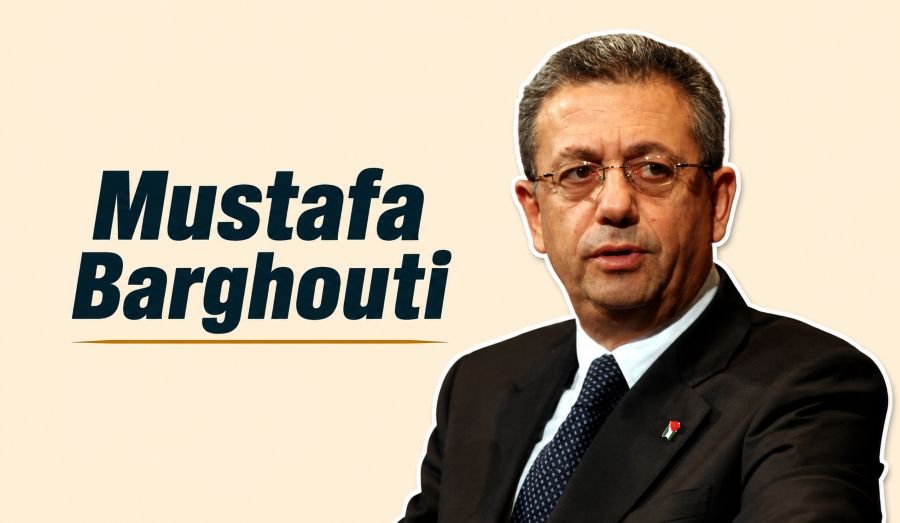
Mustafa Barghouti Biography: Powerful Voice for Palestinian Democracy and Healthcare
A Palestinian physician, political leader, and humanitarian advocate whose career connects public health with democratic reform

Introduction
Mustafa Barghouti is a Palestinian physician, politician, civil-society leader, and human rights advocate. He is widely recognised for his work in Palestinian healthcare, democratic reform, and nonviolent political resistance.
He is the secretary-general and co-founder of the Palestinian National Initiative. He also helped establish the Palestinian Medical Relief Society, which became an important provider of community healthcare in Palestinian areas.
His career is unusual because it combines medicine, humanitarian service, elections, political leadership, and international advocacy.
Quick Bio
| Field | Verified Information |
|---|---|
| Full Name | Mustafa Kamel al-Barghouti |
| Common Name | Mustafa Barghouti |
| Native Name | مصطفى البرغوثي |
| Birth Year | 1954 |
| Birthplace | Jerusalem |
| Childhood Home | Ramallah |
| Family Origin | Deir Ghassaneh |
| Nationality | Palestinian |
| Profession | Physician, politician, activist, and civil-society leader |
| Political Movement | Palestinian National Initiative |
| Current Political Role | Secretary-General of the Palestinian National Initiative |
| Medical Organisation | Palestinian Medical Relief Society |
| Former Government Role | Palestinian Minister of Information |
| Known For | Healthcare leadership, democratic reform, elections, and Palestinian advocacy |
| Spouse | Rita Giacaman |
Who Is Mustafa Barghouti?
Mustafa Barghouti is one of the most recognised independent voices in modern Palestinian politics. He has built his public career outside the main rivalry between Fatah and Hamas.
He is trained as a doctor, but his work has never been limited to hospitals. He helped create healthcare networks for communities that had limited access to medical treatment.
Barghouti later entered electoral politics and became known for supporting democracy, institutional accountability, social justice, and Palestinian national unity.
His career shows how medical work, community organisation, and public service can become closely connected during periods of political conflict.
Early Life and Family Background
Mustafa Barghouti was born in Jerusalem in 1954. He spent much of his childhood in Ramallah, while his wider family came from Deir Ghassaneh, a village north of Ramallah.
In a detailed interview about his early life, he explained that his family was politically active and strongly influenced by ideas about equality and social justice.
His father worked as a municipal engineer in Al-Bireh after the events of 1948. Political discussion was a normal part of Barghouti’s childhood environment.
The 1967 Arab-Israeli war became a major turning point in his youth. He later said that the experience changed his understanding of freedom, responsibility, injustice, and occupation.
These early experiences helped shape the values that later appeared throughout his medical and political career.
Education and Medical Training
Barghouti travelled to Moscow in 1971 to study medicine. He remained there for seven years and completed his medical training in 1978.
After returning home, he worked at Al-Makassed Hospital in Jerusalem. His medical experience included internal medicine and cardiology.
He later continued his education in management and public administration. He received a Master of Science degree from Stanford University in 1995.
His medical education gave him direct knowledge of the daily health problems faced by Palestinian communities.
It also taught him that healthcare depends on organisation, planning, access, trained workers, and stable public institutions.
Beginning of His Medical Career
After completing his studies, Barghouti returned to the Palestinian territories and began working as a physician.
He quickly saw that many villages, refugee camps, and remote communities had weak access to doctors, clinics, medicines, and preventive healthcare.
Instead of limiting his work to one hospital, he joined other medical professionals in building a community-based healthcare system.
This approach became the foundation of one of his most important achievements.
Palestinian Medical Relief Society
In 1979, Mustafa Barghouti helped establish the organisation now known as the Palestinian Medical Relief Society.
The organisation developed mobile clinics, local medical centres, emergency programmes, rehabilitation services, and public-health projects.
Its purpose was to take medical assistance directly to communities that could not easily reach major hospitals.
Barghouti became strongly associated with its leadership and growth. His work helped turn community healthcare into a wider form of humanitarian support and social organisation.
This combination of healthcare and political leadership became one of the defining features of his public identity.
Entry into Palestinian Politics
Barghouti was politically active while working as a doctor. He was previously connected with the Palestinian Communist Party, which later became the Palestinian People’s Party.
He took part in political and diplomatic work during the early 1990s. This included involvement in the Palestinian delegation connected with the Madrid Peace Conference.
Barghouti later became critical of the Oslo peace process. He believed it had failed to end occupation, settlement expansion, political division, and weak public accountability.
He also argued that Palestinian politics required stronger democratic institutions and greater public participation.
Like many people entering elected office, he faced the challenge of turning political ideas into practical public action.
Founding the Palestinian National Initiative
In June 2002, Mustafa Barghouti helped establish the Palestinian National Initiative, also known as Al-Mubadara.
The movement was founded with respected Palestinian figures including Haidar Abdel-Shafi and Ibrahim Dakkak. Edward Said was also closely associated with its early development.
The Palestinian National Initiative presented itself as a democratic alternative to both Fatah and Hamas.
Its main goals included ending occupation, creating democratic institutions, protecting civil rights, fighting corruption, strengthening civil society, and supporting social justice.
Barghouti became the movement’s secretary-general and most internationally recognised representative.
Political Philosophy and Public Beliefs
Barghouti supports organised popular resistance that involves broad participation from ordinary people.
He has regularly promoted nonviolent resistance, civil action, international solidarity, boycotts, and community organisation.
His political philosophy also focuses on democracy within Palestinian society. He has criticised corruption, political division, authoritarian rule, and the long delay in holding national elections.
He supports free elections, judicial independence, freedom of political organisation, and greater accountability from Palestinian leaders.
His calls for institutional policy reform are closely connected with his belief that national freedom and internal democracy must develop together.
The 2005 Presidential Election
Mustafa Barghouti entered the Palestinian presidential election held in January 2005.
He ran against Mahmoud Abbas and several other candidates. His campaign focused on democratic renewal, better public services, opposition to corruption, and national independence.
Barghouti finished second in the election with just under 20 percent of the vote.
Although he did not win, the result made him the strongest challenger to Mahmoud Abbas and raised the national profile of the Palestinian National Initiative.
The campaign also showed that a political candidate outside Fatah and Hamas could attract meaningful public support.
Election to the Palestinian Legislative Council
Barghouti led the Independent Palestine list during the 2006 Palestinian legislative election.
The list won two seats. Barghouti and Rawya Shawa became its representatives in the Palestinian Legislative Council.
His role gave him a formal position inside Palestinian political institutions.
However, the Palestinian legislature later became unable to function normally because of political division and the wider conflict.
His experience in the council involved debate, representation, negotiation, and public scrutiny of political decisions.
Minister of Information
In 2007, Mustafa Barghouti became the Palestinian Minister of Information in the national unity government.
The government was formed during an attempt to reduce conflict between Fatah and Hamas.
Barghouti’s ministerial role lasted only a few months because the unity government collapsed during the political and armed division between the West Bank and Gaza.
Although the position was brief, it remains one of the most important official government roles of his career.
The European Council on Foreign Relations profile also identifies him as a former information minister, elected legislator, physician, and Palestinian political leader.
Career Timeline
| Year | Career Event |
|---|---|
| 1954 | Born in Jerusalem |
| 1971 | Travelled to Moscow to study medicine |
| 1978 | Completed medical training and returned home |
| 1979 | Helped establish Palestinian Medical Relief |
| Early 1990s | Participated in Palestinian diplomatic and political work |
| 1995 | Completed a master’s degree at Stanford University |
| 1996 | Contested a Palestinian legislative election |
| 2002 | Co-founded the Palestinian National Initiative |
| 2005 | Finished second in the Palestinian presidential election |
| 2006 | Elected to the Palestinian Legislative Council |
| 2007 | Served as Palestinian Minister of Information |
| 2010 | Received a Nobel Peace Prize nomination |
| 2021 | Took part in preparations for elections that were later postponed |
| 2023–2026 | Continued political advocacy, interviews, and humanitarian work |
Personal Life
Mustafa Barghouti is married to Rita Giacaman.
She is a respected Palestinian public-health researcher and professor associated with Birzeit University.
Giacaman has carried out extensive research on health, conflict, social conditions, and the daily experiences of Palestinian communities.
Their professional interests share a connection with medicine, public health, social justice, and community development.
Barghouti has generally kept most details about his private family life outside his political career.
Public Image
Mustafa Barghouti is often presented as an independent Palestinian political voice.
Supporters view him as a democratic reformer, healthcare organiser, human rights advocate, and supporter of national unity.
His medical background separates him from many traditional career politicians.
He is also known for appearing regularly in international media, where he discusses Gaza, the West Bank, Palestinian elections, humanitarian conditions, occupation, and international law.
Critics may disagree with his language or political conclusions, but his long involvement in healthcare and public organisation remains an important part of his reputation.
Challenges and Political Struggles
Barghouti’s career has developed during occupation, political division, armed conflict, and repeated failures to hold regular Palestinian elections.
He has faced restrictions while campaigning and has been detained during political activity in East Jerusalem.
His political movement has also struggled to compete with the larger organisations of Fatah and Hamas.
Despite finishing second in the 2005 presidential election, the Palestinian National Initiative has remained a smaller political force.
Barghouti has continued to argue that Palestinian politics cannot move forward without elections, unity, public participation, and institutional reform.
Current Role and Public Work
Mustafa Barghouti continues to serve as secretary-general of the Palestinian National Initiative.
He also remains connected with Palestinian medical and humanitarian work.
During the Gaza war, he became a frequent guest on international television networks and public-affairs programmes.
He has used these appearances to discuss civilian suffering, healthcare collapse, displacement, ceasefire proposals, Palestinian political rights, and future governance.
His public statements strongly criticise Israeli government policy while also calling for change inside the Palestinian political system.
Featured Interview Video
The following interview shows Mustafa Barghouti discussing a possible Gaza ceasefire, Palestinian political leadership, and the future of the region.
Recommended placement: Add this video directly after the “Current Role and Public Work” section.
Major Achievements
Mustafa Barghouti helped build a major community-based Palestinian healthcare network.
He co-founded the Palestinian National Initiative and gave independent democratic politics a visible national platform.
He finished second in the 2005 Palestinian presidential election.
He won election to the Palestinian Legislative Council in 2006.
He served as Palestinian Minister of Information in 2007.
His public work has connected medicine, civil society, democracy, humanitarian relief, and political advocacy.
Interesting Facts About Mustafa Barghouti
- He trained as a doctor before becoming an internationally known political figure.
- He studied medicine in Moscow for seven years.
- He later completed graduate studies at Stanford University.
- He helped establish Palestinian Medical Relief while still in his twenties.
- He has worked in both medicine and politics for several decades.
- He finished ahead of all candidates except Mahmoud Abbas in the 2005 election.
- His movement presents itself as an alternative to both Fatah and Hamas.
- His wife is also a respected public-health academic.
- He has consistently supported organised popular and nonviolent resistance.
- His political work focuses strongly on elections and democratic accountability.
Frequently Asked Questions
Who is Mustafa Barghouti?
He is a Palestinian physician, politician, humanitarian organiser, and secretary-general of the Palestinian National Initiative.
When was Mustafa Barghouti born?
He was born in Jerusalem in 1954.
Where did he grow up?
He spent much of his childhood in Ramallah.
What did he study?
He studied medicine in Moscow and later completed graduate studies at Stanford University.
What is Mustafa Barghouti famous for?
He is famous for Palestinian healthcare work, democratic reform, political leadership, and human rights advocacy.
Which political party does he lead?
He leads the Palestinian National Initiative, also known as Al-Mubadara.
Did he run for Palestinian president?
Yes, he finished second in the 2005 Palestinian presidential election.
Is Mustafa Barghouti married?
Yes, he is married to Palestinian public-health academic Rita Giacaman.
Conclusion
Mustafa Barghouti has built a public life around medicine, community organisation, democracy, and Palestinian political rights.
His journey began with medical training and direct work with communities that lacked basic healthcare. It later expanded into elections, government service, political reform, and international advocacy.
He remains one of the best-known Palestinian figures outside the traditional Fatah-Hamas divide.
His lasting impact comes from connecting healthcare with human dignity and political freedom with democratic responsibility.