Baroness Harding: The Controversial Visionary Leader of Modern Britain
A Comprehensive Biography of a Resilient Member of the House of Lords of the United Kingdom

Table of Contents
ToggleIntroduction
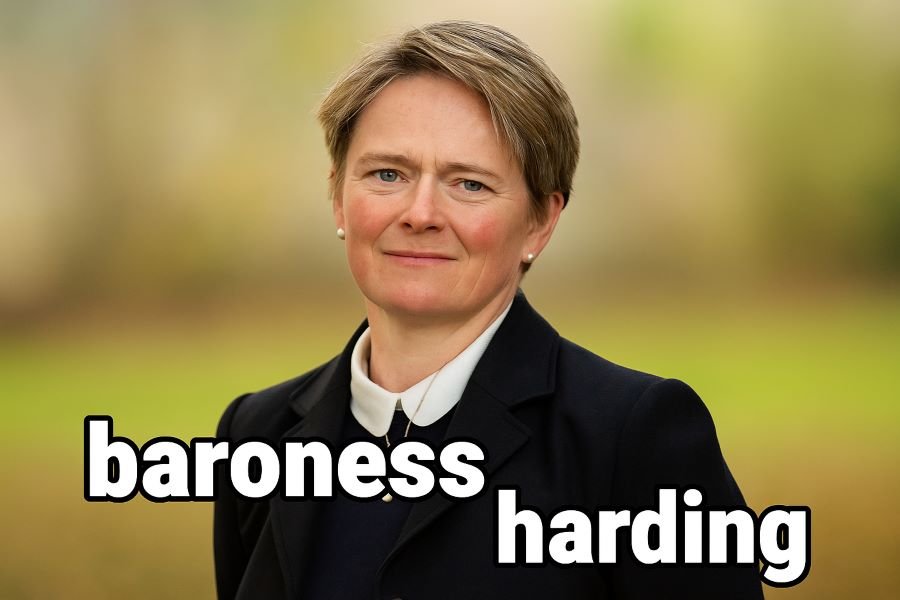
Baroness Dido Harding is a name that evokes both admiration and debate across the United Kingdom. Known for her transformative leadership in both business and public service, she stands as one of the most recognized Members of the House of Lords of the United Kingdom. Her journey from a Dorset farm to the corridors of power reflects not only ambition and intellect but also the immense pressures that come with public accountability.
A business executive turned public servant, Baroness Harding’s legacy bridges two worlds — the competitive boardrooms of corporate Britain and the complex systems of the National Health Service (NHS). Her tenure as the Chief Executive of TalkTalk Group and later as the head of NHS Test and Trace during the COVID-19 pandemic marked defining chapters in her career. Though her path has been marked by triumphs and trials alike, her influence on national policy and governance is undeniable.
Quick Bio
| Field | Details |
|---|---|
| Full Name | Diana Mary “Dido” Harding |
| Title | Baroness Harding of Winscombe |
| Date of Birth | 9 November 1967 |
| Age (2025) | 57 years |
| Birthplace | Dorset, England |
| Nationality | British |
| Education | PPE at Magdalen College, Oxford; MBA from Harvard Business School |
| Occupation | Business Executive, Member of the House of Lords of the United Kingdom |
| Spouse | John Penrose (Conservative MP) |
| Children | Two daughters |
| Known For | CEO of TalkTalk, Chair of NHS Improvement, Head of NHS Test and Trace |
| Political Affiliation | Conservative Party |
Early Life and Education
Growing Up in Dorset
Born in Dorset, England, on 9 November 1967, Diana Mary Harding — better known as Baroness Harding — grew up on her family’s pig farm. Her early environment instilled in her a sense of discipline, responsibility, and perseverance. Coming from a family with a strong military and public service tradition, she was encouraged to pursue excellence and leadership from a young age.
Her father, John Harding, the 2nd Baron Harding of Petherton, was a British Army officer, while her grandfather, Field Marshal John Harding, 1st Baron Harding of Petherton, served as Chief of the Imperial General Staff. These influences shaped her early understanding of duty, strategy, and leadership — traits that later became central to her career.
Educational Foundation
Baroness Harding attended St Antony’s Leweston School in Sherborne before enrolling at Magdalen College, Oxford, where she studied Philosophy, Politics, and Economics (PPE). This academic background provided her with a deep understanding of governance and economics, key to her later success in both corporate and governmental roles. She further advanced her education with an MBA from Harvard Business School, strengthening her credentials as a future business leader.
Professional Career: From Boardroom to Parliament
Corporate Ascension
Harding began her professional journey at McKinsey & Company in 1988, where she honed her analytical and strategic thinking. She then moved into prominent roles across major British companies, including Thomas Cook, Tesco, and Sainsbury’s. At Tesco, she served as Commercial Director for Value-Added Foods, later becoming International Support Director, a position that expanded her understanding of global retail operations.
Her dynamic leadership style earned her a place on Sainsbury’s operating board as Convenience Director. By 2010, she had risen to one of the highest positions in UK corporate leadership — Chief Executive Officer of TalkTalk Group. During her tenure, she led TalkTalk through a rapid expansion in the telecom market but faced a major challenge during the 2015 cyber-attack that affected millions of customers. The event was a defining moment, testing her crisis management and communication skills.
Transition to Public Service
In 2014, Dido Harding was elevated to the peerage as Baroness Harding of Winscombe, becoming a Member of the House of Lords of the United Kingdom. Her appointment recognized her experience in technology, business, and leadership. This transition from the private to the public sector marked a new chapter in her professional life.
By 2017, she was appointed Chair of NHS Improvement, overseeing performance and governance across NHS trusts in England. Her most challenging public role came in 2020, when she was chosen to lead NHS Test and Trace during the height of the COVID-19 pandemic. Tasked with one of the most ambitious health initiatives in modern British history, she faced immense pressure and public scrutiny. Despite controversies regarding cost and effectiveness, her leadership during an unprecedented crisis kept the programme functioning through turbulent times.
Contributions and Achievements
Leadership and Governance
Baroness Harding has demonstrated remarkable adaptability, seamlessly transitioning between corporate and government leadership. Her strategic thinking and resilience earned her respect even among critics. She also served as a Non-Executive Director on the Court of the Bank of England, contributing to financial oversight and policy discussions at one of the nation’s most critical institutions.
Recognition
Her contributions have not gone unnoticed. In 2013 and 2014, she was featured among the BBC Radio 4 Woman’s Hour’s 100 Most Powerful Women in the UK. She was also recognized by Anglia Ruskin University for her leadership and service to business and public policy.
Public Image: Strengths and Criticisms
Baroness Harding’s career represents both success and controversy. Her ability to lead large organizations and take on national responsibilities showcases her as a determined and visionary leader. However, she has also faced criticism for perceived government favoritism in her appointments and for challenges faced by NHS Test and Trace.
Her tenure illustrates the dual nature of public service — the chance to make a difference alongside the constant glare of accountability. For many, she remains a symbol of courage under pressure; for others, a reminder of the complexities in balancing private expertise with public expectations.
Personal Life
Baroness Harding is married to John Penrose, a former Member of Parliament for Weston-super-Mare, with whom she shares two daughters. Outside of work, she is a passionate horse racing enthusiast and a board member of The Jockey Club, reflecting her lifelong love for equestrian sport.
Her life beyond politics reveals a balance between leadership, family, and personal interest — a testament to her multifaceted personality.
Conclusion
Baroness Harding’s story is a powerful narrative of ambition, leadership, and resilience. From her beginnings in rural Dorset to becoming a respected Member of the House of Lords of the United Kingdom, she has made her mark across multiple sectors. Her achievements in the corporate world, her leadership within the NHS, and her unwavering determination through challenges illustrate the strength of modern British leadership.
While debates about her public service tenure continue, her impact on British business and healthcare governance remains significant. Whether viewed as a trailblazer or a figure of controversy, Baroness Harding’s legacy is one of courage, adaptability, and enduring influence.
Frequently Asked Questions (FAQ)
Who is Baroness Harding?
Baroness Dido Harding is a British business executive and life peer, best known for leading TalkTalk Group and later NHS Test and Trace. She serves as a Member of the House of Lords of the United Kingdom.
What is Baroness Harding’s educational background?
She studied Philosophy, Politics and Economics (PPE) at Oxford University and earned an MBA from Harvard Business School.
What major roles has she held?
Her roles include CEO of TalkTalk Group, Chair of NHS Improvement, and Head of NHS Test and Trace.
Is Baroness Harding still active in public service?
Yes, she continues to contribute to national discussions through her position in the House of Lords.
Why is she considered a controversial figure?
Her appointments to key public health roles during the pandemic were criticized for lack of transparency and competition, though supporters highlight her vast leadership experience.