Ros Atkins: The Powerful Voice Redefining Modern Journalism
How a BBC Journalist Transformed News Explanation, Media Trust, and Global Storytelling

Table of Contents
ToggleIntroduction
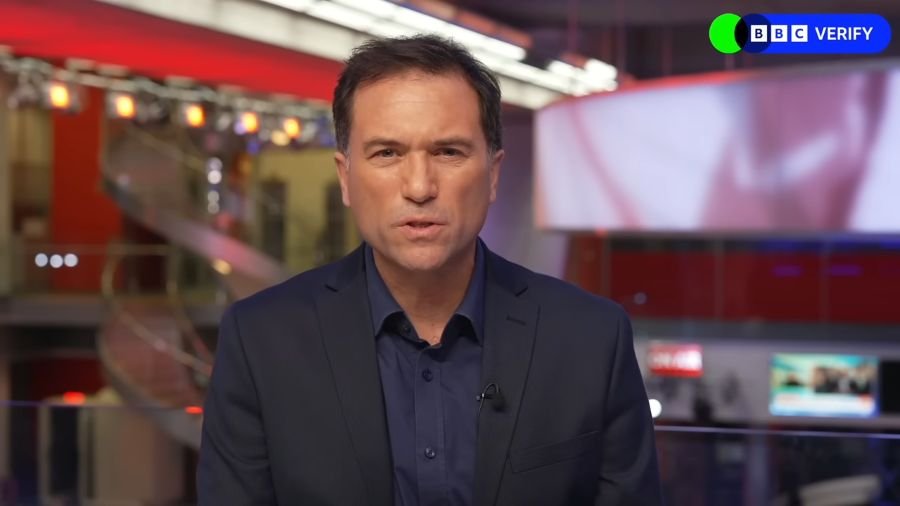
Ros Atkins is one of the most influential journalists of the modern era, known for transforming how complex news is explained to global audiences. As a senior BBC journalist, presenter, and author, he has become widely respected for clarity, structure, and calm authority in an age often dominated by noise, speed, and misinformation. His work demonstrates that journalism can be both rigorous and accessible, analytical yet human.
In a media environment facing declining trust and shrinking attention spans, Ros Atkins has built a reputation for doing the opposite of sensationalism. His approach focuses on evidence, logic, and transparency. While his influence is largely positive, his prominence also places him at the center of debates about public broadcasting, neutrality, and the evolving role of journalists in digital spaces.
Quick Bio
| Attribute | Details |
|---|---|
| Full Name | Roslyn Atkins |
| Known As | Ros Atkins |
| Year of Birth | 1974 |
| Age | 51–52 (as of 2026) |
| Nationality | British |
| Profession | Journalist, Broadcaster, Author |
| Current Role | Analysis Editor, BBC News |
| Education | History, University of Cambridge |
| Marital Status | Married |
| Children | Two daughters |
| Known For | Explainer journalism, BBC News analysis |
| Notable Initiative | The 50:50 Project |
Who Is Ros Atkins?
Ros Atkins is a British journalist best known for his analytical explainer videos and long-standing career with BBC News. He currently serves as Analysis Editor, a role that places him at the heart of major global news coverage. His calm delivery and structured storytelling have become instantly recognizable to audiences worldwide.
Unlike many television journalists, Ros Atkins is not defined by confrontation or opinion-driven commentary. Instead, his journalism prioritizes facts, timelines, and clearly sourced information. This has made him especially influential among younger audiences and educators who value clarity over outrage.
Early Life and Background
Ros Atkins was raised in Stithians, Cornwall, in southwest England. During his childhood, he also lived in Port of Spain in Trinidad and Tobago and in Nassau, The Bahamas. These international experiences exposed him early to different cultures, media systems, and global perspectives, which later shaped his worldview as a journalist.
Growing up across continents helped him develop a strong interest in international affairs and communication. Rather than seeing news as distant or abstract, Atkins learned early that global events have local consequences. This understanding remains central to his journalism today.
Education and Academic Foundation
Ros Atkins attended Truro School in Cornwall before studying History at the University of Cambridge, where he was a student at Jesus College. His academic background in history plays a crucial role in his journalistic style, particularly his emphasis on context, chronology, and cause-and-effect relationships.
Studying history trained him to analyze information critically and to present narratives grounded in evidence. These skills later became the backbone of his explainer journalism, allowing him to break down complex political and social developments into understandable components.
Start of His Journalism Career
Before joining the BBC, Ros Atkins began his professional life in Johannesburg, South Africa. There, he worked on research related to crime prevention and human rights and also wrote for a major South African newspaper. This early exposure to social justice issues helped shape his commitment to responsible journalism.
He also worked as a radio DJ during this period, gaining valuable broadcasting experience. This combination of research, writing, and live presentation created a strong foundation for his later success in television and radio journalism.
Rise at the BBC
Ros Atkins joined the BBC in 2001 and steadily progressed through multiple roles across radio, television, and digital platforms. He worked as a producer and presenter on BBC Radio 5 Live, BBC World Service, and BBC World News, building a reputation for reliability and global insight.
One of his most significant contributions was the creation and presentation of the program Outside Source, which ran from 2014 to 2023. The show integrated live data, social media, and international reporting, offering audiences a real-time understanding of breaking global stories.
Explainer Journalism and Global Impact
Ros Atkins is widely credited with popularizing modern explainer journalism at scale. His “Ros Atkins On…” videos are designed to explain complex issues such as elections, wars, and public health crises in a clear and structured way. These explainers have been shared millions of times across digital platforms.
The positive impact of this approach is undeniable. It has helped audiences understand complicated topics without oversimplification. However, the format has also attracted criticism from those who believe explainers risk shaping interpretation. Atkins addresses this concern by emphasizing transparency, sourcing, and clearly stated facts rather than opinion.
The 50:50 Project and Media Responsibility
In 2017, Ros Atkins founded the 50:50 Project, an initiative aimed at improving gender representation in media content. The project uses self-monitoring to encourage balanced representation without imposing quotas.
The initiative has been widely adopted across the BBC and by organizations worldwide. It represents a positive shift toward accountability in journalism, though it has also sparked debate among critics who question measurement-based approaches to diversity. Atkins has consistently framed the project as a practical tool rather than a political statement.
Author, Speaker, and Broadcaster
In 2023, Ros Atkins published The Art of Explanation, a book focused on communication, clarity, and structured thinking. The book draws directly from his journalism experience and has been embraced by professionals in media, business, and education.
Beyond writing, he continues to host radio programs, podcasts, and public discussions on journalism and communication. His career demonstrates how a journalist can expand influence beyond traditional newsrooms while maintaining editorial integrity.
Conclusion
Ros Atkins represents a model of journalism built on trust, clarity, and responsibility. His work has had a profoundly positive impact on how news is explained and consumed globally. At the same time, his prominence invites scrutiny, reminding audiences that even the most careful journalism exists within broader debates about media power and influence.
Overall, his legacy is one of innovation without spectacle and authority without aggression. In an era of fragmented information, Ros Atkins has shown that careful explanation remains one of journalism’s most powerful tools.
Frequently Asked Questions (FAQ)
Who is Ros Atkins?
Ros Atkins is a British journalist and broadcaster who serves as Analysis Editor at BBC News and is widely known for explainer journalism.
What is Ros Atkins famous for?
He is best known for his clear, structured explainer videos that simplify complex global news events.
What is Ros Atkins’ profession?
He is a journalist, broadcaster, author, and media analyst.
What initiative did Ros Atkins start?
He founded the 50:50 Project, which promotes balanced representation in media content.
Is Ros Atkins still with the BBC?
Yes, he continues to work as Analysis Editor for BBC News.