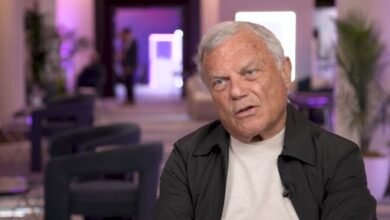
Mark Mardell: A Powerful Voice in British Journalism
The Respected Journalist Who Shaped Political Broadcasting with Insight, Integrity, and Independence

Table of Contents
ToggleIntroduction
Mark Mardell is one of the most recognisable and respected figures in modern British journalism. Over several decades, he became known for calm authority, sharp political analysis, and the ability to explain complex national and international issues in a way ordinary audiences could understand. His career reflects the highest standards of public service journalism, built on accuracy, balance, and experience rather than controversy or personal promotion.
At the same time, his professional journey has not been without challenges. From intense political pressure to public discussions around health and broadcasting change, Mark Mardell’s story includes both positive achievements and difficult moments. This balanced reality makes his career especially relevant to anyone interested in how journalism shapes democracy, accountability, and public understanding.
Quick Bio
| Detail | Information |
|---|---|
| Real Name | Mark Ian Mardell |
| Date of Birth | 10 September 1957 |
| Age | 68 (as of 2026) |
| Birth Place | Hillingdon, Middlesex, England |
| Nationality | British |
| Profession | Journalist, Broadcaster, Radio Presenter |
| Education | Epsom College; University of Kent (Politics) |
| Known For | BBC Political Reporting, Radio 4 Presenting |
| Years Active | 1980s – Present |
Early Life and Education
Mark Mardell was born in Hillingdon, Middlesex, and raised in England, where he developed an early interest in politics and public affairs. His upbringing in a stable educational environment encouraged curiosity, debate, and critical thinking—qualities that later became central to his professional identity as a journalist.
He attended Epsom College before moving on to the University of Kent, where he studied Politics. This academic background gave him a strong foundation in political systems, ideology, and governance. Unlike many media figures who enter journalism through performance or entertainment routes, Mark Mardell’s grounding in political study shaped his analytical and measured reporting style.
Starting a Career in Journalism
Mark Mardell began his professional career in commercial radio, a training ground that demanded clarity, speed, and accuracy. He worked at Radio Tees and Radio Aire in Leeds, gaining first-hand experience in live reporting and audience-focused news delivery.
He later joined Independent Radio News in London, where he worked as an industrial editor. During this period, he covered major industrial and political disputes, developing a reputation for seriousness and reliability. This early phase of his career established his identity as a journalist focused on substance rather than spectacle.
Rise at the BBC
Mark Mardell joined the BBC in 1989, marking the beginning of a defining chapter in his professional life. He quickly rose through the ranks due to his political knowledge and calm on-air presence. Unlike more combative journalists, he became known for asking firm but fair questions.
One of his most influential roles was as Political Editor of Newsnight, where he reported on major shifts in British politics. This period tested his ability to balance political pressure with editorial independence. While his work earned widespread respect, it also exposed him to criticism from those uncomfortable with rigorous scrutiny.
International Reporting and Editorial Leadership
Mark Mardell later became the BBC’s first Europe Editor, a role that placed him at the centre of complex European Union affairs. Reporting from across the continent, he translated dense policy debates into accessible narratives for UK audiences. His coverage helped many viewers understand how European decisions affected daily life in Britain.
He then served as North America Editor, based in Washington, D.C. In this role, he covered US elections, political polarisation, and shifts in global power. While praised for depth and experience, he also faced the challenge of explaining foreign political cultures to a British audience during increasingly divisive times.
Radio 4 and Public Trust
After returning to the UK, Mark Mardell became a leading voice on BBC Radio 4, presenting flagship programmes such as The World at One and The World This Weekend. These roles demanded authority, neutrality, and clarity—qualities he consistently delivered.
His radio work strengthened public trust in serious journalism, even as media consumption habits changed. However, the pressure on traditional broadcasting and budget constraints created uncertainty, ultimately contributing to his departure from the BBC after more than three decades.
Life Beyond the BBC
Following his exit from the BBC in 2020, Mark Mardell transitioned into freelance journalism and commentary. Rather than retreating from public life, he continued writing and speaking on political and social issues with honesty and independence.
He also became a podcast host, using the format to explore serious topics in a more personal and reflective way. This phase of his career shows adaptability and resilience, proving that experienced journalists still have relevance in a changing media landscape.
Health, Openness, and Advocacy
Mark Mardell publicly disclosed his Parkinson’s disease diagnosis in 2022. His decision to speak openly was widely respected and contributed to greater awareness and understanding of the condition. Rather than diminishing his professional identity, this honesty strengthened his public standing.
By discussing the challenges of communication and broadcasting with Parkinson’s, he helped remove stigma and encouraged openness. This aspect of his life represents a powerful example of turning personal difficulty into public value.
Legacy in Journalism
Mark Mardell’s legacy is built on credibility, depth, and public service. He represents a generation of journalists who prioritised accuracy over outrage and explanation over opinion. His work helped audiences navigate political change with understanding rather than fear.
At the same time, his career reflects the pressures faced by traditional journalism in a digital age. His journey shows both the strength and vulnerability of serious reporting, making his story especially relevant today.
Conclusion
Mark Mardell’s career stands as a powerful reminder of what journalism can achieve at its best. Through decades of political reporting, international analysis, and public broadcasting, he earned trust by staying informed, measured, and human. His challenges did not erase his achievements; instead, they added depth to his public role.
As a journalist, broadcaster, and advocate, Mark Mardell remains a significant figure in British media history. His story continues to inspire respect, reflection, and renewed appreciation for journalism rooted in integrity.
Frequently Asked Questions
Who is Mark Mardell?
Mark Mardell is a British journalist and broadcaster known for his long career in political reporting and radio presenting.
What is Mark Mardell best known for?
He is best known for his work with the BBC, including political editing, international reporting, and Radio 4 presenting.
Did Mark Mardell work outside the UK?
Yes, he served as Europe Editor and North America Editor, reporting from across Europe and the United States.
Is Mark Mardell still active in journalism?
Yes, he continues to work as a writer, commentator, and podcast host.
Why is Mark Mardell considered influential?
He is respected for his balanced reporting, political expertise, and long-term contribution to public understanding of complex issues.