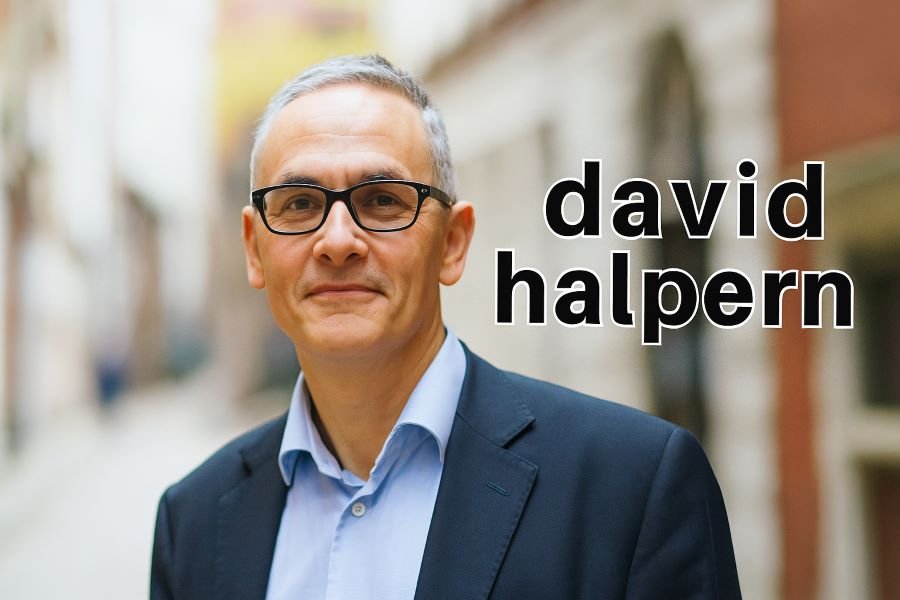
David Halpern: The Visionary Mind Behind the Behavioural Insights Revolution
How the CEO of the Behavioural Insights Team Transformed Public Policy and Human Decision-Making

Table of Contents
ToggleIntroduction
David Halpern is a name that resonates with innovation, intellect, and influence in the world of behavioural science and policymaking. As the CEO of the Behavioural Insights Team, he played a pivotal role in reshaping how governments across the globe think about human behaviour, decision-making, and evidence-based governance. Known for applying psychological principles to improve public policy, Halpern’s work has touched millions of lives — proving that small behavioural changes can lead to powerful societal outcomes.
He has combined academic rigour with real-world application, pioneering what many call the “nudge revolution.” His philosophy is rooted in a simple yet profound belief: better understanding of human behaviour can make governments smarter, fairer, and more effective.
Quick Bio
| Attribute | Details |
|---|---|
| Full Name | David Solomon Halpern |
| Date of Birth | June 1966 |
| Nationality | British |
| Profession | Psychologist, Policy Advisor, Public Servant |
| Education | University of Cambridge (B.A., PhD) |
| Position | Former CEO, President Emeritus of the Behavioural Insights Team |
| Honours | Commander of the Order of the British Empire (CBE, 2023) |
| Key Books | Social Capital (2005), The Hidden Wealth of Nations (2010), Inside the Nudge Unit (2015) |
Early Life and Education
David Halpern was born in June 1966 in the United Kingdom. His academic journey began at The King’s School in Rochester, where his curiosity about human nature took shape. Later, he attended the University of Cambridge, earning a First-Class Honours degree in Natural Sciences, specialising in Experimental Psychology at Christ’s College.
Halpern’s intellectual curiosity did not stop there. He pursued a PhD in Social and Political Sciences at St John’s College, Cambridge. His early academic exposure to both psychology and social sciences helped him develop a rare ability — to view human behaviour not just as a scientist, but as a policymaker determined to make lasting impact.
The Birth of a Behavioural Scientist
Halpern began his professional career as a Research Fellow at the Policy Studies Institute in London. There, he analysed social policies through an empirical lens, blending data with psychology to understand what truly drives human behaviour. Later, he served as a Prize Research Fellow at Nuffield College, Oxford, refining his ideas on social capital and the mechanisms that bind societies together.
By 1996, he joined the University of Cambridge as a lecturer, inspiring a generation of students to think beyond theories and look at how behavioural insights could reshape communities and institutions. These formative years gave him the foundation to bridge science and governance — a hallmark of his later work.
Rise in Public Service
In 2001, David Halpern took his behavioural expertise into the heart of British government as Chief Analyst in the Prime Minister’s Strategy Unit. Over six years, he helped develop policies grounded in social research rather than political ideology. His innovative approach demonstrated that understanding behaviour — not just designing rules — is key to effective policy.
After 2007, Halpern became Director of the Institute for Government, a think tank aimed at improving government performance. His leadership there reinforced his belief in evidence-based policymaking and experimentation, preparing him for what would become his defining role.
The Behavioural Insights Team: A New Era of Public Policy
In 2010, David Halpern founded the Behavioural Insights Team (BIT), famously known as the Nudge Unit. As its CEO, he led an extraordinary experiment: applying behavioural science to real-world governance. BIT’s mission was simple but radical — test small interventions, measure their outcomes, and scale what works.
Under Halpern’s leadership, BIT transformed government strategies. Whether increasing organ-donation registrations, boosting tax compliance, or promoting energy conservation, BIT proved that human-centred design could outperform traditional bureaucracy. This “nudge” philosophy inspired similar units across the US, Australia, Canada, and beyond.
By 2023, after more than a decade of pioneering this global movement, Halpern transitioned to President Emeritus of BIT, leaving behind a team that continues to influence international public policy.
Publications and Academic Influence
David Halpern has authored influential works that blend behavioural theory with practical governance. His 2005 book, Social Capital, explored how trust and community networks shape societies. The Hidden Wealth of Nations (2010) examined how social bonds drive prosperity, while Inside the Nudge Unit (2015) offered an insider’s view into how small changes create large-scale impact.
These books cemented Halpern’s reputation as both a scholar and practitioner. They are used in universities and policy schools worldwide, reflecting his dual commitment to academic excellence and public service.
Honours and Recognition
Halpern’s contribution to the UK and global public service has been formally recognised. In 2016, he was elected a Fellow of the Academy of Social Sciences, highlighting his academic and social impact. In 2023, he received the Commander of the Order of the British Empire (CBE) for outstanding service to public policy and behavioural science.
These honours signify more than prestige — they acknowledge the profound effect his research and leadership have had on governments, public institutions, and millions of ordinary people influenced by smarter policy design.
Leadership Style and Legacy
As CEO of the Behavioural Insights Team, David Halpern was known for fostering collaboration, creativity, and experimentation. He encouraged civil servants to “test, learn, adapt,” building a culture where evidence guided decisions. His approach helped public institutions move away from rigid policies toward agile, data-driven innovation.
Halpern’s legacy lies in transforming policymaking from intuition-based governance into an empirical science of human behaviour. His work demonstrated that governments can be more empathetic and efficient when they understand the psychology behind citizens’ choices. Today, behavioural insight units exist in over 50 countries, each a testament to his vision.
Criticism and Debate
While Halpern’s work is widely celebrated, it has also sparked ethical debate. Critics argue that “nudging” can manipulate citizens subtly, raising questions about autonomy and consent. Halpern acknowledges these concerns, emphasising that transparency and ethical oversight are vital for behavioural science in policy.
This openness to criticism is part of his strength. By addressing ethical boundaries head-on, Halpern has helped shape a global conversation about the moral use of behavioural data — balancing innovation with responsibility.
Conclusion
David Halpern’s journey from Cambridge scholar to global policymaker represents one of the most compelling stories in modern governance. His tenure as CEO of the Behavioural Insights Team redefined how governments approach social challenges — using evidence, empathy, and experimentation rather than ideology.
His story is proof that understanding people’s behaviour is not a soft science — it’s the foundation of effective leadership. Whether admired for his visionary methods or challenged for the ethical questions they raise, Halpern’s influence is undeniable. His legacy continues to inspire policymakers, psychologists, and citizens striving for smarter, fairer societies.
Frequently Asked Questions (FAQ)
Who is David Halpern?
David Halpern is a British psychologist and policymaker best known as the founder and former CEO of the Behavioural Insights Team, which applies behavioural science to improve public policy.
What is the Behavioural Insights Team?
The Behavioural Insights Team (BIT) — also known as the Nudge Unit — is a social-purpose company that uses behavioural research to design effective government policies and programs.
What are David Halpern’s most famous books?
His key works include Social Capital (2005), The Hidden Wealth of Nations (2010), and Inside the Nudge Unit (2015).
What awards has he received?
He was appointed Commander of the Order of the British Empire (CBE) in 2023 for public service and contributions to behavioural science.
What is his legacy?
Halpern’s legacy lies in pioneering the global adoption of behavioural insights in policymaking, helping governments use psychology and evidence to drive positive social change.