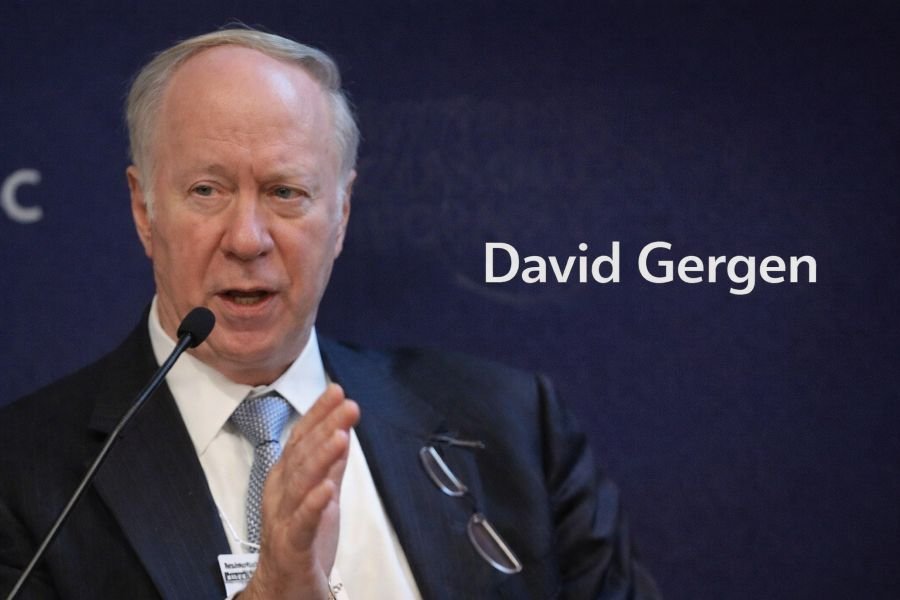
David Gergen: The Powerful Political Strategist Who Shaped the White House — Leadership, Influence, and the Challenges of American Politics
A Remarkable Journey of a Commentator and Former White House Communications Director Who Guided Four Presidents

Table of Contents
ToggleIntroduction
David Gergen stands as one of the most respected political advisers in modern American history. Known as a Commentator and former White House Communications Director, he built a remarkable career that crossed party lines and decades of political transformation. His work inside the White House and later in media and academia made him a trusted voice in American political life.
What makes David Gergen’s story powerful is the combination of influence and restraint. He served four U.S. presidents and witnessed moments of national triumph as well as political crisis. While he gained respect for his leadership and communication skills, he also experienced the pressures and criticism that come with working at the highest levels of government.
Quick Bio
| Field | Information |
|---|---|
| Real Name | David Richmond Gergen |
| Nickname | Dave Gergen |
| Date of Birth | May 9, 1942 |
| Birthplace | Durham, North Carolina, United States |
| Nationality | American |
| Ethnicity | White / European-American |
| Profession | Political Adviser, Commentator, Professor, Author |
| Known For | Commentator and former White House Communications Director |
| Education | Yale University, Harvard Law School |
| Spouse | Anne Elizabeth Wilson |
| Children | Christopher Gergen, Katherine Gergen |
Early Life and Family Background
David Richmond Gergen was born on May 9, 1942, in Durham, North Carolina. Growing up in an academic household, he was surrounded by intellectual curiosity and disciplined thinking. His father, John Jay Gergen, was a respected mathematics professor at Duke University, and this environment played a significant role in shaping David’s worldview.
As a young student, Gergen developed a deep interest in writing, politics, and public communication. He often participated in school activities that involved debate and journalism. These early experiences laid the foundation for his later career as a national political commentator and strategist.
The family valued education, discussion, and civic responsibility. This upbringing helped him understand the importance of leadership and public service. Even during his teenage years, he demonstrated strong analytical thinking and the ability to explain complex ideas clearly.
Education and Academic Development
David Gergen pursued higher education at two of the most prestigious institutions in the United States. He attended Yale University, where he studied American Studies and graduated in 1963. During his time at Yale, he became actively involved in journalism and served as managing editor of the Yale Daily News.
Working with the university newspaper helped him develop professional communication skills and a strong understanding of politics and public affairs. These experiences were instrumental in shaping his future career in political communication.
After Yale, Gergen continued his studies at Harvard Law School, where he earned his law degree in 1967. His time at Harvard further strengthened his analytical thinking and understanding of law, government, and leadership. This legal and academic background later proved invaluable in his work inside the White House.
Military Service and Early Professional Experience
Following his graduation from Harvard Law School, David Gergen served in the United States Navy. His military service lasted several years and provided him with valuable leadership experience and discipline.
Serving in the Navy also gave him a broader perspective on national service and global affairs. The experience helped shape his understanding of government institutions and national responsibilities.
After completing his military duty, Gergen began exploring opportunities in public service and political communication. His combination of legal training, writing ability, and leadership experience soon led him toward a career in national politics.
Entry into the White House
David Gergen’s career in national politics began in 1971, when he joined the administration of President Richard Nixon. He started as a speechwriting assistant and quickly demonstrated a remarkable ability to craft clear and persuasive messages.
His work focused on helping the president communicate with the American public during a difficult period in U.S. political history. The role required careful communication strategies and strong leadership under pressure.
Within a short time, Gergen was promoted to Director of Speechwriting, a position that placed him at the center of presidential communication. This promotion marked the beginning of his long influence in American political leadership.
Role as White House Communications Director
One of the most defining chapters of David Gergen’s career was his role as White House Communications Director. In this position, he helped design the messaging and communication strategy of presidential administrations.
He served as Communications Director for both Gerald Ford and Ronald Reagan, making him one of the few political advisers trusted by different administrations. His work involved coordinating speeches, press relations, and national messaging.
This role required balancing political strategy with public trust. While successful communication strengthened presidential leadership, mistakes or misunderstandings could lead to national controversy. Gergen’s ability to manage these challenges made him a respected strategist.
Advisor to Four U.S. Presidents
David Gergen holds a rare distinction in American politics: he served four different presidents.
Richard Nixon
Gergen began as a speechwriter and later directed speechwriting operations during the Nixon administration.
Gerald Ford
He served as Director of Communications, helping restore public confidence after the Watergate scandal.
Ronald Reagan
During the Reagan administration, he again worked as Communications Director and helped refine presidential messaging.
Bill Clinton
In 1993, he joined the Clinton administration as Counselor to the President, offering strategic advice on communication and leadership.
Serving leaders from both political parties demonstrated his ability to focus on governance rather than partisan loyalty.
Career in Journalism and Media
After leaving government service, David Gergen transitioned into journalism and media commentary. His deep experience inside the White House made him a valuable analyst for national news organizations.
He became a senior political analyst for CNN and regularly appeared on television programs discussing elections, public policy, and leadership. As a commentator and former White House Communications Director, his insights helped viewers understand complex political developments.
His media career allowed him to continue influencing public debate while maintaining a reputation for thoughtful and balanced analysis.
Academic Leadership and Teaching
David Gergen also built a respected career in academia. He joined Harvard Kennedy School as a professor of public service and focused on leadership education.
One of his most significant contributions was helping develop the Center for Public Leadership at Harvard. The center aims to train future leaders in government, nonprofit organizations, and international institutions.
Through teaching and mentoring students, Gergen extended his influence beyond politics and media. Many of his students went on to become leaders in public service and global organizations.
Books and Thought Leadership
David Gergen shared his insights through writing as well. His most famous book, “Eyewitness to Power,” describes his experiences working with four presidents and offers lessons about leadership.
In the book, he explains the challenges presidents face and the qualities required for effective leadership. His writing combines personal experiences with thoughtful political analysis.
Later, he published “Hearts Touched with Fire,” which explores how leaders develop courage, vision, and the ability to inspire others.
Legacy and Influence
David Gergen’s legacy lies in his commitment to leadership, public service, and bipartisan cooperation. Few individuals have had such a long and varied career inside government, media, and academia.
His work helped shape presidential communication, public leadership education, and political commentary. As a Commentator and former White House Communications Director, he provided insight into how leadership decisions are made at the highest levels.
Although political life often involves conflict and criticism, Gergen remained widely respected for his thoughtful approach and dedication to civic responsibility.
Conclusion
David Gergen’s life represents a rare combination of political experience, communication expertise, and educational leadership. From the White House to television studios and university classrooms, he influenced how Americans understand leadership and governance.
His career shows both the opportunities and challenges of public service. While political life can be demanding and controversial, it can also shape history and inspire future leaders. David Gergen’s journey continues to serve as an example of thoughtful leadership and dedication to the public good.
FAQ
Who is David Gergen?
David Gergen was an American political adviser, commentator, professor, and author who served four U.S. presidents.
Why is David Gergen famous?
He is widely known as a Commentator and former White House Communications Director who played a key role in presidential communication strategies.
Which presidents did David Gergen serve?
He worked for Richard Nixon, Gerald Ford, Ronald Reagan, and Bill Clinton.
What is David Gergen known for outside politics?
He became a political analyst for CNN and a professor at Harvard Kennedy School, where he helped develop leadership education programs.
What books did David Gergen write?
His most notable books include Eyewitness to Power and Hearts Touched with Fire, both focused on leadership and political experience.