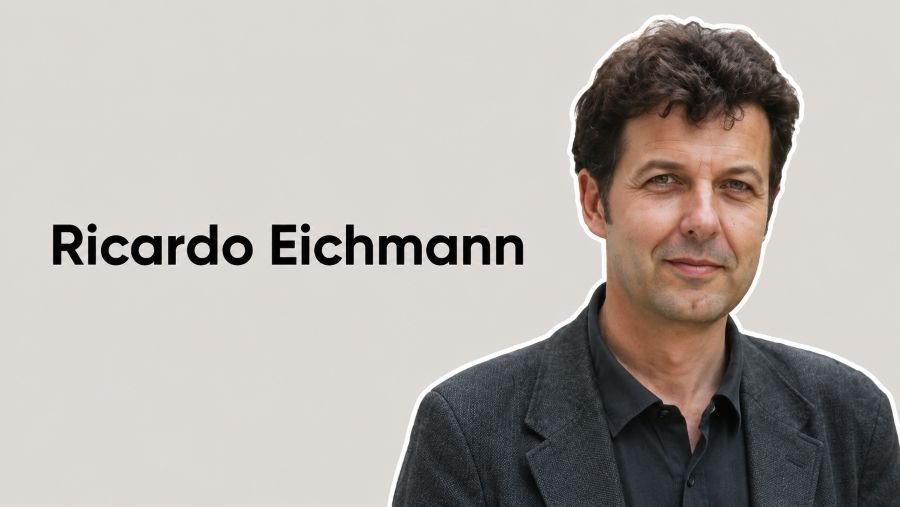
Ricardo Eichmann: Powerful Archaeology Career and Legacy
The life, education, research projects and academic influence of the German Near Eastern archaeologist

Introduction
Ricardo Eichmann is an Argentine-born German archaeologist, professor and academic editor. He is known for his research into ancient Near Eastern architecture, prehistoric settlements and the musical cultures of early civilisations.
His professional career includes university teaching, archaeological fieldwork and more than two decades of leadership at the German Archaeological Institute. He has worked on important sites in Saudi Arabia, Ethiopia, Qatar and Mesopotamia.
Ricardo Eichmann is best known as a specialist in Near Eastern and music archaeology.
Quick Bio
| Detail | Verified Information |
|---|---|
| Full Name | Ricardo Francisco Eichmann |
| Known As | Ricardo Eichmann |
| Date of Birth | 2 November 1955 |
| Age | 70 years old as of June 2026 |
| Birthplace | Buenos Aires, Argentina |
| National Background | Argentine-born German |
| Profession | Archaeologist, professor, researcher and academic editor |
| Main Fields | Near Eastern archaeology, ancient architecture and music archaeology |
| Education | Heidelberg University |
| Qualification | PhD completed in 1984 |
| Former Academic Role | Professor of Near Eastern Archaeology at the University of Tübingen |
| Major Leadership Role | Founding director of the Orient Department at the German Archaeological Institute |
| Father | Adolf Eichmann |
| Mother | Vera Eichmann, née Liebl |
| Known For | Archaeological research at Taymāʾ, Uruk, Wuqro and other ancient sites |
Who Is Ricardo Eichmann?
Ricardo Francisco Eichmann is a German scholar whose work explores the buildings, settlements, objects and musical practices of ancient societies.
Unlike traditional historians, who often depend heavily on written documents, archaeologists study physical evidence such as structures, tools, instruments, pottery and settlement remains.
Eichmann developed particular expertise in the archaeology of the Near East and Egypt. His work has examined how early communities designed buildings, organised settlements and used music within religious or social settings.
He also became an important academic administrator through his leadership of the Orient Department of the German Archaeological Institute in Berlin.
Early Life and Family Background
Ricardo Eichmann was born in Buenos Aires, Argentina, on 2 November 1955. He was the youngest of four sons born to Adolf Eichmann and Vera Eichmann.
His father was living in Argentina under a false identity after escaping Europe following the Second World War. Israeli agents captured Adolf Eichmann near Buenos Aires in May 1960, when Ricardo was five years old.
Adolf Eichmann was taken to Israel, tried for crimes connected to the Holocaust and executed in 1962.
Ricardo later explained that his mother rarely discussed his father or the events surrounding his capture and trial. He gradually learned the history through books, newspapers and other published material while growing up in Germany.
He later rejected Nazi ideology and did not accept the argument that his father’s actions could be excused because he was following orders.
Building an Independent Identity
Ricardo Eichmann’s surname attracted public attention, particularly when he entered university teaching and senior academic leadership.
However, he built a career that was independent of his family history. His public identity became connected to archaeology, university research and the preservation of ancient cultural heritage.
He did not change his surname. Instead, he acknowledged the historical facts while refusing to allow his father’s ideology to define his own beliefs or professional work.
His approach was generally private and controlled. He rarely gave interviews about his family and preferred to focus public attention on his archaeological research.
Education at Heidelberg University
Eichmann began his university studies at Heidelberg University in 1977.
He studied prehistory and protohistory, classical archaeology and Egyptology. These subjects provided a broad foundation for examining ancient cultures through architecture, objects, written evidence and excavation.
He completed his PhD in 1984. His doctoral research focused on prehistoric building plans and architectural design in the Near East.
The dissertation examined how early communities planned domestic and public structures during the Neolithic and Chalcolithic periods. It later became an important published study of prehistoric Near Eastern architecture.
His Einstein Center Chronoi academic profile confirms his Heidelberg education, doctorate and main research fields.
Beginning of His Archaeological Career
After completing his doctorate, Eichmann joined the Baghdad Department of the German Archaeological Institute in Berlin.
He worked as a research assistant from 1984 to 1989. He then continued as a researcher from 1989 until 1994.
This period allowed him to study the architecture and settlement history of ancient Mesopotamia. He developed experience in analysing excavation records, building phases and the physical development of early urban centres.
His early career reflects the detailed research path followed by many academic researchers before they move into senior teaching or institutional leadership.
Professor at the University of Tübingen
In 1995, Ricardo Eichmann became professor of Near Eastern archaeology at Eberhard Karls University of Tübingen.
He held the position until 1996. His work involved teaching students about ancient Near Eastern settlements, archaeological methods, architecture and cultural development.
The appointment brought greater media attention because of his surname. Eichmann addressed the historical connection openly but made clear that he rejected his father’s views.
His teaching career placed him among university professors whose influence combines specialist research with the training of new students.
Leadership at the German Archaeological Institute
In 1996, Eichmann became the founding director of the Orient Department of the German Archaeological Institute.
The department supports archaeological work across the Middle East, the Arabian Peninsula and neighbouring regions. Its work includes excavations, heritage preservation, academic cooperation and the publication of research.
Eichmann led the department for more than two decades. During this period, he supported research partnerships with institutions and cultural authorities in several countries.
The German Archaeological Institute’s official leadership record lists Margarete van Ess as head of the Orient Department from 2020, marking the end of Eichmann’s directorship.
Research at Uruk
Uruk was one of the most important subjects in Eichmann’s early archaeological work.
The ancient Mesopotamian city played a major role in the rise of urban civilisation. Archaeological evidence from the site reveals the development of monumental buildings, organised administration and complex social structures.
Eichmann studied the architectural remains and excavation records from major areas of Uruk, including Eanna and the Anu Ziggurat.
His research examined how the city’s buildings changed from early settlement periods into the Early Dynastic age.
This work helped scholars understand how architecture can reveal political, religious and social developments in ancient cities.
The Taymāʾ Archaeological Project
Eichmann became an important figure in archaeological research at Taymāʾ, an ancient oasis in north-western Saudi Arabia.
The Saudi-German project began in 2004 and investigated thousands of years of settlement history. Researchers studied buildings, inscriptions, water systems, environmental change and trading connections.
Taymāʾ held an important position on ancient trade routes linking Arabia with Egypt, Mesopotamia and the Levant.
Eichmann helped lead the German side of the project and contributed to academic reports and edited research volumes.
The project demonstrated his ability to connect excavation, environmental research, architecture and cultural history within one large investigation.
Archaeological Work in Ethiopia and Qatar
From 2008, Eichmann took part in excavations at Wuqro in northern Ethiopia.
The project explored ancient cultural links between the Horn of Africa and South Arabia. Archaeologists studied buildings, inscriptions and religious remains connected to early societies in the region.
Between 2012 and 2017, he also participated in fieldwork in southern Qatar in cooperation with Qatar Museums.
These projects expanded his research beyond Mesopotamia and showed the wide geographical range of his archaeological career.
His ability to connect different regions and academic subjects resembles the interdisciplinary approach used by an economic historian when combining evidence from several fields.
Göbekli Tepe Research
Ricardo Eichmann also became connected to the long-term research project examining prehistoric societies in Upper Mesopotamia.
Following the death of archaeologist Klaus Schmidt in 2014, Eichmann took responsibility for the wider research project that included Göbekli Tepe.
Göbekli Tepe is famous for its monumental stone structures and carved pillars. The site has transformed discussions about ritual activity, social organisation and construction during the early Neolithic period.
Eichmann’s involvement continued until his retirement from departmental leadership around 2020.
Contribution to Music Archaeology
Music archaeology is one of the most distinctive parts of Ricardo Eichmann’s career.
The field investigates how people created, performed and experienced music in past societies. Researchers examine ancient instruments, artistic images, written descriptions and the acoustic qualities of buildings.
Eichmann’s work focused especially on ancient Near Eastern and Egyptian music, including string instruments and lutes.
In 1998, he and music archaeologist Ellen Hickmann founded the International Study Group on Music Archaeology.
The group encouraged stronger cooperation between archaeologists, musicologists, historians and instrument specialists. Eichmann also helped organise international conferences and edit the series Studien zur Musikarchäologie.
His research demonstrates how archaeology can address human creativity as well as buildings and everyday objects. This broad intellectual curiosity can also be seen in writers such as Annaka Harris, whose work explores complex questions through more than one discipline.
Reconstructing Ancient Sound
Eichmann’s later music-archaeology research examined how musical sound may have shaped ideas of time in ancient cultures.
Researchers cannot hear an original performance from thousands of years ago. They must study surviving instruments, images, written material and the spaces where performances may have taken place.
Eichmann worked with reconstructions and replicas of ancient instruments to test their possible sound qualities.
This experimental method helped researchers consider how rhythm, musical structure and performance environments affected the experience of time.
His work gave music archaeology a practical dimension rather than treating ancient instruments only as museum objects.
Books and Academic Publications
Ricardo Eichmann has written, edited or contributed to numerous scholarly books and archaeological reports.
His important works include studies of prehistoric architecture in the Near East and the architectural development of Uruk.
He also contributed to publications about the Taymāʾ excavations, ancient music, archaeological instruments and cultural links between Egypt and the southern Levant.
His selected academic works include:
- Aspekte prähistorischer Grundrissgestaltung in Vorderasien
- Uruk: Die Stratigraphie
- Uruk: Architektur I
- Music-Archaeological Sources
- Music Archaeology in Context
- Taymāʾ I: Archaeological Exploration, Palaeoenvironment, Cultural Contacts
- Music and Politics in the Ancient World
- Music Beyond Cultural Borders
These works show the two main directions of his scholarship: ancient architecture and the archaeology of music.
Academic Recognition
Eichmann received an honorary doctorate in Baghdad in 2009 from the Union of Arab Historians’ Institute for Arabian History and Cultural Heritage.
He was also involved in the Berlin-based Topoi research cluster from 2007 to 2019.
In 2021, academic colleagues honoured him with the publication Klänge der Archäologie: Festschrift für Ricardo Eichmann.
A Festschrift is a collection of scholarly studies prepared to recognise an academic’s research career and influence.
The publication reflected Eichmann’s standing within Near Eastern archaeology, architectural research and music archaeology.
Public Image and Personal Values
Ricardo Eichmann is known as a private academic rather than a regular television or media personality.
When discussing his family history, he rejected antisemitism, Nazi ideology and attempts to excuse crimes through obedience to authority.
He also expressed support for education that encourages students to question, investigate and think critically.
His public comments suggest that he wanted to be judged through his own actions and professional work rather than through the crimes of his father.
He never presented himself as a political spokesman. His main public contribution remained archaeological research and academic cooperation.
Ricardo Eichmann’s Current Status
Ricardo Eichmann no longer leads the Orient Department of the German Archaeological Institute.
However, he remains connected to music-archaeology scholarship. The Austrian Archaeological Institute currently lists him as a Berlin-based member of the advisory board of the Journal of Music Archaeology.
Recent volumes in the journal appeared in 2023, 2024 and 2025, showing that the specialist field he helped develop remains active.
His published studies and archaeological projects also continue to be used by researchers examining ancient Arabia, Mesopotamia, Egypt, Ethiopia and the history of musical instruments.
Ricardo Eichmann Career Timeline
| Year | Career Event |
|---|---|
| 1955 | Born in Buenos Aires, Argentina |
| 1977 | Began studying at Heidelberg University |
| 1984 | Completed his PhD and joined the German Archaeological Institute |
| 1989 | Became a researcher in the institute’s Baghdad Department |
| 1995 | Appointed professor at the University of Tübingen |
| 1996 | Became founding director of the DAI Orient Department |
| 1998 | Co-founded the International Study Group on Music Archaeology |
| 2004 | Began archaeological fieldwork connected to Taymāʾ |
| 2008 | Became involved in excavation work at Wuqro, Ethiopia |
| 2009 | Received an honorary doctorate in Baghdad |
| 2012 | Began archaeological fieldwork in southern Qatar |
| 2014 | Took responsibility for a major Upper Mesopotamian research project |
| 2020 | Margarete van Ess succeeded him as Orient Department director |
| 2026 | Remains listed on the advisory board of the Journal of Music Archaeology |
Major Achievements
Ricardo Eichmann established a respected professional identity through several decades of archaeological work.
He helped build the Orient Department of the German Archaeological Institute into an important centre for research and international cooperation.
His field projects contributed to knowledge about ancient Arabia, Mesopotamia, northeastern Africa and the Gulf region.
He also helped music archaeology grow into a more organised international academic field.
His combination of architecture, excavation, instrument research and experimental reconstruction made his career unusually broad.
Interesting Facts About Ricardo Eichmann
- His full name is Ricardo Francisco Eichmann.
- He was born in Argentina but built his academic career in Germany.
- He studied three connected subjects at Heidelberg University.
- His doctoral research focused on prehistoric Near Eastern architecture.
- He became a university professor before leading a major archaeological department.
- He helped found an international music-archaeology research group in 1998.
- His archaeological work covered Saudi Arabia, Ethiopia, Qatar and Mesopotamia.
- An academic Festschrift was published in his honour in 2021.
- He remains associated with the Journal of Music Archaeology.
- He openly rejected the Nazi ideology connected to his father.
Frequently Asked Questions
Who is Ricardo Eichmann?
He is an Argentine-born German archaeologist known for Near Eastern archaeology, ancient architecture and music archaeology.
How old is Ricardo Eichmann?
He is 70 years old as of June 2026.
When was Ricardo Eichmann born?
He was born on 2 November 1955.
Where was Ricardo Eichmann born?
He was born in Buenos Aires, Argentina.
What is Ricardo Eichmann famous for?
He is famous for leading the German Archaeological Institute’s Orient Department and conducting research into ancient architecture and music.
Where did Ricardo Eichmann study?
He studied at Heidelberg University and completed his PhD in 1984.
Was Ricardo Eichmann a professor?
Yes, he was professor of Near Eastern archaeology at the University of Tübingen from 1995 to 1996.
What did Ricardo Eichmann research?
His research covered prehistoric architecture, ancient Near Eastern settlements, Egypt, Arabia and music archaeology.
Is Ricardo Eichmann still working?
He has retired from departmental leadership but remains listed on the advisory board of the Journal of Music Archaeology.
Who was Ricardo Eichmann’s father?
His father was Adolf Eichmann, a Nazi official convicted and executed in Israel for crimes connected to the Holocaust.
Conclusion
Ricardo Eichmann built a major academic career in Near Eastern and music archaeology.
His research moved from prehistoric architectural plans to ancient cities, Arabian oasis settlements, musical instruments and reconstructed sound.
Through university teaching and long-term leadership at the German Archaeological Institute, he supported archaeological research across several countries.
His career is also defined by his clear rejection of his father’s ideology and his decision to create an independent life based on scholarship, critical thinking and cultural research.