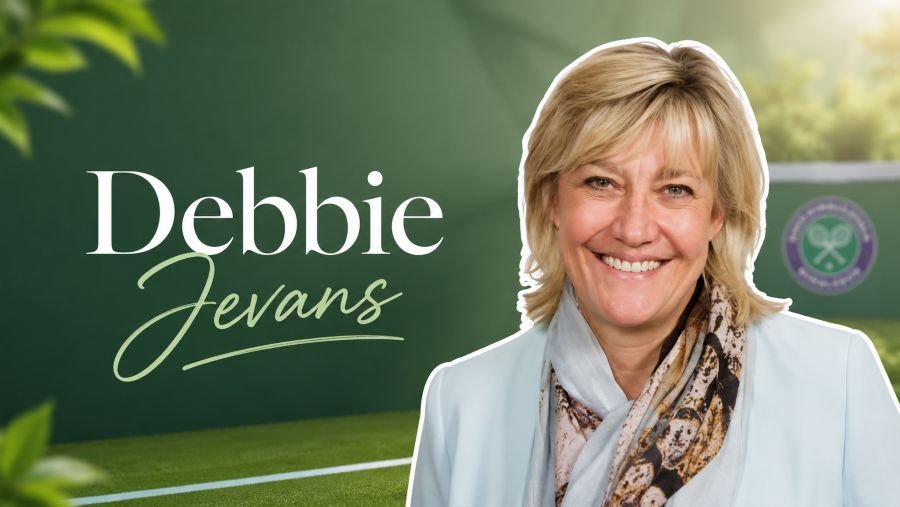
Debbie Jevans Biography: From Wimbledon Player to Historic Sports Leader
Debbie Jevans built an extraordinary career by moving from professional tennis into leadership roles across the Olympic Games, rugby, football and Wimbledon.

Introduction
Debbie Jevans is a British former professional tennis player and respected international sports administrator. She is best known as the first female Chair of the All England Lawn Tennis and Croquet Club, the organisation responsible for Wimbledon.
Her journey is unusual because she has experienced elite sport from both sides. She first competed on the court before becoming responsible for organising some of the largest sporting events in the world.
Today, she remains an important figure in British tennis and global sports leadership.
Quick Bio
| Field | Verified details |
|---|---|
| Full name | Deborah Ann Jevans |
| Popular name | Debbie Jevans |
| Former sporting name | Deborah Jevans-Jarrett |
| Date of birth | 20 May 1960 |
| Age | 66 years old |
| Birthplace | London, England |
| Nationality | British |
| Profession | Sports administrator and former professional tennis player |
| Famous for | Wimbledon leadership and London 2012 |
| Best Wimbledon singles result | Fourth round in 1979 |
| Playing retirement | 1983 |
| Current position | Chair of the All England Lawn Tennis and Croquet Club |
| Major honour | Commander of the Order of the British Empire |
| Honour received | 2013 |
Why Is Debbie Jevans Famous?
Debbie Jevans is famous for becoming one of the most experienced female sports administrators in the United Kingdom.
She played professional tennis before building a senior management career covering tennis, the Olympic Games, rugby, football and major international competitions.
Her best-known administrative achievement was helping deliver the sporting programme for the London 2012 Olympic and Paralympic Games.
She later made history by becoming the first woman to chair the All England Club, placing her at the centre of Wimbledon’s long-term leadership.
Early Life and Childhood
Deborah Ann Jevans was born in London on 20 May 1960. She spent much of her childhood in Chigwell, Essex.
Sport became an important part of her life at a young age. Tennis soon developed from a childhood interest into a serious competitive path.
Jevans attended an all-girls grammar school. However, she left formal education at 16 to concentrate fully on becoming a professional tennis player.
Her early decision required discipline and confidence. At that age, she was already training and competing with the aim of reaching the highest level.
Stories like hers form part of a wider history of women succeeding in British sport, also reflected in the career of Olympic swimming champion Anita Lonsbrough.
Junior Tennis and Early Development
Jevans became a successful junior competitor and won the Junior Wimbledon title.
That achievement marked her as one of Britain’s promising young tennis players. It also began her lifelong connection with the Wimbledon Championships.
She represented Great Britain at both junior and senior levels. International competition helped her understand the pressure, preparation and personal sacrifices involved in elite sport.
Those experiences later gave her an important advantage as an administrator because she understood the needs of athletes from personal experience.
Professional Tennis Career
Debbie Jevans became a professional tennis player during the late 1970s. She competed in singles, doubles and mixed-doubles events.
Her strongest Grand Slam singles performance came at Wimbledon in 1979. After qualifying for the main competition, she reached the fourth round.
Jevans faced former Wimbledon champion Virginia Wade in the last 16. Although she lost the match, reaching that stage remained the biggest singles result of her career.
She also reached the mixed-doubles quarter-finals at Wimbledon in 1978 with Andrew Jarrett.
Her career included appearances at Wimbledon, the French Open and the US Open. She represented Great Britain during a competitive period in women’s tennis.
Retirement From Professional Tennis
Jevans retired from professional tennis in 1983 when she was 23 years old.
She later explained that professional tennis required total daily focus. Training, fitness, diet, travel and match preparation left little room for divided attention.
After leaving the tour, she spent time in Dubai and became involved in managing sporting facilities and a golf club.
This experience introduced her to the organisational side of sport. It helped prepare her for the leadership career that followed.
Career changes are common among former competitors. The journey of Rachel Stringer also shows how experience as an athlete can support success in another part of the sports industry.
International Tennis Federation Career
Jevans returned to Britain and joined the International Tennis Federation in 1987.
She initially worked as Director of the Women’s Game. The position allowed her to support the development and organisation of women’s tennis internationally.
She later became General Secretary of the ITF. This senior role involved working with tennis associations, tournament organisers and international sporting bodies.
Her career with the federation continued until approximately 2002. By then, she had developed a strong understanding of sports governance and international event management.
The position transformed her from a former player into a recognised global sports executive.
London 2012 Olympic and Paralympic Games
In 2003, Jevans became involved with London’s bid to host the Olympic and Paralympic Games.
After London won the bid, she served as Director of Sport for the London Organising Committee. She was the first woman to hold this position for an Olympic and Paralympic organising committee.
Her responsibilities covered the delivery of Olympic sporting events, relationships with international federations, medical services and anti-doping programmes.
She managed a programme involving around 20,000 staff and a budget of more than £160 million.
Working alongside major Olympic leaders placed her within the same important chapter of British sporting history as Sebastian Coe.
Success of London 2012
The London 2012 Games became one of the most successful sporting events ever staged in Britain.
Jevans helped ensure that athletes could compete in well-prepared venues under carefully managed conditions.
The role required years of planning because each sport had different facilities, technical rules, officials and operational needs.
She also had to maintain strong relationships with international governing bodies while working toward a fixed opening date.
Her performance during London 2012 strengthened her reputation as a calm, organised and highly focused leader.
CBE Honour
Debbie Jevans was appointed a Commander of the Order of the British Empire in the 2013 New Year Honours.
The CBE recognised her services to sport and her work for the London 2012 Olympic and Paralympic Games.
It was one of the highest points of her administrative career and confirmed her influence within British sport.
The honour also recognised the importance of the wider team responsible for delivering the Games.
England Rugby 2015
Following London 2012, Jevans became Chief Executive of England Rugby 2015.
The organisation was responsible for preparing and delivering the 2015 Rugby World Cup in England.
Her work covered operational planning, venues, ticketing, volunteers and relationships with international rugby officials.
She left the role in March 2015 for publicly stated personal reasons. No further private explanation is included because she has not publicly provided detailed information.
Sport England and British Sports Development
Jevans was appointed Vice-Chair of Sport England in 2014.
Sport England supports community participation, sporting facilities and programmes designed to help more people become physically active.
Her experience brought an elite-sport and major-event viewpoint to the organisation.
She understood that successful national sport requires both major international events and strong opportunities at the local level.
The development of future competitors remains important across British sport, including athletes such as Sarah Adlington, who progressed from national development into Olympic competition.
English Football League Leadership
Jevans joined the English Football League board as an independent non-executive director in 2014.
She became Interim Chair in September 2018 following the departure of Ian Lenagan.
The appointment made her the first woman to lead the English Football League.
In 2019, she became Executive Chair while the organisation worked through a period of leadership change and serious financial concerns involving several clubs.
Her EFL board service ended in June 2023 after she completed the maximum permitted term.
Commonwealth Games and Other Roles
Jevans also led work connected with Birmingham’s successful bid to host the 2022 Commonwealth Games.
Her knowledge of Olympic planning made her a suitable choice for another major multi-sport project.
She served as a trustee and director of the Invictus Games Foundation from 2015 until 2023.
The Foundation uses sport to support wounded, injured and sick members of the military community.
She has also worked as a Special Advisor for Sport to Podium Analytics, an organisation focused on reducing injuries in sport.
Becoming Wimbledon Chair
Debbie Jevans had already served within the All England Club before becoming its chair.
She joined the boards of the All England Lawn Tennis Club and its Championships organisation in 2016.
In January 2023, she was elected Vice-Chair. She succeeded Ian Hewitt after the 2023 Wimbledon Championships.
Her appointment made her the first female Chair of the All England Lawn Tennis and Croquet Club.
The official Wimbledon profile also confirms her CBE, playing background, leadership position and involvement with the Wimbledon Foundation.
What Does Debbie Jevans Do at Wimbledon?
As chair, Jevans leads the board responsible for the long-term direction of the All England Club and Wimbledon.
Her work includes governance, strategic planning, reputation management and important decisions about the tournament’s future.
The executive team manages daily operations, while the board provides oversight and protects the organisation’s wider interests.
Jevans must balance Wimbledon’s famous traditions with changing technology, player expectations and the needs of modern audiences.
Her playing experience helps her view decisions from an athlete’s position rather than only from a business viewpoint.
Official Wimbledon Video
Place this video directly after the “What Does Debbie Jevans Do at Wimbledon?” section.
Leadership Style and Work Ethic
Jevans is known for detailed preparation and high professional standards.
Her tennis background taught her that strong results normally come from repetition, discipline and complete focus.
She has described the importance of confidence, especially for women seeking senior positions in sport.
Her leadership also shows a balance between tradition and change. At Wimbledon, she must protect the tournament’s identity while preparing it for future generations.
This ability to break barriers connects her with other influential British sporting figures, including Olympic champion Tessa Sanderson.
Awards and Major Achievements
Debbie Jevans won Junior Wimbledon before competing professionally for Great Britain.
She reached the fourth round of the Wimbledon singles competition in 1979 and the mixed-doubles quarter-finals in 1978.
She became the first female Director of Sport for an Olympic and Paralympic Games organising committee.
Jevans was appointed CBE in 2013 for services to sport and London 2012.
She later became the first woman to lead the English Football League and the first female Chair of the All England Club.
Current Status
As of June 2026, Debbie Jevans continues to serve as Chair of the All England Lawn Tennis and Croquet Club.
She also holds active directorships connected with the All England Club, the Championships and the Wimbledon Foundation.
Her current responsibilities place her among the most influential administrators in international tennis.
She remains involved in decisions concerning Wimbledon’s organisation, development, community work and long-term position within world sport.
Legacy and Influence
Debbie Jevans has built a legacy that reaches beyond her results as a tennis player.
She proved that experience as an athlete can become a strong foundation for international leadership.
Her career has crossed several sports without losing its connection to athlete welfare, competition standards and careful event delivery.
She has also opened important doors for women seeking senior positions in organisations traditionally led by men.
Her journey from Junior Wimbledon champion to All England Club Chair remains one of the most remarkable leadership stories in British sport.
Interesting Facts About Debbie Jevans
Debbie is the first woman to chair the organisation responsible for Wimbledon.
She reached the last 16 of the Wimbledon women’s singles competition in 1979.
She left school at 16 to concentrate on professional tennis.
She has held senior roles in tennis, rugby, football, the Olympic Games and the Commonwealth Games.
She managed the sporting programme for London 2012 before receiving a CBE.
She returned to Wimbledon as a leader decades after competing there as a player.
Frequently Asked Questions
Who is Debbie Jevans?
She is a British sports administrator, former professional tennis player and Chair of the All England Club.
What is Debbie Jevans’s full name?
Her full legal name is Deborah Ann Jevans.
How old is Debbie Jevans?
She is 66 years old as of June 2026.
When was Debbie Jevans born?
She was born on 20 May 1960.
Where was Debbie Jevans born?
She was born in London, England, and grew up in Chigwell, Essex.
Did Debbie Jevans play professional tennis?
Yes, she played professionally and represented Great Britain at junior and senior levels.
What was her best Wimbledon result?
She reached the fourth round of the Wimbledon women’s singles competition in 1979.
What is Debbie Jevans doing now?
She currently serves as Chair of the All England Lawn Tennis and Croquet Club.
Why did Debbie Jevans receive a CBE?
She received the honour for services to sport and her work on the London 2012 Olympic and Paralympic Games.
Is Debbie Jevans the first female Wimbledon chair?
Yes, she became the first female Chair of the All England Club in July 2023.
Conclusion
Debbie Jevans’s biography shows how sporting experience can develop into powerful leadership. She moved from competing at Wimbledon to helping organise some of the largest events in world sport.
Her work on London 2012, the English Football League and Wimbledon has made her an important figure in British sports history.
As the first female Chair of the All England Club, she continues to protect Wimbledon’s traditions while helping the tournament prepare for the future.