Home Extensions in Richmond: The Hidden Planning Rules That Catch Homeowners Off Guard Every Year

Richmond looks like an easy place to extend. Generous gardens. Period properties. Affluent homeowners with the budgets to build properly. On the surface a straightforward borough for home improvement.
Underneath the surface Richmond has some of the most complex planning constraints in London. Conservation areas. Tree preservation orders. Proximity to the river. Protected views. Constraints that catch homeowners off guard every year because they look like an easy borough and turn out to be anything but. Good architects richmond homeowners trust know exactly where these hidden rules apply.
The Conservation Area Coverage
Richmond has extensive conservation area designations. Richmond Hill. Richmond Green. Kew. Petersham. Ham. Large swathes of the borough fall within protected areas where permitted development rights are restricted and design is scrutinised closely.
Many homeowners don’t realise their property is in a conservation area until they start the planning process. The boundaries aren’t marked on the street. There are no signs. The only way to know is to check the council planning portal.
In a conservation area side extensions aren’t permitted development. Cladding isnt permitted development. Some roof alterations need full planning permission. The rules that apply on an unconstrained street simply don’t apply in the conservation areas that cover so much of Richmond.
The Tree Preservation Orders
Richmond is one of the greenest boroughs in London. Mature trees everywhere. In gardens. On streets. In the parks that give the borough its character. And many of those trees have preservation orders.
A tree preservation order makes it an offence to damage the tree without council consent. This includes damaging the roots. The root protection area extends in a circle around the trunk. Build within that zone with standard foundations and you damage the roots. Damage the roots and you commit an offence carrying fines up to twenty thousand pounds.
Homeowners plan extensions without checking for tree preservation orders. The builder starts digging. The foundations encroach on a protected root zone. Work stops. The council gets involved. What looked like a simple extension becomes a planning and legal problem.
Checking for tree preservation orders before designing takes five minutes on the council website. Skipping that check can cost twenty thousand.
The River Proximity Rules
Parts of Richmond sit within the Thames floodplain. Properties near the river fall within flood risk zones that affect what you can build and how.
A flood risk assessment is required for extensions in higher risk zones. The finished floor level must sit above the predicted flood level. Materials below the flood line must be water resistant. Drainage must include measures to prevent floodwater backing up into the property.
Homeowners near the river often don’t realise their property is in a flood zone until the council requests a flood risk assessment as additional information during the planning process. This adds weeks of delay while the assessment is commissioned and submitted.
The Protected Views
Richmond has legally protected views. The view from Richmond Hill across the Thames meadows is protected by an Act of Parliament. Other significant views across the borough are protected by planning policy.
Extensions that would interrupt a protected view face additional scrutiny or outright refusal. This rarely affects standard rear extensions but can affect taller additions, loft conversions with prominent dormers, or extensions on elevated sites with long sightlines.
A homeowner planning a roof extension on a property within a protected view corridor needs to understand the constraint before designing. An architect unfamiliar with Richmond might miss it entirely.
What These Constraints Mean for Your Extension
The constraints don’t mean you cant extend. They mean you need to design within them. And designing within them requires knowing they exist before you start.
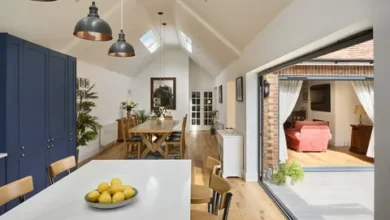
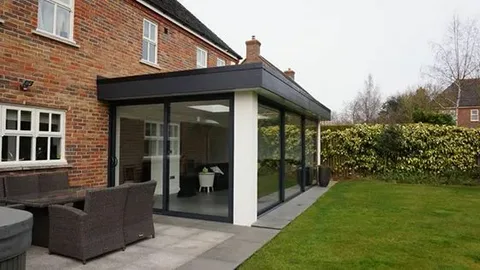
A kitchen extension is the most common project in Richmond. A rear extension creating an open plan kitchen diner connecting to the garden. On an unconstrained street this is straightforward. In Richmond it requires checking the conservation area status, the tree preservation orders, the flood risk, and the protected views before a single line is drawn.
Most kitchen extensions in Richmond are achievable. But the design must respond to whichever constraints apply to the specific property. A conservation area requires matching materials and appropriate proportions. A protected tree requires foundation design that avoids the root zone. A flood zone requires raised floor levels and water resistant construction.
Why Richmond Catches Homeowners Off Guard
Because it looks easy. The gardens are big. The properties are valuable. The homeowners have budgets. Everything suggests a borough where extending should be simple.
The complexity is invisible until you start. The conservation area you didn’t know about. The protected tree in the neighbours garden affecting your foundations. The flood zone you never suspected near the river. The protected view corridor crossing your roof line.
These constraints catch homeowners who assume Richmond is straightforward and hire an architect who makes the same assumption. The borough punishes that assumption with refusals, delays, and expensive surprises.
The Honest Recommendation
In Richmond check every constraint before designing. Conservation area status. Tree preservation orders. Flood risk. Protected views. All of these are checkable for free on the council website and the Environment Agency maps. All of them take minutes to verify.
Hire an architect who knows Richmond and checks these constraints automatically. Who doesn’t assume the borough is easy because it looks easy. Who understands that the hidden rules catch homeowners every year and designs to avoid every one of them.
Six to eight months from first conversation to completion when the constraints are identified early. Significantly longer when they emerge as surprises during planning or construction.
The hidden rules in Richmond are only hidden if you don’t look for them. Look first. Design second. Everything else follows.