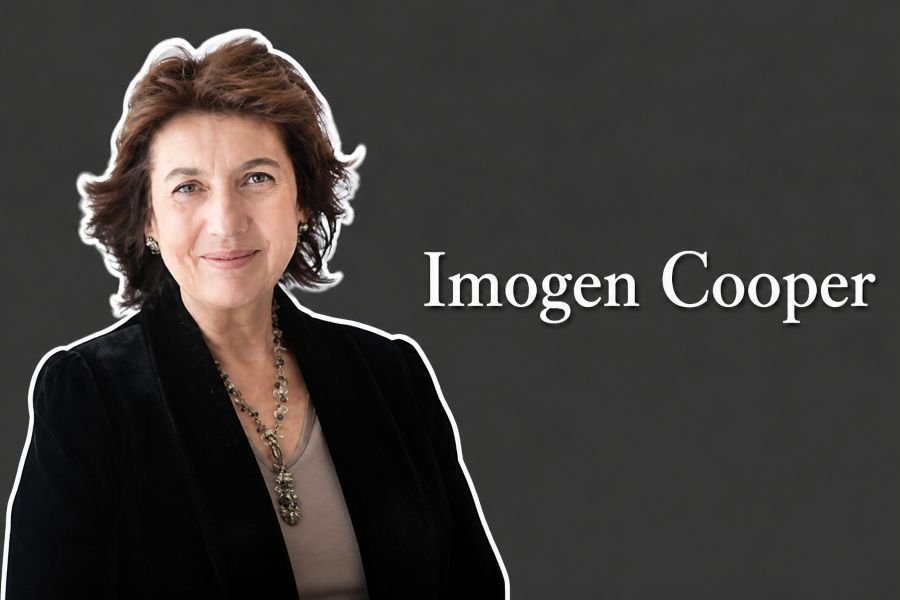
Imogen Cooper Powerful Journey of an English Pianist
A refined classical legacy built through discipline

Table of Contents
ToggleIntroduction
Imogen Cooper is a respected English pianist known for her poetic style, deep musical understanding, and lifelong dedication to classical music. She is especially admired for her interpretations of Mozart, Schubert, Schumann, and Romantic piano repertoire.
Her career shows both the positive side of artistic discipline and the difficult side of early professional training. She became one of Britain’s most admired classical performers, but her path required sacrifice, intense study, and years of commitment.
Quick Bio
| Field | Information |
|---|---|
| Real Name | Dame Imogen Cooper |
| Profession | English pianist |
| Date of Birth | 28 August 1949 |
| Birth Place | North London, England |
| Nationality | British |
| Known For | Classical and Romantic piano repertoire |
| Father | Martin Cooper, musicologist |
| Mother | Mary Stewart, artist |
| Siblings | Felicity, Josephine, and Dominic Cooper |
| Education | Conservatoire National Supérieur de Musique, Paris |
| Major Honour | DBE for services to music |
| Music Trust | Imogen Cooper Music Trust |
Early Life and Family Background
Imogen Cooper was born in North London on 28 August 1949. Her father, Martin Cooper, was a musicologist, and her mother, Mary Stewart, was an artist. She was the youngest of four children, after Felicity, Josephine, and Dominic.
Music was present in her home from childhood. According to her official biography, she experimented with the piano at a very young age, which helped shape her early musical identity. This background gave her a strong foundation, but it also placed her on a serious artistic path early in life.
Education and Musical Training
Imogen Cooper was sent to Paris at the age of 12 to study at the Conservatoire National Supérieur de Musique. Her teachers included Jacques Février, Yvonne Lefébure, and Germaine Mounier.
In 1967, at the age of 17, she received the Premier Prix de Piano. She later studied in Vienna with Alfred Brendel, Paul Badura-Skoda, and Jörg Demus. These experiences helped develop her mature style as an English pianist with a strong European classical background.
Start of Career
Imogen Cooper’s professional career began after her success at the Paris Conservatoire. Winning the Premier Prix de Piano helped establish her as a serious young performer with international potential.
Her early career was not based on fame or commercial popularity. Instead, she built her reputation slowly through musical quality, thoughtful interpretation, and strong performances. This made her career powerful in a positive way, although it required patience and long-term discipline.
Career Overview
Imogen Cooper became internationally recognised as one of the finest interpreters of classical and Romantic repertoire. She has performed as a soloist, chamber musician, and teacher.
She is particularly known for her work with Mozart, Schubert, and Schumann. Her performances are often praised for lyricism, clarity, and emotional depth. The negative side of such a demanding career is that classical performance requires constant preparation and pressure, but Cooper’s dedication helped her maintain a respected reputation.
Major Performances and Collaborations
Imogen Cooper has performed with major orchestras and appeared in important concert settings. She is also known for chamber music and lieder collaborations, including her long artistic partnership with baritone Wolfgang Holzmair.
Her official profile describes her as a soloist, chamber musician, and teacher. This shows the full range of her musical work, not only as a concert pianist but also as a mentor and collaborator.
Recordings and Musical Style
Imogen Cooper has recorded music by composers such as Mozart, Schubert, Schumann, Beethoven, Chopin, Liszt, and Wagner. Her discography includes Beethoven’s Diabelli Variations and Schubert song cycles with Wolfgang Holzmair.
Her musical style is refined rather than showy. She is admired for poetic poise, careful phrasing, and emotional intelligence. As an English pianist, she has created a legacy based on depth, not celebrity noise.
Career Timeline
1949
Imogen Cooper was born in North London, England.
1960s
She studied in Paris at the Conservatoire National Supérieur de Musique.
1967
She received the Premier Prix de Piano at age 17.
1970s onward
She developed an international career as a solo pianist and chamber musician.
2007
She was appointed Commander of the Order of the British Empire for services to music.
2015
She founded the Imogen Cooper Music Trust to support young pianists.
2019
She received the Queen’s Medal for Music.
2021
She was appointed Dame Commander of the Order of the British Empire for services to music.
2026
Reports stated that she began a farewell tour across Europe, with a final public performance planned for February 2027 at Wigmore Hall.
Awards and Honours
Imogen Cooper received a CBE in 2007 and a DBE in 2021 for services to music. She also received the Queen’s Medal for Music in 2019.
These honours confirm her importance in British classical music. Her awards are not just personal achievements; they also reflect her contribution to performance, education, and cultural life.
Imogen Cooper Music Trust
In 2015, Imogen Cooper founded the Imogen Cooper Music Trust. The trust supports young pianists by giving them time and space for intensive musical study.
This work is an important part of her legacy. It shows that her influence goes beyond concerts and recordings, reaching younger musicians who can continue the tradition of serious classical interpretation.
Recent News
In 2026, Imogen Cooper was reported to be beginning a 13-month farewell tour across Europe. The tour was described as leading toward her final public performance in February 2027 at Wigmore Hall.
This news marks a major moment in her career. For audiences, it is positive because it celebrates her legacy; for classical music, it is also sad because it signals the closing chapter of a long and respected performing life.
Legacy
Imogen Cooper’s legacy is built on artistic honesty, refined technique, and deep interpretation. She represents the kind of musician who values meaning over glamour and long-term excellence over quick fame.
As an English pianist, she has influenced audiences, students, and fellow musicians. Her recordings, performances, and educational work through her trust will continue to keep her name respected in classical music.
Conclusion
Imogen Cooper is one of the most important English pianists of her generation. Her life story combines talent, discipline, sacrifice, and artistic success. From her early training in Paris to her international performances and honours, she has built a powerful musical career.
Her journey also reminds readers that great art often comes with pressure and personal sacrifice. Still, her positive contribution to classical music is clear, lasting, and deeply respected.
FAQs
Who is Imogen Cooper?
Imogen Cooper is a British classical pianist known for Classical and Romantic piano repertoire.
What is Imogen Cooper’s real name?
Her real name is Dame Imogen Cooper.
When was Imogen Cooper born?
She was born on 28 August 1949.
Where was Imogen Cooper born?
She was born in North London, England.
Who are Imogen Cooper’s parents?
Her father was Martin Cooper, a musicologist, and her mother was Mary Stewart, an artist.
Does Imogen Cooper have siblings?
Yes, her siblings are Felicity, Josephine, and Dominic Cooper.
What is Imogen Cooper famous for?
She is famous for her interpretations of Mozart, Schubert, Schumann, and other classical composers.
What is the Imogen Cooper Music Trust?
It is a trust founded by Imogen Cooper to support young pianists through focused musical study.
What major honours has Imogen Cooper received?
She has received CBE, DBE, and the Queen’s Medal for Music.