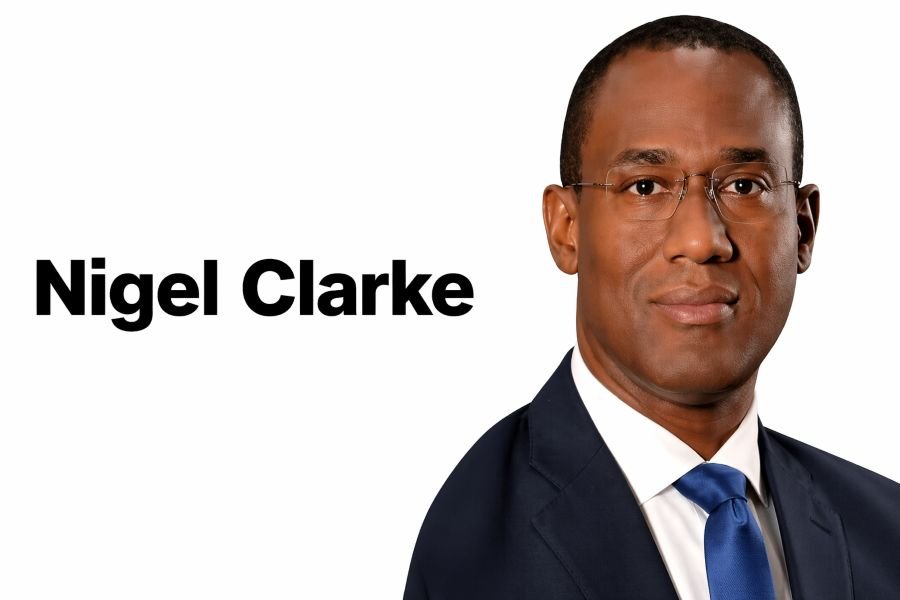
Nigel Clarke: Brilliant Economic Architect or Controversial Policy Driver? | The Powerful Rise of a Global Finance Leader
From National Reforms to Global Influence – The Strategic Mind Behind Modern Economic Transformation

Table of Contents
ToggleIntroduction
Nigel Andrew Lincoln Clarke is widely regarded as one of the most influential economic leaders to emerge from the Caribbean in recent decades. Known for his sharp intellect and disciplined approach to fiscal policy, he has played a central role in reshaping Jamaica’s economic stability and positioning it on the global financial stage.
His journey is both inspiring and complex. While many praise his reforms for strengthening economic resilience, others debate the social impact of strict fiscal discipline. This dual perception makes his story not only powerful but also deeply relevant in today’s global economic discussions.
Quick Bio
| Field | Details |
|---|---|
| Full Name | Nigel Andrew Lincoln Clarke |
| Date of Birth | 20 October 1971 |
| Age (2026) | 54 years |
| Birthplace | St. Andrew, Jamaica |
| Nationality | Jamaican |
| Profession | Economist, Politician, Financier |
| Education | University of the West Indies; University of Oxford |
| Spouse | Rupika Deloga |
| Children | 2 |
| Current Role | Deputy Managing Director, International Monetary Fund |
Early Life and Background
Nigel Clarke was born in St. Andrew, Jamaica, into a family deeply rooted in public service and national development. His father served as a respected judge, while his mother held a key leadership role in national planning. Growing up in such an environment naturally shaped his interest in governance and economics.
From an early age, he demonstrated strong academic ability and discipline. His upbringing emphasized education, responsibility, and contribution to society, laying a solid foundation for his future achievements.
Education Excellence
Clarke’s academic journey reflects both brilliance and determination. He attended Munro College, one of Jamaica’s most prestigious schools, where he developed a strong interest in mathematics and analytical thinking.
He later earned a First-Class Honours degree in Mathematics and Computer Science from the University of the West Indies. His academic excellence continued at the University of Oxford, where he completed both a master’s degree in Applied Statistics and a doctoral degree in Numerical Analysis.
Start of Career in Global Finance
Nigel Clarke began his professional career in London, working as an equity derivatives trader at Goldman Sachs. This role exposed him to high-level financial systems and international markets, sharpening his strategic thinking and technical expertise.
His time in global finance helped him understand complex financial instruments and economic structures. These insights would later prove valuable in shaping national economic policy and decision-making.
Rise in the Business World
After returning to Jamaica, Clarke transitioned into the private sector, where he quickly rose to leadership positions. At the Musson Group, he served in senior roles including Chief Financial Officer and Vice Chairman.
During his tenure, he played a key role in expanding the company’s international footprint. His leadership contributed to growth across multiple countries, demonstrating his ability to combine strategic vision with practical execution.
Entry into Politics
Clarke’s move into politics marked a significant turning point in his career. He first served as a Senator before taking on broader responsibilities in economic policy.
In 2018, he was elected as a Member of Parliament and appointed Minister of Finance and the Public Service. This role placed him at the center of Jamaica’s economic transformation efforts.
Transformational Leadership as Finance Minister
As Finance Minister, Clarke implemented a series of bold reforms aimed at strengthening fiscal discipline and economic resilience. His policies focused on reducing national debt, improving financial governance, and increasing investor confidence.
While these reforms earned international praise, they also sparked debate. Some critics argued that strict fiscal measures could limit social spending, highlighting the delicate balance between economic stability and social development.
Global Role at the IMF
In 2024, Nigel Clarke was appointed Deputy Managing Director of the International Monetary Fund. This role elevated him to one of the most influential positions in global finance.
At the IMF, he contributes to shaping international economic policy and supporting countries facing financial challenges. His appointment reflects global recognition of his expertise and leadership.
Leadership Style and Influence
Clarke is known for his analytical mindset and disciplined leadership style. He emphasizes data-driven decision-making and long-term economic planning.
His approach has influenced not only Jamaica’s economic policies but also broader discussions on sustainable development and fiscal responsibility in emerging economies.
Source of Income
Nigel Clarke’s income is derived from his professional roles in public service and corporate leadership. These include his work as Finance Minister, IMF leadership, and executive positions in the private sector.
His career reflects a blend of public and private sector experience, contributing to his overall professional success and financial stability.
Legacy and Global Impact
Nigel Clarke’s legacy is defined by his contribution to economic reform and global financial leadership. He is widely seen as a key figure in Jamaica’s economic turnaround and a representative voice for developing nations on the world stage.
His journey from a talented student in Jamaica to a senior leader at the IMF highlights the power of education, discipline, and strategic vision. His influence continues to shape economic policy both locally and internationally.
Conclusion
Nigel Clarke stands as a powerful example of modern economic leadership. His career reflects both achievement and controversy, showing that impactful leadership often comes with difficult decisions and public scrutiny.
Whether viewed as a reformer or a strict policy enforcer, his role in shaping economic systems is undeniable. As global financial challenges continue to evolve, his influence is likely to remain significant for years to come.
FAQ
Who is Nigel Clarke?
Nigel Clarke is a Jamaican economist and global financial leader currently serving as Deputy Managing Director of the IMF.
What is Nigel Clarke known for?
He is known for leading major economic reforms in Jamaica and contributing to global financial policy.
Where was Nigel Clarke born?
He was born in St. Andrew, Jamaica.
What is Nigel Clarke’s education?
He studied at the University of the West Indies and the University of Oxford, earning advanced degrees in mathematics and statistics.
Is Nigel Clarke married?
Yes, he is married and has two children.