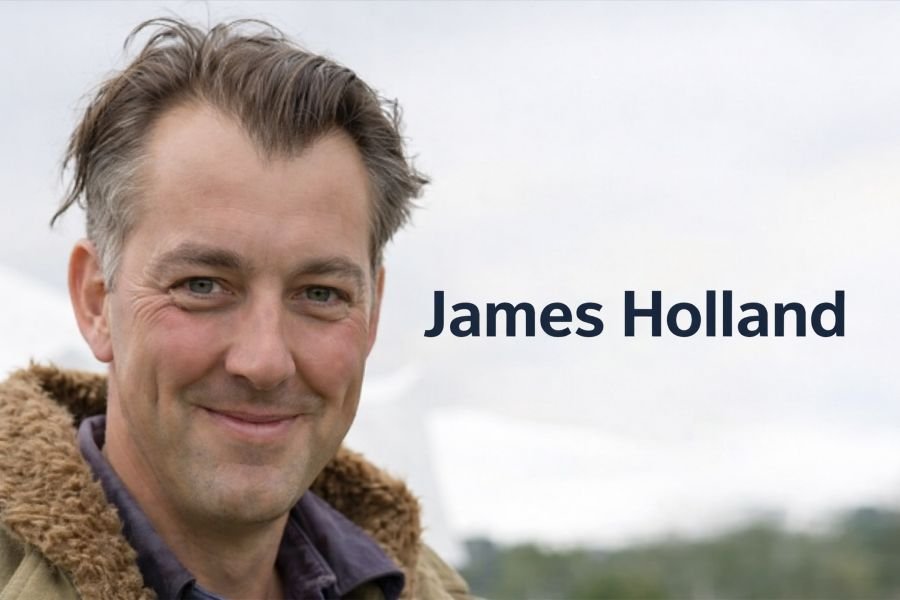
James Holland: The Brilliant Rise and Quiet Depth of a Respected Historian
A compelling look at the author, broadcaster, and World War II historian whose work has informed, challenged, and inspired modern readers

Table of Contents
ToggleIntroduction
James Holland is one of the most recognized names in modern British history writing. Known for his clear storytelling, deep research, and engaging media presence, he has built a strong reputation as a Historian who makes the past feel vivid and relevant. His work on the Second World War has reached readers, listeners, and viewers across the world, helping many people understand military history in a more human and accessible way.
What makes James Holland especially interesting is that his success has not come from noise or controversy, but from consistency, subject knowledge, and public trust. While many public figures rise quickly and fade just as fast, Holland has developed a lasting career through books, documentaries, festivals, and podcasting. His story is not only about professional growth, but also about how careful historical work can still attract a large modern audience.
Quick Bio
| Field | Details |
|---|---|
| Real Name | James Holland |
| Date of Birth | 27 June 1970 |
| Age | 55 |
| Birth Place | Salisbury, England |
| Nationality | British |
| Profession | Historian, Author, Broadcaster |
| Education | Chafyn Grove School, King’s School Bruton, St Chad’s College Durham |
| Degree | BA in History |
| Spouse | Rachel Holland |
| Children | Two |
| Sibling | Tom Holland |
| Known For | Second World War history, books, documentaries, podcasting |
| Major Project | Chalke History Festival |
| Podcast | We Have Ways of Making You Talk |
James Holland’s Early Life and Education
James Holland was born in Salisbury, England, on 27 June 1970. From an early stage in life, he was connected to an environment that valued learning, reading, and ideas. Although not every detail of his childhood is widely publicized, the available facts show that he followed a path shaped by education and intellectual interest rather than celebrity culture or commercial self-promotion.
He studied at Chafyn Grove School in Salisbury and later attended King’s School, Bruton. After that, he went on to St Chad’s College, Durham, where he earned a BA in History. This academic foundation mattered greatly in shaping his future identity as a Historian. His later career shows not just enthusiasm for the past, but also serious training in how to study, interpret, and communicate history responsibly.
How James Holland Started His Career
James Holland’s career developed through writing, and he gradually became known for his work on military and wartime history. His first major historical account connected to the Second World War was Fortress Malta: An Island Under Siege, 1940–1943, published in 2003. That work helped establish him as a writer with a strong command of military narrative and historical detail.
This beginning was important because it gave him a distinct area of authority. Rather than trying to cover every part of history, he became especially associated with the Second World War. That focus helped him stand out in a crowded field. It also allowed him to build a loyal readership that trusted him to explain complex campaigns, political decisions, and battlefield realities in a clear and readable way.
James Holland as a Historian and Author
As a Historian, James Holland is best known for making wartime history readable without stripping it of seriousness. He writes with energy, but he also grounds his work in evidence, context, and historical understanding. This balance has made him popular with both general readers and committed history enthusiasts who want books that are informative but never dull.
As an author, he has written widely on World War II, including works on Malta, the Battle of Britain, Normandy, and the Western theatre of war. His books are valued because they often combine operational detail with human experience. He does not present war only through maps and commanders. He also gives attention to logistics, ordinary personnel, strategic mistakes, and the lived reality behind major events.
Broadcast Work and Public Recognition
James Holland is not only a writer but also a broadcaster. His work in documentaries and television has helped expand his influence far beyond the traditional readership of history books. By appearing on screen and contributing to public discussions, he has become one of the most visible contemporary voices in British military history.
This part of his career matters because modern audiences often meet historians through media before they ever open a book. Holland has adapted well to that reality. His documentary work has strengthened his public image as someone who can explain difficult historical events in a direct and engaging way. That skill has played a major role in building his legacy and extending his reach.
Podcasting and a New Audience
One of the most successful parts of James Holland’s modern career is podcasting. He is widely known as the co-host of We Have Ways of Making You Talk, a podcast focused on the Second World War. The show has helped him connect with a large global audience, including younger listeners who may not have first discovered him through publishing or television.
Podcasting gave Holland something powerful: regular access to listeners who enjoy long-form discussion, strong storytelling, and deep historical conversation. In that space, he has been able to show not just his expertise but also his personality, curiosity, and communication style. For many people, this has made him feel less like a distant academic and more like a trusted guide through one of history’s most studied periods.
Major Projects and Professional Influence
A major part of James Holland’s professional identity is his role in the Chalke History Festival. He is associated with the festival as a co-founder, co-chair, and programme director. This is significant because it shows that his influence is not limited to writing alone. He has also helped shape public history as a live and shared cultural experience.
That role reflects a broader strength in his career. Holland is not simply producing content; he is building platforms where history can be discussed, debated, and appreciated. This kind of work deepens his standing as a Historian because it connects scholarship with community. It also shows that his contribution is both intellectual and organizational.
Personal Life and Family
James Holland is married to Rachel Holland and has two children. He is also the brother of Tom Holland, who is likewise known as a writer and historian. This family connection adds an interesting dimension to his life, as it places him within a household and family culture strongly linked to books, history, and public thought.
Even so, James Holland has generally maintained a measured public image. He is visible because of his work, not because he constantly shares private life for attention. That has helped preserve a sense of seriousness around his career. In an age where many public figures chase visibility at any cost, his more restrained presence has arguably worked in his favor.
Why James Holland Stands Out
James Holland stands out because he bridges several worlds successfully. He is serious enough for readers who want depth, but accessible enough for wider audiences who want clarity. He moves between books, broadcasting, live events, and podcasting without losing credibility. That is not easy, and it is one reason why his reputation has remained strong.
There is also a positive and negative contrast in his public story that makes him compelling. He works in a field that can sometimes become overly technical, repetitive, or narrow, yet his work remains lively and relevant. At the same time, his success has not depended on sensationalism. That combination gives him an unusual position: he is both popular and respected, visible and thoughtful.
Conclusion
James Holland has earned his place as one of the most influential public historians working on the Second World War today. Through books, documentaries, public speaking, festivals, and podcasting, he has created a body of work that informs readers while keeping history alive for a broad audience. His career shows what can happen when knowledge, discipline, and communication come together in the right way.
His story is ultimately about more than personal success. It is about the continuing value of history in public life. As a Historian, author, and broadcaster, James Holland has helped many people see the past not as something distant and dusty, but as something urgent, human, and worth understanding.
FAQ
Who is James Holland?
James Holland is a British Historian, author, and broadcaster best known for his work on the Second World War.
When was James Holland born?
He was born on 27 June 1970.
Where is James Holland from?
He was born in Salisbury, England.
What is James Holland known for?
He is known for writing books on World War II, presenting historical documentaries, and co-hosting a major history podcast.
What did James Holland study?
He studied History and earned a BA in the subject from St Chad’s College, Durham.
Is James Holland married?
Yes, he is married to Rachel Holland.
Does James Holland have children?
Yes, he has two children.
What podcast does James Holland co-host?
He co-hosts We Have Ways of Making You Talk.
What festival is James Holland associated with?
He is closely associated with the Chalke History Festival.
Why is James Holland important as a Historian?
He is important because he has made Second World War history more accessible, engaging, and meaningful for a wide modern audience.