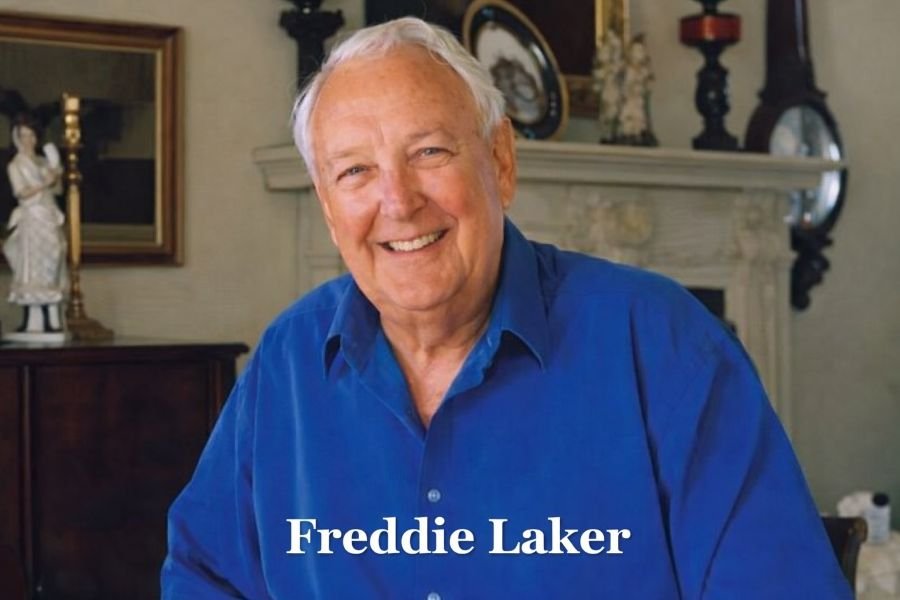
Freddie Laker: The Bold Visionary Entrepreneur Who Transformed Air Travel Forever
A Powerful Story of Innovation, Risk, Triumph, and Turbulence in Aviation History

Table of Contents
ToggleIntroduction
Freddie Laker remains one of the most influential figures in modern aviation, widely recognized as the entrepreneur who challenged traditional airline economics and made long-haul travel accessible to ordinary people. His journey from a modest upbringing in England to becoming a pioneering airline founder reflects determination, creativity, and an unwavering belief that air travel should not be a luxury reserved for the wealthy.
His life story is both inspiring and cautionary. While he achieved remarkable success by revolutionizing transatlantic travel with his low-fare model, he also faced dramatic setbacks, including the collapse of his airline empire. These contrasting experiences make Freddie Laker a compelling figure in business history and a lasting symbol of entrepreneurial courage.
Quick Bio
| Field | Details |
|---|---|
| Real Name | Frederick Alfred Laker |
| Known As | Freddie Laker |
| Date of Birth | 6 August 1922 |
| Birthplace | Canterbury, Kent, England |
| Nationality | British |
| Profession | Entrepreneur, Airline Founder |
| Major Company | Laker Airways |
| Spouse | Jacqueline Harvey |
| Children | Four |
| Died | 9 February 2006 |
Early Life and Background
Freddie Laker was born in Canterbury, England, during a period marked by economic hardship and global uncertainty. Growing up in a working-class household, he developed a strong sense of independence early on. His fascination with machines and aviation began in his teenage years, eventually shaping the direction of his future career.
Instead of following a conventional academic path, Laker chose hands-on experience. He left school to work in the aviation sector, where he learned technical and operational skills that later proved invaluable. This practical foundation gave him a deep understanding of aircraft operations and business logistics, setting him apart from many entrepreneurs of his time.
Education and Early Interests
Laker attended Simon Langton Grammar School but did not remain long, as his interests leaned more toward practical work than formal education. His decision to pursue real-world experience rather than academic qualifications demonstrated his entrepreneurial mindset from a young age.
His early exposure to aircraft engineering and operations provided a unique perspective on the aviation industry. These formative experiences not only sparked his passion for flying but also helped him identify inefficiencies in the airline business that he would later challenge with innovative ideas.
Start of Career
Freddie Laker’s professional journey began with employment in the aviation manufacturing sector, where he gained valuable technical expertise. During the 1940s, he also served in aviation support roles, gaining operational insight into aircraft logistics and transportation systems.
These early roles shaped his understanding of the aviation ecosystem, from maintenance to commercial operations. By the end of the decade, he had developed the confidence and knowledge necessary to launch his own ventures, marking the beginning of his entrepreneurial career.
Rise as an Entrepreneur
In the late 1940s, Laker founded Aviation Traders, a company focused on converting and selling aircraft. This venture proved successful and provided the financial foundation for his future airline businesses. His ability to identify market opportunities and act decisively quickly established him as a rising entrepreneur in the aviation industry.
Over the following years, he launched several aviation ventures, each expanding his expertise and influence. These businesses allowed him to refine his operational strategies and gain a deeper understanding of passenger and cargo markets, preparing him for his most ambitious project.
Founding Laker Airways
The defining moment of Freddie Laker’s career came with the establishment of Laker Airways in 1966. Initially operating as a charter airline, the company quickly gained recognition for its efficiency and competitive pricing. Laker’s vision was clear: to disrupt the airline industry by offering affordable travel without unnecessary frills.
Under his leadership, Laker Airways expanded rapidly, gaining a reputation as an innovative and customer-focused airline. The company’s growth reflected Laker’s entrepreneurial philosophy — combining cost efficiency with bold market positioning to challenge established competitors.
The Skytrain Revolution
Freddie Laker’s most significant contribution to aviation was the introduction of the Skytrain service in the 1970s. This low-cost, no-frills transatlantic flight offered dramatically reduced fares, making international travel accessible to a much broader audience.
The concept was revolutionary at the time, challenging the dominance of traditional airlines and reshaping consumer expectations. Skytrain proved that affordability and long-haul travel could coexist, laying the groundwork for the modern budget airline model used worldwide.
Challenges and Setbacks
Despite its early success, Laker Airways faced mounting challenges in the early 1980s. Rising fuel costs, economic recession, and intense competition placed enormous financial pressure on the company. These factors ultimately led to the airline’s collapse in 1982, marking a difficult chapter in Laker’s career.
The downfall of his airline was a stark reminder of the risks associated with bold innovation. Yet even in failure, Laker’s ideas continued to influence the industry, demonstrating that entrepreneurial impact can extend beyond immediate business success.
Later Life and Continued Influence
After the collapse of his airline, Freddie Laker remained active in aviation and business circles. He relocated to the United States and later became involved in advisory roles, sharing his experience with new generations of airline entrepreneurs.
His willingness to continue contributing to the industry after major setbacks highlighted his resilience and passion for aviation. Laker’s insights helped shape emerging airline strategies, reinforcing his reputation as a visionary entrepreneur.
Legacy
Freddie Laker’s legacy lies in his transformative impact on global aviation. By proving that low-cost long-haul flights could succeed, he changed how airlines approach pricing, competition, and accessibility. Today’s budget travel industry owes much to the principles he pioneered decades ago.
Beyond aviation, his life represents the broader entrepreneurial journey — one defined by risk-taking, innovation, and perseverance. His story continues to inspire business leaders who seek to challenge established systems and create meaningful change.
Conclusion
Freddie Laker’s life was a powerful blend of ambition, creativity, success, and adversity. As an entrepreneur, he reshaped an entire industry and left behind a legacy that continues to influence how millions of people travel today. His story demonstrates that true innovation often comes from those willing to challenge convention and embrace risk.
Even decades after his passing, Laker remains a symbol of entrepreneurial vision. His achievements remind us that bold ideas can redefine industries, while his setbacks offer valuable lessons about resilience and adaptability in the face of change.
FAQ
Who was Freddie Laker?
Freddie Laker was a British entrepreneur and airline founder best known for creating Laker Airways and pioneering low-cost transatlantic travel.
What was Freddie Laker famous for?
He was famous for launching the Skytrain service, one of the first low-fare long-haul airline models.
When was Freddie Laker born?
He was born on 6 August 1922 in Canterbury, England.
What is Freddie Laker’s legacy?
His legacy is the transformation of air travel into a more affordable and accessible service, influencing the modern budget airline industry.
Was Freddie Laker considered an entrepreneur?
Yes, he is widely regarded as a pioneering entrepreneur who revolutionized airline pricing and competition.