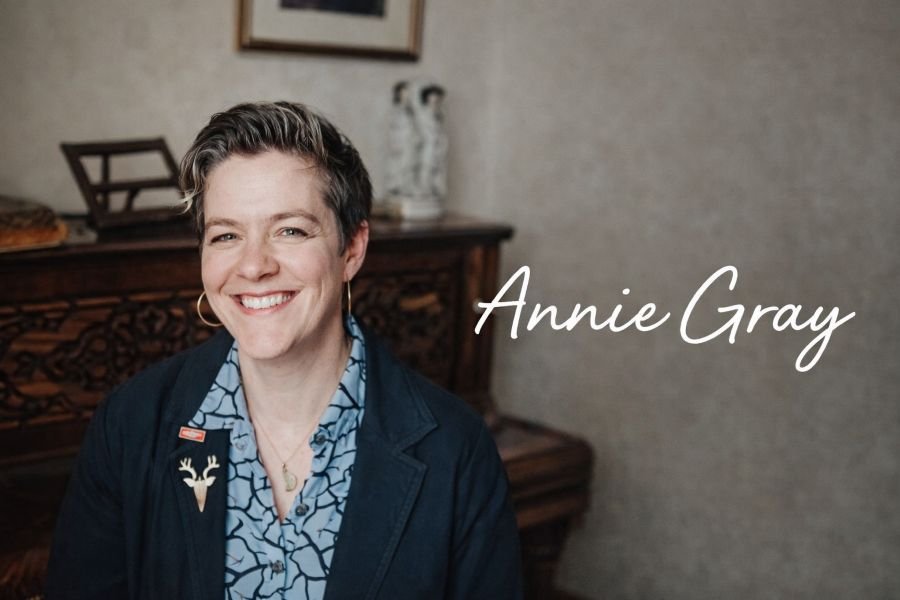
Annie Gray: The Brilliant Food Historian Transforming Britain’s Culinary Story
A Powerful Journey Through History, Culture, and the Surprising Truth Behind What We Eat

Table of Contents
ToggleIntroduction
Annie Gray is one of Britain’s most respected and influential food historians, known for transforming the way people understand culinary history. Through her books, broadcasting work, and public speaking, she has helped audiences see food not just as nourishment, but as a powerful reflection of society, class, culture, and politics. Her work proves that the kitchen can be just as historically important as the battlefield or the throne room.
At the same time, Annie Gray’s journey has not been without challenges. Establishing food history as a serious academic and media subject required persistence and credibility in a field sometimes dismissed as trivial. Yet through scholarly research and engaging storytelling, she has successfully positioned herself as a leading authority in British culinary history.
Quick Bio
| Field | Details |
|---|---|
| Full Name | Dr Annie Gray |
| Profession | Food Historian, Author, Broadcaster |
| Nationality | British |
| Education | University of Oxford, University of York, University of Liverpool |
| Specialization | British food history (c. 1650–1950) |
| Notable Role | Resident Food Historian on BBC Radio 4’s The Kitchen Cabinet |
| Known For | Culinary history books and media consultancy |
Early Life and Academic Foundation
Annie Gray developed a love of history and literature from an early age. Growing up in a home where books were valued and learning was encouraged, she discovered that stories of the past could be both informative and inspiring. This early intellectual curiosity shaped her future path.
Her academic journey began at the University of Oxford, where she studied Modern History. She later completed a Master’s degree in Historical Archaeology at the University of York, followed by a PhD from the University of Liverpool. This strong academic background gave her the tools to approach food history with scholarly depth and credibility.
Becoming a Leading Food Historian
The title “food historian” may sound niche, but Annie Gray transformed it into a respected professional identity. She specializes in British food and dining history from approximately 1650 to 1950, examining how food practices reveal social structures, economic shifts, and cultural attitudes.
Rather than focusing solely on recipes, she explores who cooked the food, who served it, and who had access to it. This approach allows her to uncover hidden stories about domestic workers, royal kitchens, wartime rationing, and everyday households. Through this lens, food becomes a powerful historical document.
Career in Broadcasting and Media
Annie Gray is widely recognized for her role as the resident food historian on BBC Radio 4’s “The Kitchen Cabinet.” In this program, she answers questions about culinary traditions and historical cooking methods, blending academic expertise with accessible explanation.
She has also appeared on television programs such as “The Sweet Makers” and “Victorian Bakers.” In these productions, she often helps recreate historical recipes using authentic methods. Her media presence has made the study of food history engaging and entertaining for modern audiences.
Major Books and Publications
Annie Gray has authored several acclaimed books that explore British culinary history in depth. One of her best-known works, “The Greedy Queen: Eating With Victoria,” examines Queen Victoria’s dining habits and challenges popular myths about royal consumption.
Another notable book, “Victory in the Kitchen: The Life of Churchill’s Cook,” focuses on the personal chef of Winston Churchill, offering insight into wartime Britain through the lens of food. Her work consistently combines rigorous research with compelling storytelling, making complex history readable and relatable.
The Role of Research and Historical Accuracy
What sets Annie Gray apart as a food historian is her commitment to primary research. She consults historical documents, household accounts, diaries, cookbooks, and archival materials to ensure her work is accurate. This scholarly approach strengthens her authority in both academic and public spaces.
However, presenting historical information to a wide audience requires balance. Too much academic detail can overwhelm readers, while oversimplification risks losing nuance. Annie Gray successfully navigates this challenge by blending clarity with depth, ensuring her content is both informative and engaging.
Consultancy and Heritage Work
Beyond writing and broadcasting, Annie Gray works as a consultant for heritage institutions and television productions. She has collaborated with organizations such as English Heritage, helping ensure that historical interpretations of food and dining are authentic.
She has also participated in historical reenactments and interpretation at heritage sites. By wearing period clothing and demonstrating historical cooking techniques, she brings the past to life in a vivid and memorable way. This hands-on approach strengthens public understanding of culinary history.
Impact on British Culinary Culture
Annie Gray’s work has significantly influenced how people perceive British food history. For many years, British cuisine was unfairly criticized as bland or uninspired. Through careful research, she has highlighted the richness and diversity of historical British cooking.
At the same time, she does not romanticize the past. Her research acknowledges issues such as inequality in food access, rigid class divisions, and the hardships of rationing. By presenting both the positive and negative aspects of culinary history, she provides a balanced and honest perspective.
Writing Style and Public Engagement
Annie Gray’s writing style is clear, intelligent, and accessible. She avoids unnecessary jargon while maintaining academic integrity. This makes her books suitable for both general readers and history enthusiasts.
Her public speaking engagements further demonstrate her ability to connect with audiences. Whether addressing academic conferences or community events, she communicates with enthusiasm and authority. Her passion for food history is evident in every lecture and broadcast appearance.
Continuing Influence and Modern Relevance
In a world increasingly interested in sustainability, local produce, and traditional cooking methods, Annie Gray’s work feels especially relevant. By examining how past societies sourced, prepared, and consumed food, she offers valuable context for modern discussions about food culture.
Her ongoing projects and publications continue to expand public knowledge. As a food historian, she bridges the gap between past and present, showing how culinary traditions evolve while retaining cultural meaning.
Conclusion
Annie Gray has established herself as a powerful voice in British culinary history. Through academic rigor, media presence, and compelling storytelling, she has elevated the role of the food historian to national prominence.
While food may once have been dismissed as a minor topic in historical studies, Annie Gray has proven that it is central to understanding society. Her legacy lies in transforming everyday meals into meaningful historical narratives that educate and inspire.
FAQ
Who is Annie Gray?
Annie Gray is a British food historian, author, and broadcaster known for her expertise in British culinary history between 1650 and 1950.
What does a food historian do?
A food historian studies how food practices, recipes, dining habits, and kitchen culture reflect social, economic, and political changes over time.
What is Annie Gray known for?
She is known for her books on British culinary history and her role as resident food historian on BBC Radio 4’s “The Kitchen Cabinet.”
Why is Annie Gray important in culinary history?
She has helped make food history accessible to mainstream audiences while maintaining academic credibility and historical accuracy.