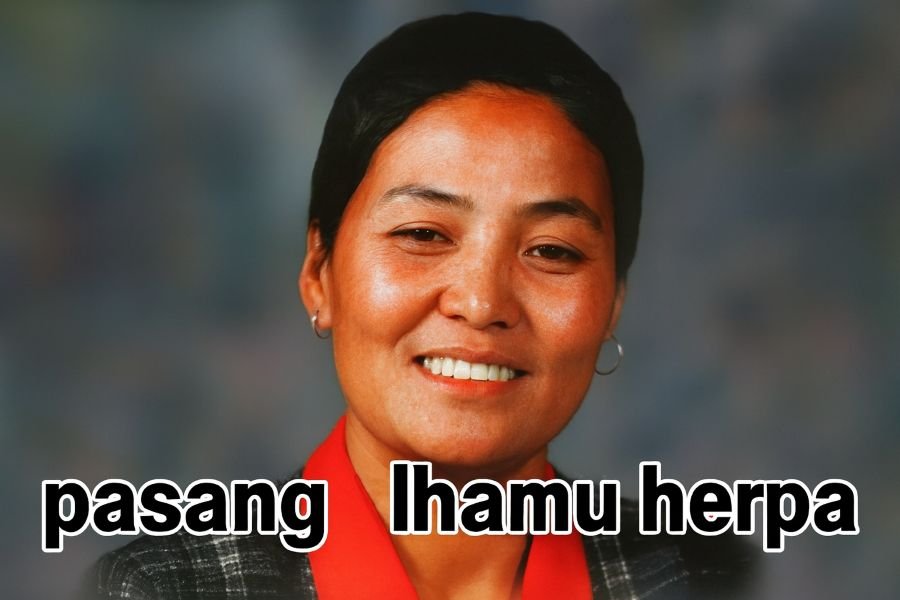
Pasang Lhamu Sherpa – The Fearless Nepalese Mountaineer Who Conquered Everest Against All Odds
A powerful story of courage, sacrifice, and an unbreakable spirit that reshaped women’s mountaineering in Nepal

Table of Contents
ToggleIntroduction
Pasang Lhamu Sherpa stands as one of the most powerful symbols of courage in Himalayan history. Born in a remote mountain village and raised in a society where women were discouraged from extreme climbing, she dared to dream beyond tradition. Her journey was not smooth or celebrated at first; it was filled with resistance, repeated failures, and immense physical risk. Yet, her determination never weakened.
As a Nepalese mountaineer, Pasang Lhamu Sherpa changed history by becoming the first Nepali woman to summit Mount Everest. Her achievement was not just a personal victory but a defining moment for Nepalese women and global mountaineering. Though her success came with a tragic end, her legacy continues to inspire generations.
Quick Bio
| Attribute | Details |
|---|---|
| Real Name | Pasang Lhamu Sherpa |
| Date of Birth | 10 December 1961 |
| Place of Birth | Surke, Solukhumbu District, Nepal |
| Nationality | Nepali |
| Ethnicity | Sherpa |
| Profession | Mountaineer |
| Known For | First Nepali woman to summit Mount Everest |
| Date of Death | 22 April 1993 |
| Age at Death | 31 years |
Early Life and Background
Pasang Lhamu Sherpa was born in Surke, a small village in Nepal’s Solukhumbu region, close to the world’s highest peaks. Growing up in the Himalayas meant that mountains were not distant dreams but everyday realities. From a young age, she accompanied her father on mountain journeys, gradually building physical strength and familiarity with high-altitude terrain.
Her early life was shaped by cultural limitations. While her brothers had opportunities for schooling, she did not receive formal education. Despite this, she developed deep practical knowledge of mountain life. The lack of formal education did not weaken her ambition; instead, it strengthened her resilience and self-belief.
Breaking Social Barriers
In traditional Sherpa society, mountaineering was considered unsuitable for women. Pasang Lhamu Sherpa challenged this mindset from an early age. She refused to accept a life limited by expectations and instead chose a path filled with uncertainty and danger. This decision was not easy and often brought criticism and resistance from her surroundings.
Her courage to step outside accepted norms was as significant as her physical climbs. Long before she stood on Everest’s summit, she had already conquered fear, doubt, and societal pressure. This inner victory became the foundation of her later achievements.
Start of Her Mountaineering Career
Pasang Lhamu Sherpa began her mountaineering journey through trekking and expedition work. Living in a region frequented by international climbers exposed her to professional mountaineering practices. Over time, she gained hands-on experience that no classroom could offer.
She gradually progressed from local peaks to more challenging climbs. Her early expeditions allowed her to understand extreme weather, altitude sickness, and the mental discipline required for high mountains. Each climb refined her skills and strengthened her resolve to aim higher.
Climbing Experience Before Everest
Before attempting Mount Everest, Pasang Lhamu Sherpa successfully climbed several notable mountains. These included Mont Blanc in Europe and Cho Oyu, one of the world’s highest peaks. She also climbed Yala Peak and Pisang Peak in Nepal. These ascents proved her technical ability and endurance as a serious mountaineer.
Each successful climb added confidence but also revealed the risks of extreme mountaineering. She learned when to advance and when to retreat, a discipline that defines responsible climbers. These experiences prepared her physically and mentally for the ultimate challenge—Everest.
The Everest Dream and Repeated Attempts
Mount Everest was Pasang Lhamu Sherpa’s ultimate goal. She attempted to climb the mountain multiple times before succeeding. Her earlier attempts in the early 1990s were unsuccessful due to severe weather and dangerous conditions. Turning back was painful, but she chose survival over pride.
These failed attempts tested her patience and mental strength. Many would have given up, but she viewed each failure as preparation. Her persistence reflected her belief that success in mountaineering comes not from speed, but from endurance and respect for the mountain.
Historic Summit of Mount Everest
On 22 April 1993, Pasang Lhamu Sherpa achieved what no Nepali woman had done before. She reached the summit of Mount Everest, standing at the highest point on Earth. This moment marked a historic milestone for Nepal and for women in mountaineering worldwide.
Her achievement was a powerful statement that skill and determination matter more than gender. As a Nepalese mountaineer, her success inspired national pride and global admiration. The summit symbolized years of struggle, sacrifice, and unwavering belief.
Tragic Descent and Death
While reaching the summit was a moment of triumph, the descent proved fatal. Severe weather struck the mountain, creating life-threatening conditions. During the descent, a fellow climber became critically ill. Pasang Lhamu Sherpa chose to stay and help instead of descending quickly to safety.
This act of selflessness cost her life. She died during the descent, making her victory deeply tragic. Her death highlighted the unforgiving nature of Everest and the immense risks climbers face even after success.
National Recognition and Honors
After her death, Pasang Lhamu Sherpa was honored as a national hero in Nepal. She became the first woman to receive Nepal’s highest civilian award, recognizing her extraordinary contribution to the nation. Roads, mountains, and institutions were named in her memory.
These honors reflected the nation’s acknowledgment of her courage and sacrifice. She transformed from a discouraged village girl into a symbol of national pride and resilience.
Legacy and Cultural Impact
Pasang Lhamu Sherpa’s legacy extends far beyond mountaineering. She represents determination, equality, and the power of perseverance. Her story is taught in schools and remembered in public monuments across Nepal.
For women, especially in traditional societies, she stands as proof that barriers can be broken. For climbers, she is a reminder that true greatness includes compassion and responsibility. Her life continues to inspire people who dare to challenge limits.
Conclusion
Pasang Lhamu Sherpa’s life was a powerful blend of courage and sacrifice. She reached the summit of the world but paid the ultimate price in doing so. Her story is not just about climbing Everest; it is about rising above fear, tradition, and repeated failure.
As a Nepalese mountaineer, she redefined what was possible for women in extreme sports. Her legacy lives on as a timeless reminder that true success is measured not only by reaching the top, but by the values upheld along the way.
Frequently Asked Questions (FAQ)
Who was Pasang Lhamu Sherpa?
Pasang Lhamu Sherpa was a Nepalese mountaineer and the first Nepali woman to summit Mount Everest.
When did Pasang Lhamu Sherpa summit Everest?
She reached the summit on 22 April 1993.
Why is Pasang Lhamu Sherpa important?
She broke gender barriers in mountaineering and became a national symbol of courage in Nepal.
Did Pasang Lhamu Sherpa survive the Everest expedition?
No, she tragically died during the descent from Mount Everest.
What is her legacy today?
She is remembered as a national hero, an inspiration for women, and a pioneer of Nepalese mountaineering.