William Keegan: The Fearless Voice of Economic Truth
An Inspiring Journey of a British Journalist Who Shaped Economic Thinking for Decades

Table of Contents
ToggleIntroduction
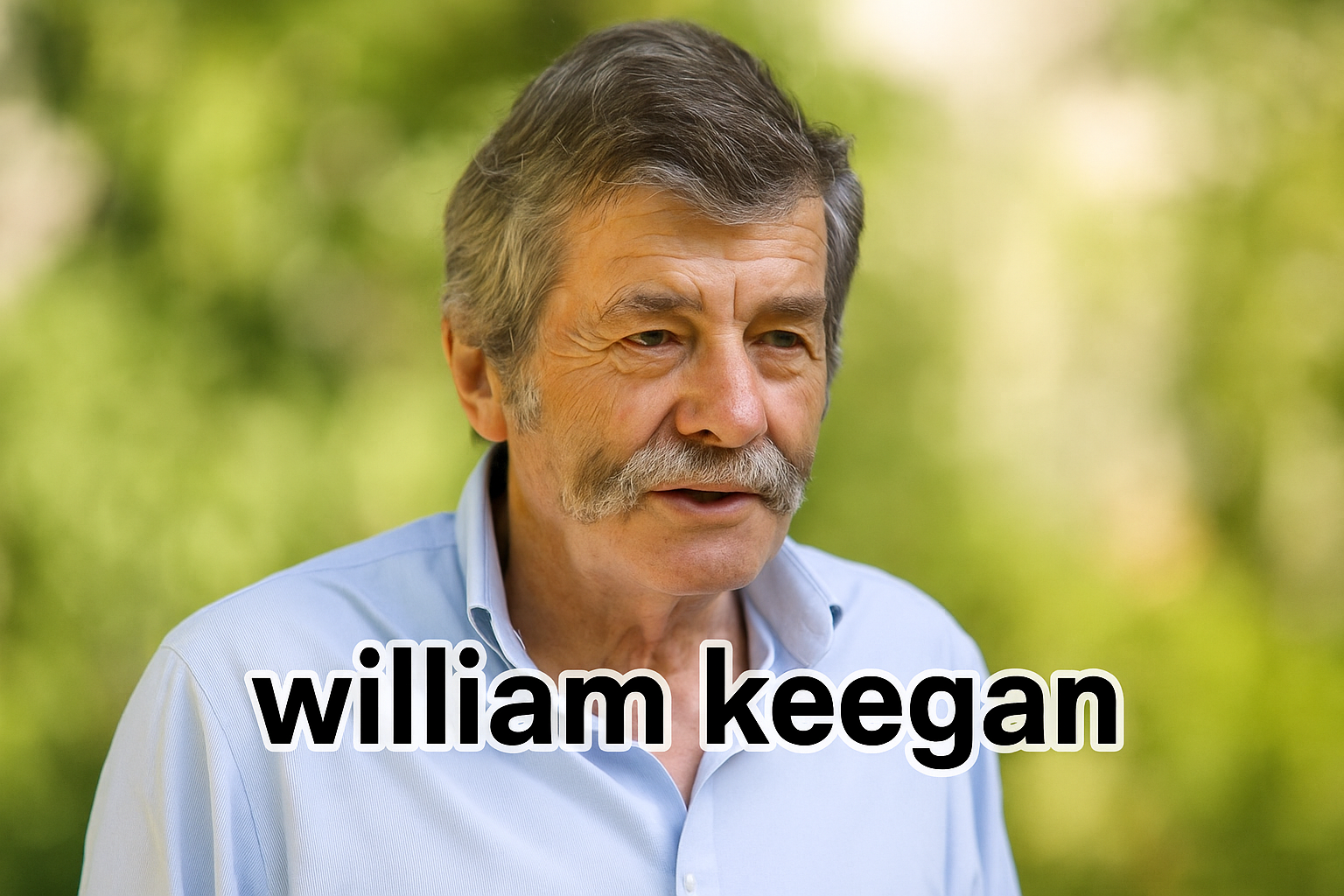
William Keegan stands as one of the most influential figures in the world of British journalism. Known for his deep insights into economic policy and his fearless critique of government decisions, Keegan’s work has left a lasting mark on the nation’s understanding of finance, politics, and social change. As a distinguished British journalist, author, and commentator, his words have guided generations through the complexities of economic transformation in the United Kingdom.
Born in London, England, William Keegan’s journey from a passionate young observer of world events to a respected commentator and columnist at The Observer reflects his dedication to truth and intellectual integrity. His voice became a beacon for readers seeking clarity in a world often clouded by political rhetoric and financial uncertainty.
Quick Bio
| Full Name | William James Gregory Keegan |
|---|---|
| Date of Birth | 3 July 1938 |
| Age (2025) | 87 years |
| Nationality | British |
| Birthplace | London, England, United Kingdom |
| Spouse | Married (to a barrister) |
| Children | Seven |
| Sibling | Victor Keegan |
| Education | Wimbledon College; Trinity College, Cambridge |
| Profession | British Journalist, Author, Economist |
| Honor | CBE (Commander of the Order of the British Empire), 2009 |
William Keegan’s Early Life and Education
William Keegan was born on July 3, 1938, in London. Growing up in post-war Britain, he developed a sharp awareness of social and economic changes shaping the modern world. His early education at Wimbledon College, a Jesuit institution, instilled discipline, curiosity, and a moral sense of public service—qualities that would later define his journalistic work.
Keegan continued his studies at Trinity College, Cambridge, one of the world’s most prestigious universities. At Cambridge, his interest in economics and politics deepened, setting the foundation for his future as an economic commentator. His education was not just about acquiring knowledge; it was about developing an analytical lens through which he could understand and interpret society’s shifting economic tides.
Start of Career and Rise in Journalism
William Keegan began his career at the Financial Times in 1963, marking the start of what would become a remarkable journey in journalism. His early assignments focused on financial reporting, where his ability to simplify complex economic concepts earned him recognition among peers and readers alike. After a brief period at the Daily Mail in 1964, Keegan returned to the Financial Times in 1967, where he spent nearly a decade refining his craft.
In 1976, Keegan made a pivotal move by joining the Bank of England’s Economics Intelligence Department. This experience gave him a first-hand understanding of economic policy-making, adding depth to his later journalism. His exposure to the inner workings of Britain’s central bank helped shape his analytical writing style—firm, factual, and fearless.
The Observer and Professional Triumph
In 1977, William Keegan joined The Observer as Economics Editor. This position would define his career for decades. His columns became a must-read for those seeking credible, balanced perspectives on the UK economy. From inflation and recession to government budgets and European relations, Keegan’s commentary was both insightful and uncompromising.
He served as Economics Editor until 2003 and later became Senior Economics Commentator for The Observer. Throughout his tenure, he maintained a reputation for independent thought and intellectual honesty. His writing was neither partisan nor populist—it was grounded in facts and shaped by a profound understanding of economic systems.
Academic and Advisory Roles
Apart from journalism, Keegan contributed to academia and policy through teaching and advisory positions. In 1989, he served as Visiting Professor of Journalism at the University of Sheffield, inspiring future journalists with his wisdom and experience. Later, in 2012, he became Visiting Professor of Economics at Queen Mary University of London.
He also served as Governor of the National Institute of Economic and Social Research and participated in the Strand Group at King’s College London. These roles underline his commitment to public education and evidence-based policy discussions. His influence extends beyond media—he is a thinker whose insights continue to shape academic and policy circles.
Published Works and Intellectual Legacy
William Keegan is the author of numerous books that explore the intersections of economics, politics, and society. His works include Mrs Thatcher’s Economic Experiment, Who Runs the Economy?, The Spectre of Capitalism, The Prudence of Mr Gordon Brown, and Nine Crises: Fifty Years of Covering the British Economy from Devaluation to Brexit.
Each book reflects his analytical brilliance and commitment to honest discourse. As a British journalist, his writing bridges the gap between scholarly analysis and public understanding. His language is sharp yet accessible—designed for readers who seek both clarity and depth in economic reporting.
Recognition and Honors
In 2009, William Keegan was appointed Commander of the Order of the British Empire (CBE) for his outstanding services to journalism. This honor recognized not just his professional achievements but also his contribution to the nation’s intellectual and democratic life. His integrity, independence, and dedication have made him a model for future journalists.
Impact and Legacy
William Keegan’s influence on British journalism is profound. Over six decades, he has provided readers with consistent, insightful, and principled commentary. His writing has illuminated the economic challenges faced by Britain—from post-war recovery to Brexit—and guided public debate with courage and reason.
He has also demonstrated that journalism can be both a moral and intellectual pursuit. Through his columns and books, Keegan has helped millions of readers understand that economics is not just about numbers—it’s about people, choices, and consequences.
Conclusion
William Keegan remains a towering figure in British journalism, admired for his intellect, courage, and unwavering commitment to truth. His career reflects both the triumphs and trials of economic reporting—celebrated for his insights yet unafraid to challenge authority when necessary.
As a British journalist and author, he has turned economic commentary into an art form—combining precision with passion. His words continue to inspire new generations to think critically about policy, society, and the pursuit of justice in public life.
Frequently Asked Questions (FAQ)
1. Who is William Keegan?
William Keegan is a renowned British journalist, author, and economist known for his long career with The Observer and his insightful commentary on UK economic policy.
2. What is William Keegan famous for?
He is best known for his role as Economics Editor and later Senior Economics Commentator at The Observer, and for his books analyzing British economic history and politics.
3. Where was William Keegan educated?
He studied at Wimbledon College and Trinity College, Cambridge, before serving in the Royal Tank Regiment.
4. What awards has William Keegan received?
He was appointed Commander of the Order of the British Empire (CBE) in 2009 for his services to journalism.
5. What is his most popular book?
Nine Crises: Fifty Years of Covering the British Economy from Devaluation to Brexit is among his most celebrated works.
6. What is his lasting legacy?
William Keegan’s legacy lies in his fearless dedication to truth, his mastery of economic storytelling, and his lifelong contribution to British journalism.